









1. Introduction: The Next Frontier in Turbidity Measurement
The global measurement turbidity water meter market is projected to grow from $19.88 million in 2026 to $30.31 million by 2035, at a compound annual growth rate (CAGR) of 4.8% [citation:4]. This growth is driven by increasing municipal water treatment investments, stricter environmental compliance regulations, and continuous advancements in sensor technology [citation:4].
The future of turbidity measurement is being shaped by five transformative forces: laser scattering advancements achieving sub-0.01 NTU resolution, artificial intelligence for predictive analytics, sensor miniaturization enabling ubiquitous deployment, multi-spectral fusion for comprehensive water quality assessment, and autonomous systems with self-cleaning and self-calibrating capabilities [citation:2][citation:5][citation:10].
2. Laser Scattering: Achieving Sub-0.01 NTU Resolution
Recent advancements in laser scattering technology are pushing the boundaries of turbidity measurement precision. A groundbreaking study published in early 2026 demonstrates a laser scattering-based online turbidity sensor achieving 0.01 NTU resolution and an 0.0075 NTU detection limit [citation:2].
2.1 Key Technical Innovations
The new sensor design incorporates several breakthrough features [citation:2]:
- 860 nm near-infrared laser source compliant with ISO 7027:2016, effectively color interference
- Multi-stage bubble removal flow cell based on "physical separation" and "delayed steady flow" principles to eliminate bubble interference
- Dual-angle scattering detection (90° and 135°) improving adaptability to complex particle size distributions
- Dynamic baseline correction and wide-range temperature compensation algorithms ensuring long-term stability
Performance testing results are remarkable [citation:2]:
| Parameter | Achieved Performance |
|---|---|
| Resolution | 0.01 NTU |
| Detection Limit | 0.0075 NTU |
| Linearity (0-10 NTU range) | R² > 0.9999 |
| Stability | CV < 3% |
| Repeatability | RSD < 1.5% |
This level of precision matches laboratory-grade commercial instruments, making it suitable for surface water automatic monitoring and drinking water safety assurance [citation:2].
2.2 Future Laser Technology Directions
By 2030, we can expect [citation:2][citation:7]:
- Tunable laser sources enabling multi-wavelength analysis from a single emitter
- Quantum cascade lasers for mid-infrared detection of specific contaminants
- Integrated photonic circuits reducing sensor size while improving reliability
- Sub-0.001 NTU resolution for ultra-pure water applications in semiconductor manufacturing
3. AI and Machine Learning Integration
Artificial intelligence is transforming turbidity measurement from simple data collection to intelligent decision-making. Recent research demonstrates that machine learning techniques can achieve 96-98% classification accuracy for different water types when trained on turbidity, TDS, and temperature data [citation:5].
3.1 Thermal Variation Compensation
A 2026 study published in Engineering Research Express reveals that temperature significantly affects turbidity readings—turbidity decreases with higher temperature due to particle settling, while TDS increases from enhanced solubility [citation:5]. The research developed a thermal change sensing system operating from 15°C to 150°C, with machine learning algorithms providing accurate compensation [citation:5].
3.2 Algorithm Performance Comparison
| Machine Learning Algorithm | Classification Accuracy | Best Application |
|---|---|---|
| Decision Tree | Highest | Water type classification |
| Random Forest | Very High | Anomaly detection |
| Support Vector Classifier (SVC) | High | Binary classification |
| K-Nearest Neighbors (KNN) | Moderate | Real-time monitoring |
The research concludes that using AI-ML techniques with temperature variation sensing significantly improves accuracy and enables precise estimation of water types based on combined parameters [citation:5].
3.3 Predictive Analytics and Anomaly Detection
Industry trends indicate that AI-driven diagnostics are growing at 21% annually in the water quality sector [citation:4]. Future turbidity sensors will feature [citation:1][citation:5]:
- On-device AI processing for real-time anomaly detection without cloud latency
- Predictive maintenance alerts based on sensor health monitoring
- Automated calibration scheduling when drift is detected
- Water quality forecasting using historical pattern recognition
"Combining sub-systems with AI models creates an expert system. The more accurate data available, the faster AI training becomes and the higher the decision quality." — Industry perspective on AI integration [citation:1]
4. Sensor Miniaturization and Ubiquitous Deployment
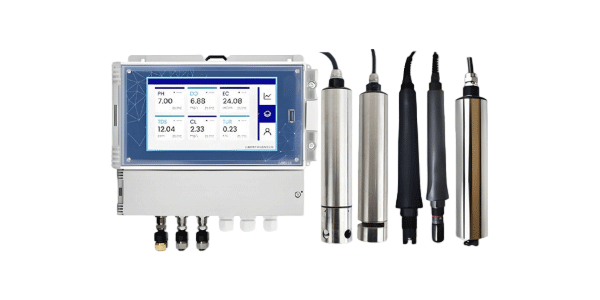
The trend toward miniaturization is perhaps the most transformative force in turbidity measurement. Companies developing sensors that integrate pH, conductivity, turbidity,
4.1 Key Miniaturization Technologies
The "four-dimensional fusion technology" enables five core detection modules to be integrated into a single probe, achieving [citation:10]:
- Dissolved oxygen accuracy: ±0.2 mg/L
- pH accuracy: ±0.05
- Volume reduction of 70% compared to traditional sensors
- Cost reduction enabling widespread deployment
4.2 Ubiquitous Sensing Networks
By 2030, we will see the emergence of ubiquitous water quality sensing with [citation:10]:
- 4G wireless transmission and GPS positioning in every sensor
- Edge computing for local data processing
- Solar-powered operation enabling deployment in remote areas
- R&D investment reaching 18% of revenue with $5 million allocated to quantum dot sensing and edge computing chips
4.3 Five-Parameter Microsystems
The "miniature smart sentinel" concept integrates pH, dissolved oxygen, conductivity, turbidity, and temperature into a compact system [citation:6]. Key features include [citation:6]:
- Fluorescence-based dissolved oxygen sensors with longer lifespan
- Scattered light turbidity sensors for suspended particle quantification
- Plug-and-play design with automatic calibration and cleaning
- IoT platform integration with PC and mobile app access
- Accuracy within ±5% across all parameters
These microsystems are already deployed in source water monitoring, water treatment plants, and discharge points, proving that small size can deliver major impact [citation:6].
5. Multi-Spectral Fusion and Optical Innovations
The future of turbidity measurement lies in moving beyond single-wavelength measurements to multi-spectral fusion. The ATE5800 multi-spectral water quality online monitor represents this trend, incorporating six core spectral bands [citation:7]:
| Wavelength | Application |
|---|---|
| 450 nm | Blue-green algae detection |
| 550 nm | Chlorophyll a |
| 660 nm | Phycocyanin, turbidity reference |
| 720 nm | Suspended solids |
| 780 nm | CDOM, turbidity compensation |
| 840 nm | Turbidity (ISO 7027 compliant) |
Each band has approximately 15 nm bandwidth, and through multi-band signal fusion and algorithm inversion, the system can accurately measure over 20 water quality parameters including turbidity, chlorophyll a, blue-green algae density, total phosphorus, total nitrogen, COD, CDOM, and suspended solids [citation:7].
5.1 Advanced Capabilities
Multi-spectral systems enable [citation:7]:
- 360° continuous rotation and 33x optical zoom for precise定位 of pollution sources
- Early warning of cyanobacteria blooms 1-3 days in advance
- Real-time monitoring of illegal discharges
- Emergency response tracking of pollutant dispersion
5.2 Turbidity Compensation Technology
Advanced COD sensors are incorporating turbidity compensation as a core feature [citation:9]. When turbidity exceeds 50 NTU, traditional sensor errors can reach over 30%. New dual-wavelength four-channel detection technology uses [citation:9]:
- 254 nm UV light for COD characteristic absorption
- 546 nm visible light as turbidity reference
- Adaptive compensation models for 0-500 NTU range
Results show error reduction of 70% in 200 NTU industrial wastewater, maintaining ±5% accuracy [citation:9].
6. Self-Cleaning and Autonomous Systems
Maintenance requirements have historically limited the deployment of turbidity sensors in remote or harsh environments. The future points toward fully autonomous sensors with self-cleaning and self-calibrating capabilities.
6.1 Hydrodynamic Self-Cleaning
The ProMinent DULCOEYE sensor series demonstrates gentle fluid-dynamic self-cleaning that reduces maintenance costs while improving reliability [citation:3]. Key features include [citation:3]:
- Compact flow cell reducing water consumption
- Automatic bubble detection and compensation using intelligent algorithms
- Factory calibration enabling immediate plug-and-play use
6.2 Mechanical and Ultrasonic Cleaning
For high-fouling environments, future sensors will incorporate [citation:6][citation:9]:
- Mechanical wipers for biofilm removal
- Ultrasonic cleaning modules for optical windows
- Automatic flushing valves for programmable remote cleaning
6.3 Self-Calibration and Diagnostics
Autonomous systems will feature [citation:3][citation:10]:
- Automatic compensation for light source aging and temperature drift
- Solid-state verification options for calibration checking
- Self-diagnostic algorithms reporting sensor health
- Predictive maintenance alerts before failures occur
The result is 30+ days of unattended operation with maintenance frequency reduced by over 80% [citation:10].
7. Digital Twins and Predictive Water Management
The integration of turbidity sensors with digital twin technology represents the ultimate expression of Industry 4.0 in water management. The multi-parameter水质计 market is evolving from "discrete data collection" to "continuous water quality fingerprint" [citation:1].
7.1 From Data to Digital Twins
Future systems will create virtual replicas of water systems incorporating real-time sensor data [citation:1]:
- Cross-coupling analysis of multi-dimensional heterogeneous data
- Elimination of environmental interference (temperature drift, pressure drift)
7.2 Pollution Source Tracing
AI-powered systems will enable [citation:1]:
- Instantaneous when anomalies are detected
- Multi-dimensional data fusion combining flow velocity, pH, and conductivity
- Automatic generation of based on pollution type and location
7.3 Carbon Trading Integration
By 2030, water quality data will directly link to carbon emission reduction accounting [citation:1]. Turbidity sensors will serve as carbon audit terminals where [citation:1]:
- Precise DO control in wastewater treatment converts energy savings
- Water reuse certification
- Blockchain technology ensures data authenticity
8. Emerging Applications and Market Growth
8.1 Wireless Connectivity Trends
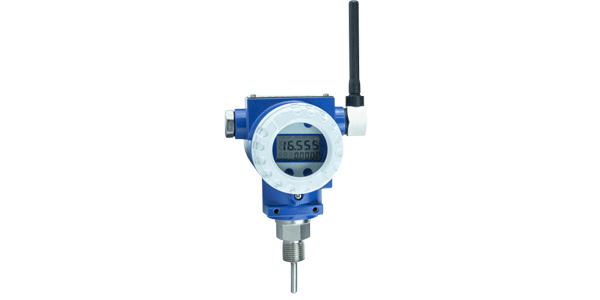
Currently, over 65% of turbidity meters are equipped with wireless capabilities, and the industry is transitioning toward predictive diagnostics [citation:4]. Key trends include [citation:4]:
- Wireless data transmission adoption growing 31%
- Portable device preference increasing 25%
- Smart meter integration growing 17%
- Dual-function meter adoption rising 15%
8.2 Application-Specific Growth
Different sectors show varying adoption patterns [citation:4]:
| Application Sector | Market Share | Key Trend |
|---|---|---|
| Municipal Water Treatment | 51% | 78% of systems now use online sensors for continuous monitoring |
| Industrial Wastewater | 29% | 66% of discharge permits require real-time turbidity tracking |
| Environmental Field Testing | 20% | 71% of projects use手持式 meters for rapid data collection |
8.3 Regional Market Outlook
Regional distribution for 2035 projects [citation:4]:
- Asia-Pacific: 36% market share, driven by China (16%) and India (9%)
- North America: 32% market share, US leading with 25%
- Europe: 28% market share, Germany at 11%
- Middle East & Africa: 4% market share, growing 12% annually in groundwater projects
9. Challenges and Roadblocks
9.1 Technical Challenges
- High calibration costs affecting 19% of installations [citation:4]
- Limited rural access impacting 14% of potential deployments [citation:4]
- Low awareness restricting 11% of growth [citation:4]
- Bubble interference requiring advanced mitigation [citation:2]
9.2 Adoption Barriers
- Initial investment costs for advanced systems limiting small facility adoption (43% cite affordability as barrier) [citation:4]
- Lack of skilled technicians in rural areas (51% due to improper calibration) [citation:4]
- Integration complexity with existing SCADA systems [citation:4]
Despite these challenges, the trajectory is clear: turbidity measurement technology is evolving from simple optical devices to intelligent nodes in the global water management infrastructure. The convergence of laser precision, AI analytics, and ubiquitous deployment will fundamentally transform how we monitor and protect water resources.