TIME: 2026.05.20AUTHOR: Coco LiNUMBER OF VIEWS 1377
How to Monitor 6 Parameters Simultaneously? Multi-Parameter Water Quality Analyzer – Technical Architecture Deep Dive
Next‑gen intelligent analyzer
How to Monitor 6 Parameters Simultaneously? Multi‑Parameter Water Quality Analyzer – Technical Architecture Deep Dive
One instrument, multiple digital sensors. Real-time monitoring of pH, dissolved oxygen, conductivity, turbidity, COD, and more. Explore the modular architecture, communication backbone, and industrial applications of modern multi-parameter water quality analyzers.
Up to 6 channels Digital sensors RS485 · Modbus · 4-20mA
Why simultaneous multi-parameter analysis?
In industrial water treatment, environmental monitoring, and aquaculture, water quality is never defined by a single parameter. pH, dissolved oxygen, conductivity, turbidity, residual chlorine and COD interact to reflect system health. Traditional single-parameter instruments require multiple devices, complex wiring, and separate data logging. A modern multi-parameter water quality analyzer integrates up to 6 digital sensors into one touchscreen controller, simplifying installation, reducing costs, and enabling holistic decision-making.
Technical architecture: from sensor to screen
1. Digital sensor layer
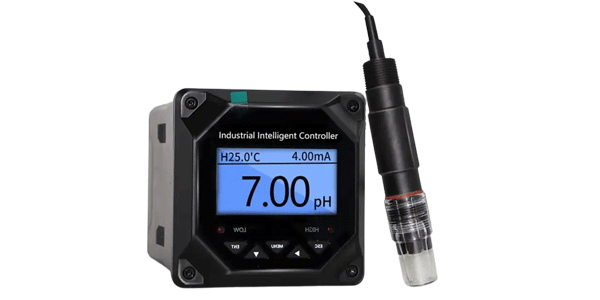
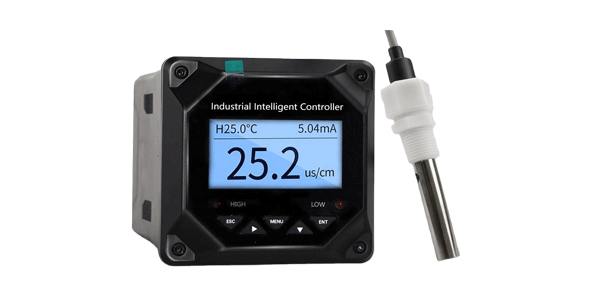
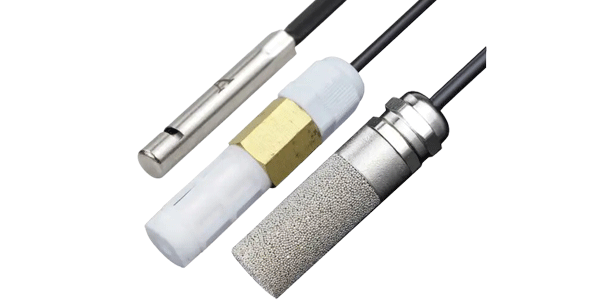
Each water quality parameter is measured by an independent digital sensor with built‑in signal conditioning and calibration data. Sensors communicate via RS‑485 (Modbus‑RTU), eliminating analog signal degradation over long cable runs.
2. Central analyzer unit
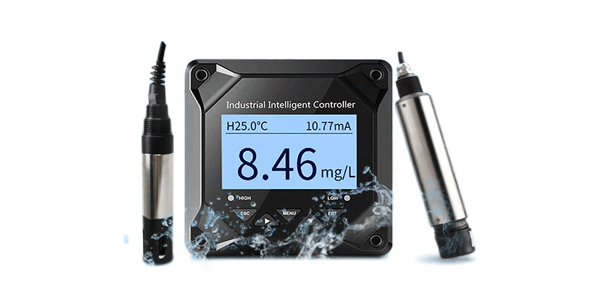
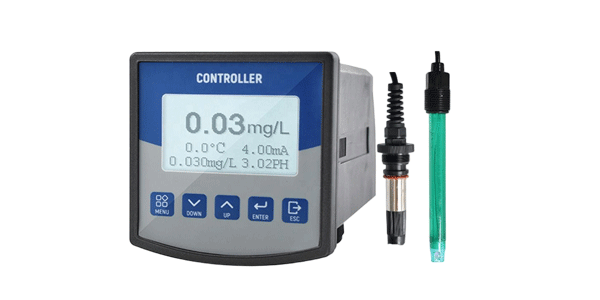
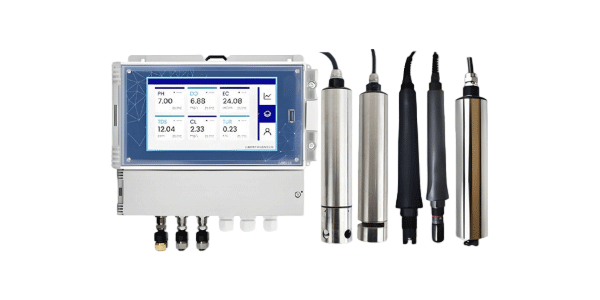
The main unit houses a real-time operating system (RTOS), touchscreen interface, multi‑channel input processing, and data logging. It polls each digital sensor, applies temperature compensation, and displays values simultaneously.
3. I/O & communication layer
Isolated 4‑20 mA outputs (2 channels), dual RS‑485 ports for external SCADA/PLC integration, and relay outputs for alarm/control.
4. Data storage & remote access
Built‑in TF card (8‑32 GB) stores years of historical data. Combined with RS‑485/Modbus, the system can feed data to cloud platforms or DCS.
Reference design example (GWQ-MP200 architecture): Supports 1 to 6 measurement channels. Each channel can host a digital sensor of any parameter type (pH, DO, conductivity, turbidity, residual chlorine, COD, ammonia, etc.). The system automatically recognizes sensors and their calibration records.
How one device reads 6 parameters at the same time
Digital sensor bus architecture
Instead of dedicated analog inputs, multi-parameter analyzers use a digital communication bus (RS‑485). Each sensor has a unique Modbus address. The central controller sequentially polls each sensor (e.g., sensor #1 pH, sensor #2 DO, sensor #3 conductivity) at high speed (<1 second per sensor). Because digital sensors pre-process measurements internally, the main unit receives accurate, temperature-compensated values directly — no signal interference or crosstalk.
Parallel vs. sequential reading
With fast digital polling, 6 parameters can be updated every 2–5 seconds — essentially "simultaneous" for real-time monitoring. The touchscreen displays all values on one dashboard, and each parameter can have independent alarm thresholds, relay controls, and analog outputs.
Measurable parameters: unlimited combinations
Depending on the analyzer model and sensor selection, typical parameters include:
Flexibility: Up to 6 parameters can be selected per combination. Multiple channels can carry the same parameter (e.g., two pH sensors in different tanks). Different sensors can be configured with different cable lengths, and the analyzer automatically adapts.
Core features that enable reliable multi‑parameter operation
Real-time operating system (RTOS)
RTOS ensures deterministic response times for alarm handling, relay activation, and data logging – critical for industrial processes where delayed response can cause product loss or equipment damage.
Large color touchscreen
Intuitive interface showing all parameters simultaneously, with trend graphs, calibration wizards, and system diagnostics.
Automatic temperature compensation
Each digital sensor provides temperature data; the analyzer applies compensation algorithms for pH, conductivity, and DO, ensuring accurate readings across varying process temperatures.
High‑capacity local storage
TF card (8 GB standard, up to 32 GB) stores measurement history, calibration logs, and event records – no cloud dependency for data retention.
Industrial connectivity: from field to control room
Analog outputs
2-channel isolated 4‑20 mA outputs (load <750 Ω). Each output can be assigned to any measured parameter, enabling integration with PLCs, chart recorders, or remote displays.
Digital communication
2 independent RS‑485 ports with Modbus‑RTU protocol. One port can connect to a SCADA system, the other to a local HMI or datalogger.
Relay control
Multi‑channel relay outputs (typically 4‑6 relays) for alarms, pump control, or chemical dosing. Each relay can be triggered by any parameter threshold (e.g., pH > 9.0 → dosing pump ON, DO < 3 mg/L → alarm).
Power supply
Wide input range 100–250 VAC, 50/60 Hz, suitable for global industrial environments.
Installation flexibility & modular expansion
Wall‑mount main unit
Compact dimensions (approx. 223×200×120 mm) allow easy panel or wall mounting in control rooms, near tanks, or in field cabinets.
Sensor mounting options
Threaded, immersion, or flow‑cell installations depending on sensor type and application (open channel, pipeline, or tank). Cable lengths can be specified per sensor (up to 100 m or more with digital signals).
Expandable channel capacity
Start with 2 parameters today, add a third sensor later. The analyzer automatically recognizes new digital sensors on the bus. This modular approach future‑proofs your investment.
Order specification tip: When ordering, define the number of measurement channels, parameter types per channel, measurement ranges, and cable lengths. The same analyzer can mix pH, DO, conductivity, and turbidity sensors.
Typical applications across industries
Power plants (thermal, nuclear)
Boiler feedwater, cooling water – pH, conductivity, DO.
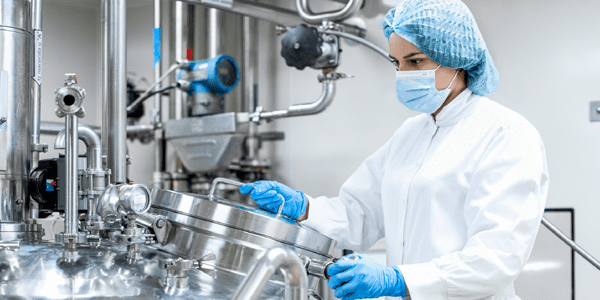
Chemical & pharmaceutical
Process monitoring, waste neutralization – pH, ORP, residual chlorine.
Lower total cost (hardware + installation + engineering)
Higher combined cost
Frequently asked questions
Q1: Can I mix sensors from different brands?
A: If they support Modbus‑RTU with standard registers, possibly yes. However, for guaranteed plug‑and‑play, use sensors recommended by the analyzer manufacturer (like GWQ-MP200 with compatible digital sensors).
Q2: How does the analyzer handle sensor failure of one parameter?
A: The system will flag the specific channel as "fault" or "no signal" while continuing to read other parameters normally. Relay outputs can be configured to trigger a maintenance alarm.
Q3: Is calibration done per sensor or via the main unit?
A: Calibration is typically initiated from the main unit touchscreen, but the calibration data is stored inside each digital sensor. This allows you to pre‑calibrate sensors in the lab and swap them in the field without recalibration.
Q4: Can the analyzer send data to a cloud platform?
A: Yes. Through the RS‑485/Modbus port, connect a gateway (4G/Ethernet) that pushes data to AWS, Azure, or custom cloud dashboards. Some analyzers have built‑in web servers.
Q5: What is the maximum cable length between sensor and main unit?
A: With RS‑485 digital signals, reliable distance is up to 1,200 meters (depending on cable quality and baud rate). This is a major advantage over analog 4‑20 mA sensors limited to ~100 m without signal degradation.
Key takeaways: why multi‑parameter analyzers win
✔ One device integrates up to 6 digital sensors – pH, DO, conductivity, turbidity, residual chlorine, COD, and more.
✔ RTOS + touchscreen delivers real‑time monitoring, trending, and alarm management.
✔ Modbus & 4‑20mA outputs enable easy SCADA/PLC integration.
✔ Lower total cost of ownership compared to multiple single‑parameter instruments.
✔ Expandable, future‑proof architecture – add channels or parameters without replacing hardware.
Discover how temperature transmitters and ultrasonic flow meters work together in power plants. Learn about steam temperature monitoring, feedwater flow measurement, cooling water systems, and turbine efficiency optimization in thermal, nuclear, and hydroelectric power generation.
Learn how temperature and humidity sensors optimize incubator environments for poultry, fish, and reptile hatcheries. Discover optimal temperature and humidity ranges, sensor placement, monitoring systems, and best practices to maximize hatch rates and survival.
Discover how temperature sensors ensure safety and efficiency in electric vehicles (EV) and traditional vehicles. Learn about battery thermal management, motor and inverter monitoring, engine and transmission temperature control, and automotive sensor technologies.