Multi-Parameter Water Quality Analyzer Selection

TIME: 2026.05.21 AUTHOR: Coco Li NUMBER OF VIEWS 869
Environmental Monitoring vs Aquaculture Farm: 5 Critical Dimensions for Multi-Parameter Water Quality Analyzer Selection
Buying guide · Two applications

Environmental Monitoring Station vs Aquaculture Farm: 5 Critical Dimensions for Multi-Parameter Water Quality Analyzer Selection

Choosing the right multi-parameter water quality analyzer depends heavily on your application. Compare the needs of regulatory environmental monitoring vs. commercial aquaculture across 5 key dimensions — from parameter priorities to total cost of ownership.

5 decision axes Sensor technology TCO analysis

Same instrument family, different selection criteria

Multi-parameter water quality analyzers are used everywhere from government monitoring stations tracking river health to aquaculture farms managing pond conditions. However, the priorities differ dramatically. An environmental station may prioritize regulatory compliance, long-term unattended operation, and wide parameter range, while a fish farm focuses on real-time alerts, ease of maintenance, and parameters like dissolved oxygen and pH. This guide breaks down 5 critical dimensions to help you choose the right analyzer for your specific context.

1. Parameter priorities & ranges

Environmental monitoring station: Wide range of parameters including nutrients (ammonia, nitrate, phosphate), heavy metals, COD, BOD, chlorophyll, cyanobacteria, plus conventional pH, DO, conductivity, turbidity. Needs low detection limits (e.g., µg/L for nutrients).

Aquaculture farm: Focus on dissolved oxygen (DO), pH, temperature, salinity, turbidity, ammonia. Ranges are narrower but require high reliability for alarms. DO range 0-20 mg/L, pH 6-9 typical.

⚖️ Environmental: broad + nutrients | Aquaculture: targeted + DO focus
2. Sensor technology & maintenance

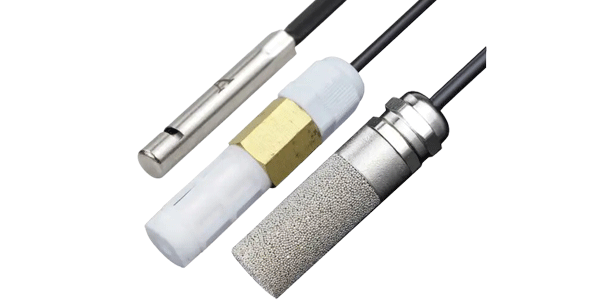
Environmental station: Often uses optical DO, ISE (ion-selective) for nutrients, and UV absorbance for COD. Sensors must withstand variable temperatures, biofouling, and long deployment (months). Self-cleaning mechanisms or wipers for turbidity probes are common.

Aquaculture farm: Prefers optical DO sensors (no membrane, low maintenance), rugged pH probes, and simple conductivity cells. Biofouling is a major issue; easy-to-clean designs and replaceable caps are valued.

⚖️ Environmental: automated cleaning + ultra-low drift | Aquaculture: field-maintainable + optical DO
3. Deployment & installation type

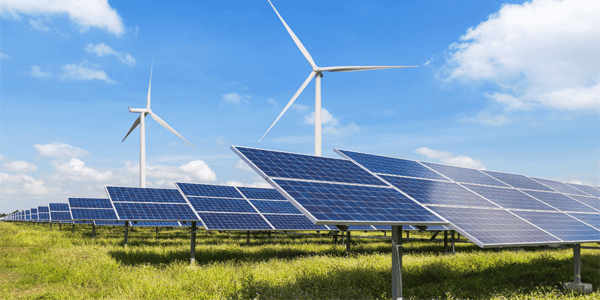
Environmental station: Fixed monitoring stations with flow-through systems or submersible sondes on buoys. Solar-powered telemetry often required. Multi-parameter sondes (integrated probes) with long cable lengths (>50m).

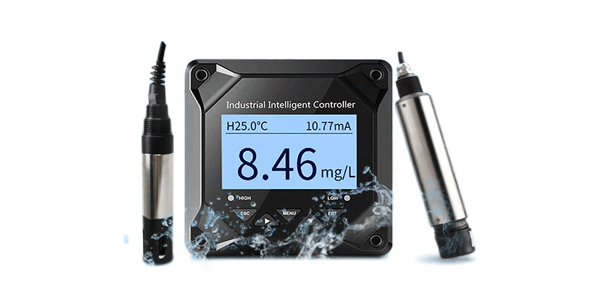
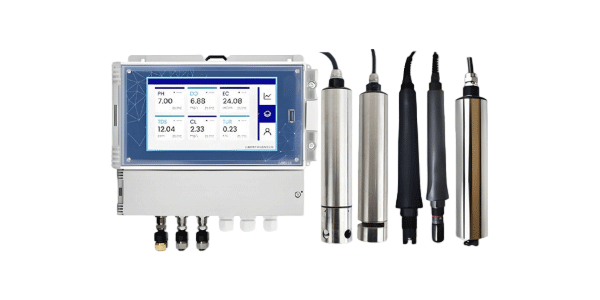
Aquaculture farm: Wall-mounted analyzer in a shed or cabinet, with sensors installed in ponds (immersion mounting). Multiple ponds → multi-channel analyzer. Portable or semi-portable options for spot checks.

⚖️ Environmental: remote, solar, telemetry | Aquaculture: centralized controller + multi-pond sensors
4. Data integration & alert logic

Environmental station: Regulatory reporting requires data integrity, audit trails, and cloud or SCADA integration (often with Modbus, 4-20mA, or 4G to central servers). Alarms for exceedances (e.g., DO below standard) trigger notifications to authorities.

Aquaculture farm: Real-time local alerts via SMS, app, or siren. Automatic aeration control based on DO threshold (relays). Integration with feeding systems. Simpler cloud dashboards for remote monitoring by farm manager.

⚖️ Environmental: compliance + audit trail | Aquaculture: automated control + direct alarms
5. Total cost of ownership (TCO)

Environmental station: Higher initial cost (advanced sensors, telemetry, solar). Low per-site labor cost if remote. Consumables: calibration solutions, wiper brushes, sensor replacement every 2-3 years.

Aquaculture farm: Moderate initial investment (aiming for ROI via reduced fish loss and energy savings). Low-cost consumables: cleaning supplies, optical caps every 2-3 years, pH probe replacement yearly. Priority: fast payback from improved survival & efficiency.

⚖️ Environmental: high upfront, long life | Aquaculture: ROI-driven, moderate upfront
Head-to-head comparison: Environmental station vs Aquaculture farm
Dimension 🌿 Environmental monitoring station 🐟 Aquaculture farm
Priority parameters DO, pH, conductivity, turbidity, nutrients (N/P), chlorophyll, COD, heavy metals DO, pH, temperature, salinity, ammonia, turbidity (optional)
DO sensor type Optical (long-term stability, wiper) Optical (low maintenance, fast response)
Nutrient measurement ISE or wet-chemistry analyzers Rare; occasional colorimetric kits
Installation environment Outdoor, remote, solar power, telemetry Pond-side shed, AC power, often multi-pond
Alarm & control Data to central server, regulatory alerts SMS/push + automatic aeration/feeding
Data storage Internal + cloud, long-term archival Local + cloud for trend analysis
Calibration frequency Monthly or quarterly (sondes) Every 1-3 months (optical DO), pH more often
Maintenance skill level Technical staff / field service Farm operators with basic training
Weighted decision factors per application

Environmental monitoring: top 3 priorities

  1. Data defensibility – Calibration traceability, audit trails, low drift.
  2. Multi-parameter integration – One sonde measuring 8+ parameters including nutrients.
  3. Remote robustness – Solar compatibility, low power, telemetry (4G/LoRa).

Aquaculture farm: top 3 priorities

  1. DO reliability & alerts – Prevent fish kills; automatic aerator control.
  2. Low daily maintenance – Optical DO sensors, easy-to-clean pH probes.
  3. Cost-effective scalability – One analyzer for multiple ponds, simple installation.
Certification & compliance requirements

Environmental monitoring stations often require compliance with EPA, ISO 7027 (turbidity), ISO 5814 (DO), and local regulations. Instruments may need third-party validation. Data logging must meet 21 CFR Part 11 or similar for official reporting.

Aquaculture farms have fewer regulatory constraints but may follow organic certification or export standards (e.g., GlobalG.A.P.). However, the main driver is operational — not compliance — though accurate records help with traceability.

⚖️ Environmental: mandatory certification | Aquaculture: voluntary or export-driven
Return on investment (ROI) drivers

Environmental station

ROI is not measured in direct profit but in cost avoidance (pollution fines, remediation) and data value for policy-making. Budgets are typically public or grant-funded; longevity and low drift justify higher upfront costs.

Aquaculture farm

Direct ROI from increased survival rate (e.g., +10-25%), energy savings (smarter aeration), and labor reduction (no manual night checks). Payback periods of 6–12 months are common. A multi-parameter analyzer paying for itself quickly is a key purchasing driver.

Frequently asked questions (cross-application)
Q1: Can an environmental multi-parameter sonde be used in a fish farm?
A: Technically yes, but it may be overkill (expensive, includes unneeded sensors). Also, some environmental sondes are not optimized for easy cleaning in high-biofouling ponds. An aquaculture-specific analyzer is often more cost-effective.
Q2: Do aquaculture farms need to measure nutrients like nitrate?
A: In intensive RAS (recirculating aquaculture systems), nitrate monitoring is useful for denitrification control. However, most pond farms focus on DO, pH, and ammonia. Nutrient measurement is secondary.
Q3: Which application requires higher accuracy?
A: Environmental compliance often demands higher absolute accuracy (e.g., DO ±0.1 mg/L, turbidity ±2%). Aquaculture needs good repeatability and fast response, but absolute accuracy of ±0.2–0.3 mg/L for DO is acceptable.
Q4: Can the same multi-parameter analyzer be used for both if I switch industries?
A: A flexible analyzer (e.g., digital sensor bus, configurable channels) can adapt by swapping sensor types. However, deployment accessories (solar kit, anti-fouling) differ. Usually, each sector's specific needs justify dedicated instruments.
Q5: How do I decide between an integrated sonde vs. separate digital sensors?
A: Environmental monitoring: integrated sonde (compact, one cable). Aquaculture: separate digital sensors (easier to replace individual probes, scale to multiple ponds).
Quick selection guide: which analyzer profile for you?

Choose an "Environmental Station" profile if:

  • Regulatory compliance is mandatory
  • You need nutrients (N/P) or heavy metals
  • Remote, solar-powered, long-term deployment
  • Data audit trail and high accuracy are critical

Choose an "Aquaculture Farm" profile if:

  • Preventing fish kills is #1 priority
  • DO, pH, temperature, salinity are main parameters
  • You want automatic aerator control & mobile alerts
  • Fast ROI via survival increase & energy savings
The bottom line: Environmental and aquaculture applications share the same hardware platform (multi-parameter, digital sensors, Modbus) but differ in sensor selection, deployment style, alarm logic, and cost justification. Evaluate each dimension based on your operational reality — don't buy an environmental station for a fish farm or a simple aquaculture controller for regulatory monitoring.
Multi-parameter Water Quality Analyzer Buying Guide · Environmental vs Aquaculture
© 2026 Water Monitoring Lab | Smart selection for critical applications
Recommend View More
TIME 2026.05.22

How to Schedule Sensor Calibration & Replacement Cycles?

Practical maintenance calendar for multi-parameter water quality analyzers. Sensor calibration schedules, replacement cycles for pH, DO, conductivity, turbidity, ammonia probes. Templates and best practices.

TIME 2026.05.21

Multi-Parameter Water Quality Analyzer Selection

Compare multi-parameter water quality analyzer needs for environmental monitoring stations vs aquaculture farms. 5 key dimensions: parameter selection, sensor technology, deployment, data integration, and TCO.

TIME 2026.05.20

How to Monitor 6 Parameters Simultaneously?

Explore technical architecture of a multi-parameter water quality analyzer that monitors up to 6 parameters simultaneously (pH, DO, conductivity, turbidity, COD, etc.). Digital sensors, modular design, and industrial applications.

029-81292510

info@gaimc.com

Rm. 1208, Building B, Huixin IBC, No. 1 Zhang Bayi Road, High-tech Zone, Xi'an, Shaanxi, China

Copyright © Xi'an Gavin Electronic Technology Co., Ltd Site Map

Message Form