







1. Introduction: Industry 4.0 and Water Quality Sensing
Industry 4.0 represents the fourth industrial revolution, characterized by the integration of digital technologies, IoT, artificial intelligence, and cyber-physical systems into manufacturing and industrial processes. Within this paradigm, sensors serve as the critical interface between physical processes and digital decision-making systems [citation:6].
According to academic research, the integration of IoT with 3D printing, microcomputers, and low-cost sensors is paving a new path for cost-effective and reliable monitoring systems [citation:3][citation:6]. A study published in the Journal of Cleaner Production demonstrated that solar-powered IoT-based water quality monitoring systems can operate autonomously for extended periods, measuring turbidity and water level every 2 hours with high linearity (R² > 0.97) [citation:6].
"Sensors are the small soldiers that can survive in the most hostile environments." — Industry expert describing the role of optical sensing in industrial applications [citation:1]
Turbidity sensors, in particular, have evolved from simple measurement tools to intelligent nodes in the Industrial Internet of Things (IIoT). optical sensing technology represents the "first mile" of water system intelligence, transforming raw data into actionable insights [citation:1].
2. The Nine Pillars of Industry 4.0 and Turbidity Sensing
The nine main pillars of Industry 4.0 provide a framework for understanding how turbidity sensors contribute to industrial transformation [citation:6]. The following table illustrates the connection between each pillar and turbidity sensing applications:
| Industry 4.0 Pillar | Turbidity Sensor Integration | Industrial Impact |
|---|---|---|
| Industrial IoT (IIoT) | Connected turbidity sensors with wireless transmission (NB-IoT, 4G/5G, LoRa) | Real-time data collection from remote locations; 5-minute sampling intervals [citation:6] |
| Cloud Computing | Data aggregation on platforms like Ambient for visualization and anomaly detection | Scalable storage and processing of multi-site monitoring data [citation:3] |
| Big Data Analytics | Trend analysis across hundreds of monitoring points | Predictive maintenance and process optimization [citation:7] |
| Artificial Intelligence | AI algorithms for anomaly detection and predictive modeling | From "water speaks" to "water thinks" — intelligent decision-making [citation:1] |
| Digital Twins | Virtual replica of water systems incorporating real-time turbidity data | Simulation and optimization without disrupting physical operations |
| Additive Manufacturing | 3D-printed sensor housings and monitoring system components | Cost-effective prototyping and customized sensor fabrication [citation:6] |
| Autonomous Robots | Self-cleaning sensor mechanisms and automated calibration | Reduced maintenance frequency by 80% [citation:7] |
| Simulation | Process modeling based on historical turbidity patterns | Optimized chemical dosing and filtration cycles |
| Cyber Security | Secure data transmission and authentication for sensor networks | Protection of critical water infrastructure |
Self-cleaning sensors with automatic calibration enable 30-day unattended operation [citation:1].
RS485 Modbus, 4-20mA, and wireless protocols enable seamless SCADA/DCS integration [citation:2].
Machine learning algorithms identify anomalies and predict water quality events [citation:1].
Virtual models integrate real-time sensor data for process optimization.
3. Smart Sensor Platforms: The SENCOM 4.0 Paradigm
A leading example of Industry 4.0-ready turbidity sensing is the SENCOM™ 4.0 Platform from Yokogawa, designed specifically for the digital transformation of water treatment processes [citation:4]. This platform represents a fundamental shift in how sensors interact with industrial control systems.
3.1 Key Features of Industry 4.0 Turbidity Sensors
- Digital Intelligence: Sensors store calibration data internally, enabling "plug-and-play" replacement without field calibration [citation:4]
- Full Visualization: Real-time data streaming to HMIs and cloud dashboards
- Enhanced Process Uptime: Predictive maintenance alerts based on sensor health monitoring
- Simplified Maintenance: Automatic wash systems and long-life LED light sources reduce maintenance costs [citation:4]
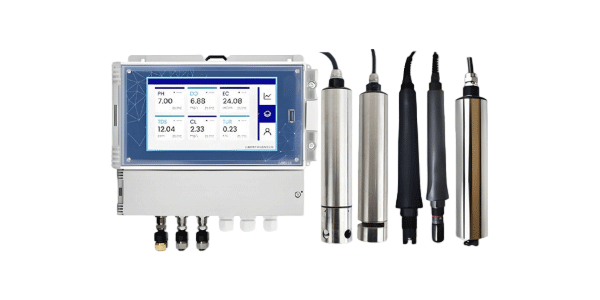
- Multi-Parameter Integration: Single analyzers can handle turbidity, chlorine, pH, and conductivity sensors [citation:4]
According to Yokogawa, the SENCOM 4.0 platform provides unique value throughout the product's entire lifecycle, from installation to decommissioning, by optimizing maintenance, reducing configuration time, and simplifying in-field operations [citation:4].
3.2 The "Make Water Speak" Philosophy
(Jetop Optoelectronics) has articulated a vision for Industry 4.0 water sensing that progresses through three stages [citation:1]:
- "Make Water Speak" — Accurate, real-time data collection from optical sensors
- "Water Thinks" — AI models trained on sensor data for intelligent decision-making
- "Water Optimizes" — Autonomous process control achieving optimal outcomes
This philosophy aligns with the Industry 4.0 vision of cyber-physical systems where sensors not only measure but also interpret and act upon the physical world [citation:1].
4. Industrial Applications and Case Studies
4.1 Textile Manufacturing: Process Optimization
In the textile dyeing industry, traditional fabric washing processes relied on experienced operators to determine rinse completeness and adjust water usage. A multi-spectral sensor system developed by automated this process, achieving remarkable results [citation:1]:
- 25-30% water savings through optimized rinse cycles
- Automated process control eliminating reliance on manual judgment
- Consistent quality through real-time turbidity monitoring
4.2 Industrial RO System Protection
Hach's MS5056 industrial panel-mounted multi-parameter analyzer demonstrates how turbidity sensors protect critical industrial infrastructure [citation:8]:
- RO membrane protection: Real-time turbidity monitoring prevents particle fouling of expensive reverse osmosis membranes
- Self-cleaning flow cell: Reduces maintenance frequency by 60% in high-fouling environments
- Multi-parameter integration: Combines turbidity with pH, conductivity, and chlorine for comprehensive water quality management
4.3 Smart Manufacturing in Food and Beverage
A brewery implemented automated turbidity monitoring for cleaning-in-place (CIP) optimization, achieving [citation:7]:
- 30% improvement in cleaning water efficiency
- $500,000+ annual savings in water and chemical costs
- Reduced downtime through predictive maintenance alerts
Challenge: Manual rinse cycle control led to inconsistent quality and water waste
Solution: Multi-spectral turbidity sensors for real-time rinse water monitoring
✅ Automated process control
✅ Consistent product quality [citation:1]
Challenge: Particulate fouling of expensive RO membranes
Solution: Panel-mounted multi-parameter analyzer with turbidity monitoring
✅ Extended membrane life
✅ Real-time process control [citation:8]
Challenge: Excessive water and chemical use in cleaning cycles
Solution: Automated turbidity monitoring for cleaning endpoint detection
✅ $500K+ annual savings
✅ 65% reduction in complaints [citation:7]
5. IoT Integration and Data Architecture
5.1 Connectivity Standards
Modern turbidity sensors support multiple communication protocols for seamless industrial integration [citation:2]:
- RS485 Modbus RTU: Industry standard for PLC/SCADA integration
- 4-20mA analog: Legacy system compatibility
- SDI-12: Environmental monitoring applications
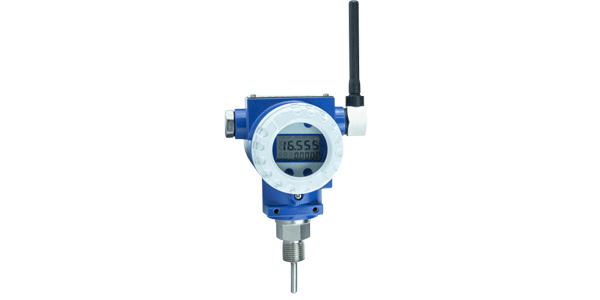
- Wireless: NB-IoT, LoRaWAN, 4G/5G for remote deployments
- Industrial Ethernet: Profinet, EtherNet/IP for factory automation
5.2 Power Management for Autonomous Operation
Academic research has demonstrated the feasibility of solar-powered, autonomous turbidity monitoring systems [citation:6]. Key findings include:
- Total power consumption analyzed for standby, operating, and transmission modes
- Optimal sampling frequency determined based on energy budget
- 2-hour sampling intervals achieved with solar-only power
- Field deployment of two months demonstrated system reliability
5.3 Data Visualization and Anomaly Detection
The palm oil plantation study utilized the Ambient cloud platform for real-time data visualization and anomaly detection [citation:6]. This open platform approach enables:
- Remote access to monitoring data from anywhere
- Automated alerts for turbidity exceedances
- Historical trend analysis for pattern identification
- Integration with other environmental data sources
6. AI and Machine Learning Integration
6.1 From Data to Decisions
The progression from simple measurement to intelligent decision-making requires sophisticated data processing [citation:1]:
| Stage | Capability | Technology |
|---|---|---|
| Level 1: Descriptive | What happened? (Real-time monitoring) | Basic SCADA visualization |
| Level 2: Diagnostic | Why did it happen? (Anomaly detection) | Threshold alerts, statistical process control |
| Level 3: Predictive | What will happen? (Forecasting) | Machine learning models trained on historical data |
| Level 4: Prescriptive | What should we do? (Optimization) | AI-driven control systems, digital twins |
6.2 AI-Powered Water Quality Systems
emphasizes the importance of combining sensor data with AI models [citation:1]:
"Combining sub-systems with AI models creates an expert system. The more accurate data available, the faster AI training becomes and the higher the decision quality. This is the strategic thinking of upgrading from 'water speaks' to 'water thinks' to achieve 'water optimizes'." — [citation:1]
6.3 Predictive Maintenance Applications
AI algorithms analyze historical turbidity patterns to predict equipment maintenance needs [citation:7]:
- Filter fouling prediction: Based on effluent turbidity trends
- Sensor cleaning alerts: When signal drift indicates fouling
- Chemical dosing optimization: Real-time adjustment based on raw water turbidity
- Pipeline leak detection: Turbidity spikes indicating potential pipe breaches
Implementation results include 80% reduction in maintenance frequency and 70% shorter maintenance time [citation:7].
7. Digital Twins for Water Systems
Digital twins — virtual replicas of physical systems — represent one of the most advanced Industry 4.0 applications for turbidity monitoring. These models integrate real-time sensor data with process simulations to enable:
- Scenario testing: Evaluate process changes without disrupting operations
- Operator training: Realistic simulations based on actual system behavior
- Optimization: Identify optimal control parameters through simulation
- Fault prediction: Detect emerging issues before they cause failures
The Shenzhen "Smart Water Ecosystem Platform" demonstrates the power of digital twins at scale, integrating over 2,000 turbidity monitoring points to [citation:7]:
- Reduce manual inspection costs by over $1.1 million annually
- Decrease water supply complaints by 65%
- Enable predictive maintenance across the entire water network
8. Economic Impact and ROI
8.1 Cost Reduction Analysis
Research from North South University demonstrates that Industry 4.0-enabled water quality monitoring systems can reduce overall costs by approximately 85% compared to traditional approaches [citation:10]. This dramatic reduction comes from:
- Elimination of manual sampling: Automated collection replaces field visits
- Reduced laboratory analysis: Real-time data eliminates lab testing
- Predictive maintenance: Early intervention prevents costly failures
- Process optimization: Reduced chemical and energy consumption
8.2 Quantifiable Benefits
Real-world implementations have documented the following economic impacts [citation:1][citation:7][citation:8]:
| Metric | Improvement | Source |
|---|---|---|
| Water Consumption | 25-30% reduction | Textile manufacturing [citation:1] |
| Maintenance Frequency | 80% reduction | Water treatment plants [citation:7] |
| Maintenance Time | 70% reduction | Smart water stations [citation:7] |
| Chemical Consumption | 15-30% reduction | Water treatment [citation:7] |
| System Cost | 85% reduction | Academic research [citation:10] |
| Manual Inspection Cost | $1.1M annual savings | Shenzhen smart water [citation:7] |
9. Future Trends and Outlook
9.1 Multi-Parameter Integration
The future of turbidity sensing in Industry 4.0 lies in multi-parameter integration. Companies like (Chemins) are developing full-spectrum sensors that simultaneously measure [citation:9]:
- Turbidity with automatic compensation
- COD, BOD, TOC, UV254
- Total phosphorus, total nitrogen, ammonia
- Nitrate, nitrite, and color
These sensors use spectral ranges of 200-750nm with resolution down to 0.1nm, detecting over 500 pollutant types while reducing equipment costs by 80% and maintenance costs by 60% [citation:9].
9.2 Edge AI and Distributed Intelligence
Processing is moving from the cloud to the edge, with smart sensors performing onboard analytics and decision-making. This reduces communication bandwidth requirements and enables real-time response even with intermittent connectivity.
9.3 Autonomous Systems
The ultimate vision for Industry 4.0 turbidity monitoring is fully autonomous systems that [citation:1]:
- Self-calibrate based on reference measurements
- Self-clean when fouling is detected
- Self-diagnose and report maintenance needs
- Self-optimize based on process conditions
As envisions, the path from "water speaks" to "water thinks" to "water optimizes" represents the complete digital transformation of water-intensive industries. Turbidity sensors, as the "first mile" of this journey, will continue to evolve as intelligent nodes in the industrial internet of things [citation:1].