



1. Introduction: Why DO Measurement Matters
Dissolved oxygen (DO) is one of the most critical parameters in water quality monitoring, affecting aquatic life survival, wastewater treatment efficiency, and industrial process control. The global DO sensor market is projected to reach $1.2 billion by 2028, driven by environmental regulations and technological advancements.
Two fundamentally different technologies dominate the DO measurement landscape: electrochemical sensors (galvanic and polarographic) and optical sensors (luminescent/lifetime-based). Understanding their differences is essential for selecting the right technology for your application.
DO is typically measured in mg/L (milligrams per liter) or % saturation. The solubility of oxygen in water decreases with increasing temperature and salinity, requiring temperature compensation for accurate readings.
2. Electrochemical DO Sensors: The Traditional Standard
Self-powered: No external voltage required
Response Time: 30-60 seconds
Maintenance: Membrane and electrolyte replacement
Best For: Field use, portable meters, continuous monitoring
Externally polarized: Requires external voltage (0.6-0.8V)
Response Time: 60-120 seconds (warm-up required)
Maintenance: Membrane, electrolyte, and anode replacement
Best For: Laboratory use, high-accuracy applications
Both galvanic and polarographic sensors use the Clark cell design: oxygen diffuses through a gas-permeable membrane and is reduced at the cathode, producing a current proportional to oxygen concentration.
2.1 Key Components
- Gas-permeable membrane: PTFE or silicone, allows oxygen diffusion while blocking liquids
- Cathode: Gold or platinum (reduction site)
- Anode: Silver (galvanic) or silver/silver chloride (polarographic)
- Electrolyte: KCl solution (polarographic) or KOH/NaOH (galvanic)
2.2 Advantages of Electrochemical Sensors
- Lower initial cost: $200-800 for complete systems
- Simple electronics: No complex optics required
- Proven technology: Decades of reliable performance data
- Wide measurement range: 0-20 mg/L or higher
2.3 Disadvantages
- Oxygen consumption: Sensor consumes oxygen, requiring stirring (minimum flow 0.2-0.3 m/s)
- Membrane maintenance: Replace every 1-6 months
- Electrolyte depletion: Refill or replace regularly
- Drift over time: Requires frequent calibration (weekly)
- Sulfide poisoning: H₂S damages silver anodes
3. Optical DO Sensors: The Modern Alternative
Principle: Fluorescence quenching by oxygen
Response Time: 10-30 seconds
Maintenance: Sensor cap replacement (yearly)
Best For: Long-term monitoring, low-flow applications, wastewater
A luminescent dye (typically ruthenium or platinum porphyrin) is excited by LED light. Oxygen molecules quench the luminescence—higher oxygen concentration reduces luminescence intensity or lifetime. Measurement of intensity or lifetime correlates to DO concentration.
3.1 How Optical Sensors Work
- Blue LED excites luminescent dye in sensing layer
- Dye emits red light (luminescence)
- Oxygen molecules collide with excited dye molecules
- Higher oxygen = less luminescence (quenching)
- Photodiode measures luminescence intensity or lifetime
- Microprocessor converts signal to DO concentration using calibration
3.2 Advantages of Optical Sensors
- No oxygen consumption: No stirring required—works in static samples
- Low maintenance: Sensor cap replaced annually (no membrane or electrolyte)
- Excellent stability: Drift <1% per month, calibration every 6-12 months
- Fast response: 10-30 seconds (no warm-up)
- No poisoning: Unaffected by H₂S, sulfides, or fouling
- Suitable for low-flow: Ideal for groundwater, rivers, bioreactors
3.3 Disadvantages
- Higher initial cost: $800-2,500 for complete systems
- Sensor cap replacement: $150-300 annually
- Temperature sensitivity: Requires compensation (built-in thermistor)
- Salinity compensation: Required for accurate mg/L readings
- Light interference: Ambient light can affect readings (solved with optical shielding)
4. Direct Technology Comparison
| Feature | Galvanic | Polarographic | Optical |
|---|---|---|---|
| Measurement Principle | Self-powered electrochemical | Externally polarized electrochemical | Fluorescence quenching |
| Oxygen Consumption | Yes (requires stirring) | Yes (requires stirring) | No (static OK) |
| Warm-up Time | None | 10-30 minutes | None |
| Response Time (90%) | 30-60 sec | 60-120 sec | 10-30 sec |
| Maintenance Frequency | Monthly (membrane + electrolyte) | Monthly (membrane + electrolyte) | Yearly (cap replacement) |
| Calibration Frequency | Weekly | Weekly | 6-12 months |
| Drift (per month) | 2-5% | 2-5% | <1% |
| Affected by H₂S | Yes (anode poisoning) | Yes (anode poisoning) | No |
| Sensor Lifespan | 1-2 years | 1-2 years | 3-5 years (caps replaced) |
| Initial Cost | $200-500 | $300-800 | $800-2,500 |
| Annual Operating Cost | $50-150 | $50-150 | $150-300 (cap) |
Key Takeaway: Optical sensors offer lower long-term maintenance and greater stability, while electrochemical sensors provide lower upfront cost. For applications requiring >50,000 measurements/year, optical sensors often have lower total cost of ownership.
5. Accuracy and Performance Factors
5.1 Accuracy Specifications
| Parameter | Electrochemical | Optical |
|---|---|---|
| Accuracy (mg/L) | ±0.1-0.2 mg/L | ±0.05-0.1 mg/L |
| Accuracy (% reading) | ±2-5% | ±1-2% |
| Resolution | 0.01-0.1 mg/L | 0.01 mg/L |
| Repeatability | ±1-2% | ±0.5-1% |
5.2 Influencing Factors
- Temperature: Affects oxygen solubility and membrane permeability—ATC required for both technologies
- Salinity: Reduces oxygen solubility—both require salinity compensation for mg/L readings
- Pressure: Atmospheric pressure affects DO—barometric compensation needed
- Flow velocity: Electrochemical sensors require minimum flow (0.2-0.3 m/s); optical sensors do not
Optical sensors are inherently more stable because they measure a physical property (luminescence lifetime) rather than an electrochemical current that drifts with membrane condition and electrolyte depletion.
6. Application-Specific Recommendations
| Application | Recommended Technology | Reason |
|---|---|---|
| Wastewater treatment (aeration basin) | Optical | Low maintenance, no stirring needed, unaffected by fouling |
| Aquaculture (fish farming) | Optical | High accuracy at low DO, no oxygen consumption, stable |
| Drinking water treatment | Optical | Low maintenance, excellent stability, no reagent consumption |
| Laboratory BOD testing | Polarographic or Optical | High accuracy required; polarographic is traditional, optical gaining acceptance |
| Field spot sampling (rivers/lakes) | Galvanic or Optical | Galvanic: lower cost; Optical: no stirring, faster response |
| Industrial process control | Optical | Reliability, low maintenance, unaffected by chemicals |
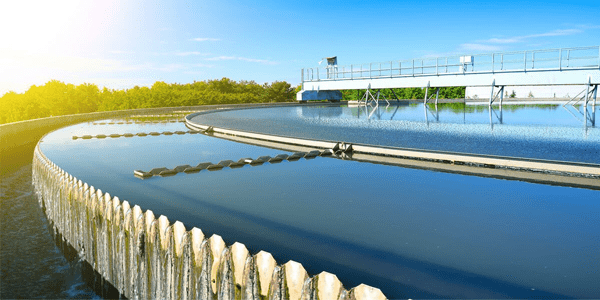
| Environmental monitoring (remote) | Optical | Long calibration stability (6-12 months), low power |
| Bioreactors / fermenters | Optical | Sterilizable, no oxygen consumption, fast response |
7. Maintenance Requirements
7.1 Electrochemical Sensor Maintenance
- Weekly: Calibrate in water-saturated air or zero solution
- Monthly: Replace membrane and electrolyte solution
- Quarterly: Clean and polish cathode/anode (polarographic)
- Annually: Replace anode (polarographic) or entire sensor (galvanic)
- As needed: Clean membrane of biological fouling
7.2 Optical Sensor Maintenance
- Monthly: Clean sensing surface with soft cloth
- Every 6-12 months: Calibration check (rarely needs adjustment)
- Annually: Replace sensor cap (luminescent layer and electronics)
- No electrolyte changes, no membrane replacements, no anode/cathode maintenance
Labor Savings: Optical sensors reduce DO sensor maintenance time by 80-90% compared to electrochemical sensors—a critical factor for facilities with limited technical staff.
8. Cost of Ownership Analysis
| Cost Component | Electrochemical | Optical |
|---|---|---|
| Initial purchase (sensor + meter) | $300-800 | $800-2,500 |
| Annual consumables | $50-150 | $150-300 |
| Annual labor (maintenance) | 10-20 hours ($500-1,000) | 2-4 hours ($100-200) |
| 5-year total cost | $1,500-3,500 | $2,000-4,500 |
| Cost per measurement (10,000/year) | $0.03-0.07 | $0.04-0.09 |
For high-frequency monitoring (>50,000 measurements/year), optical sensors often have lower total cost of ownership despite higher initial investment due to reduced labor and consumable costs.
9. Emerging Technologies and Trends
9.1 Optical Sensor Innovations
- Dual-wavelength sensing: Compensates for dye degradation and fouling
- Phase fluorometry: Lifetime-based measurement eliminates intensity drift
- Self-cleaning optics: Mechanical wipers or ultrasonic cleaning for long-term deployment
- Wireless optical sensors: IoT-enabled for remote monitoring
9.2 Electrochemical Improvements
- Microfabricated sensors: Smaller, lower power, disposable options
- Solid-state electrolytes: Eliminate liquid electrolyte maintenance
- Thin-film membranes: Faster response, longer life
9.3 Market Trends
- Optical sensors now represent >60% of new installations in wastewater and aquaculture
- Electrochemical sensors remain dominant in portable field meters ($200-500 price point)
- Hybrid sensors (optical + electrochemical) emerging for specific applications
10. Frequently Asked Questions
Q: Do optical DO sensors require calibration?
A: Yes, but much less frequently than electrochemical sensors—typically every 6-12 months. Most optical sensors hold calibration for a year or more.
Q: Can electrochemical sensors be used in static (no-flow) conditions?
A: No. Electrochemical sensors consume oxygen and require minimum flow (0.2-0.3 m/s) for accurate readings. Optical sensors work perfectly in static samples.
Q: Which technology is more accurate?
A: Modern optical sensors (typically ±0.05-0.1 mg/L) are slightly more accurate than electrochemical (±0.1-0.2 mg/L). Both are suitable for most applications.
Q: How often do optical sensor caps need replacement?
A: Annually, or every 12-18 months depending on manufacturer and usage. Caps cost $150-300.
Q: Can I use electrochemical sensors in saltwater?
A: Yes, with appropriate salinity compensation. However, saltwater accelerates corrosion and membrane degradation. Optical sensors are more durable in marine environments.
Q: What is the response time difference?
A: Optical: 10-30 seconds; Galvanic: 30-60 seconds; Polarographic: 60-120 seconds (plus 10-30 min warm-up). Optical is fastest.
11. Summary: Choosing the Right Technology
Choose Electrochemical (Galvanic/Polarographic) If:
- Budget is the primary constraint ($200-800 range)
- You have technical staff for regular maintenance
- Measurements are intermittent (field spot checks)
- Flow is adequate (≥0.2 m/s) or you have a stirrer
- You are in a laboratory setting with controlled conditions
Choose Optical (Luminescent) If:
- Low maintenance is critical (limited staff, remote locations)
- You need continuous, long-term monitoring (weeks/months)
- Flow is low or variable (rivers, groundwater, tanks)
- H₂S or fouling is present (wastewater, aquaculture)
- You want the highest accuracy and stability
- Budget allows $800-2,500 initial investment
Final Recommendation: For most new installations—particularly wastewater treatment, aquaculture, environmental monitoring, and industrial processes—optical sensors are the superior choice despite higher upfront cost. For portable field meters, educational labs, and budget-constrained applications, electrochemical sensors remain a viable, proven option.