








1. Understanding pH Electrode Components
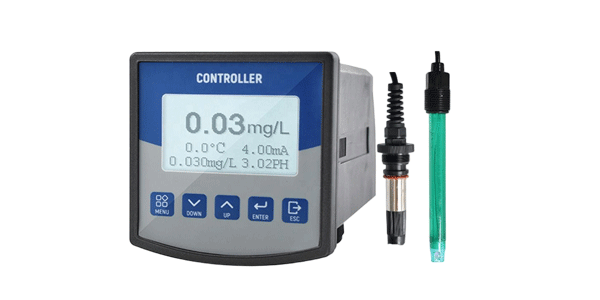
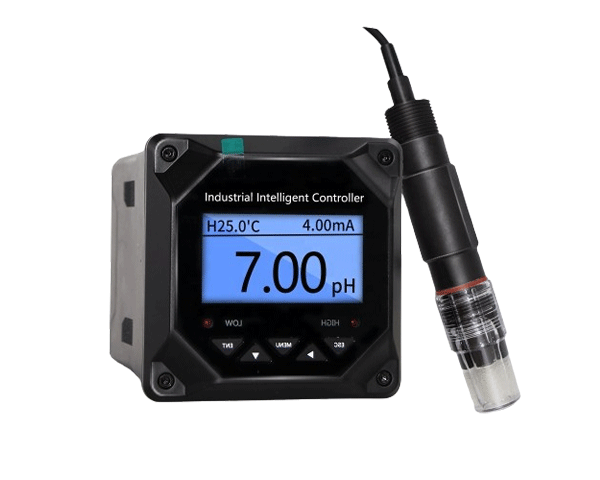
Before discussing storage and maintenance, it's essential to understand the vulnerable parts of a pH electrode that require proper care: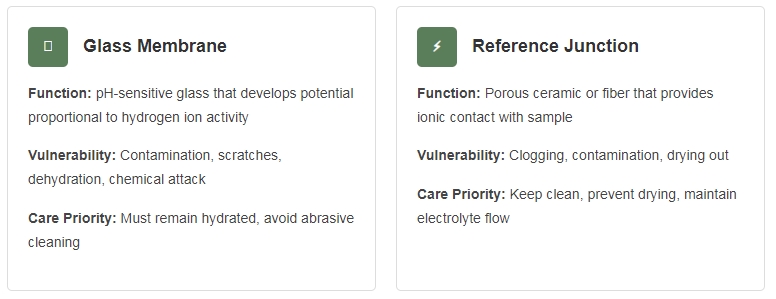
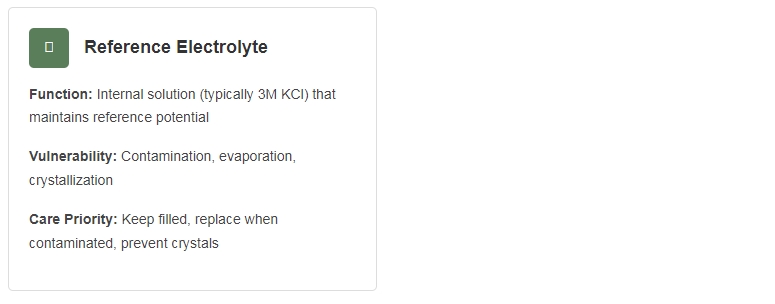
With proper care, a pH electrode can last 2-3 years. Improper storage can destroy an electrode in days. The glass membrane must remain hydrated—the hydration layer is essential for proper function.
2. Proper Electrode Storage Methods
Best Practice: Store in pH 4 or 7 buffer solution
Why: Maintains hydration layer, prevents reference junction from drying, keeps glass membrane active
Duration: Up to 1 week between uses
Best Practice: Store with protective cap containing storage solution or pH 4 buffer
Why: Prevents drying while protecting the glass bulb from damage
Note: Fill cap halfway with solution; ensure electrode tip is submerged
Distilled/Deionized Water: Leaches ions from glass membrane, destroys hydration layer
Dry Storage: Dehydrates membrane, causes permanent damage
Tap Water: Contains contaminants that can clog reference junction
2.1 Special Storage Considerations
- Refillable Electrodes: Always keep reference electrolyte level above the internal reference point. Add fresh 3M KCl solution as needed.
- Sealed/Gel-Filled Electrodes: Cannot be refilled. Ensure storage cap is always filled with storage solution.
- Double-Junction Electrodes: Same storage requirements—never allow reference junction to dry.
- ISFET Electrodes: Do not require hydration; store dry with protective cap.
Pro Tip: For electrodes that will not be used for extended periods, store in a refrigerator (but not frozen!) at 4-10°C. Allow to warm to room temperature before use.
3. Electrode Cleaning Procedures
Regular cleaning removes contaminants that cause slow response, drifting readings, and calibration failure. Use the appropriate cleaning method for the contaminant type:
| Contaminant Type | Cleaning Solution | Procedure | Rinse After |
|---|---|---|---|
| General deposits / Light dirt | Mild detergent solution | Soak 10-15 minutes, gently wipe with soft cloth | Distilled water |
| Protein deposits | Pepsin/HCl solution (enzyme cleaner) | Soak 15-30 minutes, do not exceed 1 hour | Distilled water, then storage solution |
| Oil / Grease / Organic films | Isopropyl alcohol or mild detergent | Wipe gently with alcohol-soaked tissue, or soak 5-10 minutes | Distilled water |
| Inorganic deposits (scale, precipitates) | 0.1 M HCl or 0.1 M HNO₃ | Soak 5-10 minutes, monitor carefully | Distilled water, then storage solution |
| Bacterial / Fungal growth | Dilute bleach solution (0.5% sodium hypochlorite) | Soak 10-15 minutes | Distilled water, then soak in storage solution 30 min |
| Sulfide / Silver sulfide deposits | Thiourea solution or specialized cleaning kit | Follow manufacturer's instructions | Distilled water |
3.1 Reference Junction Cleaning
Clogged reference junctions cause slow response, high impedance, and unstable readings. Cleaning methods include:
- Ceramic frit: Soak in warm 0.1 M HCl for 15-30 minutes
- PTFE sleeve: Flush with distilled water while rotating sleeve
- Open junction: Flush with cleaning solution using provided syringe
- General method: Soak electrode in cleaning solution overnight if deposits are stubborn
Important: Never scrub the glass membrane with abrasive materials. Never use paper towels or rough cloths—use only soft, lint-free tissues. Abrasion damages the hydrated layer and creates measurement errors.
3.2 After-Cleaning Procedure
- Rinse thoroughly with distilled water
- Soak in pH 4 buffer or storage solution for 30-60 minutes to rehydrate
- Recalibrate the electrode before use
- Check slope and offset—if still outside acceptable range, consider restoration
4. Electrode Restoration Methods
When an electrode shows signs of aging but is still physically intact, restoration procedures can often recover performance: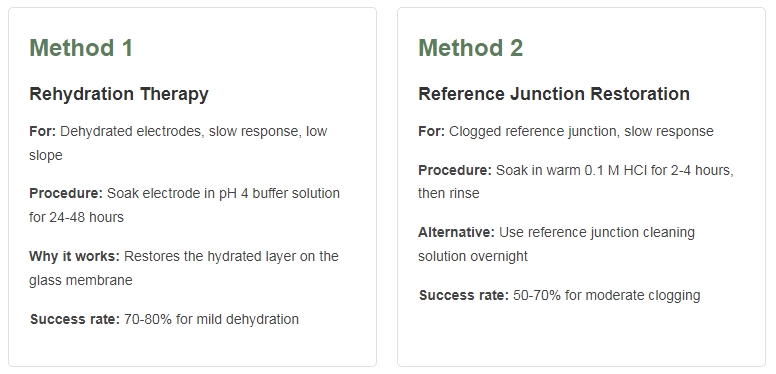
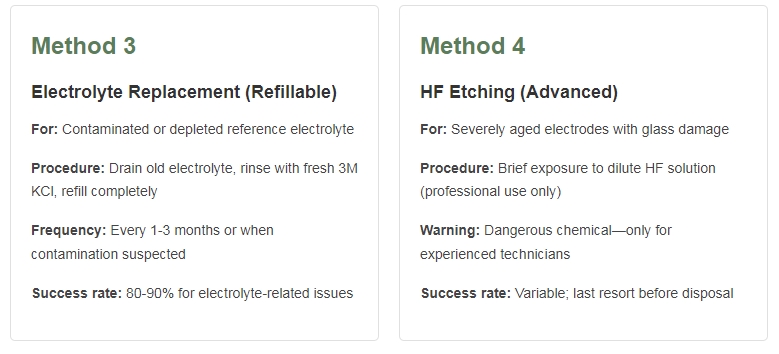
4.1 Step-by-Step Restoration Protocol
- Inspect: Check for physical damage (cracks, scratches, broken glass)
- Clean: Remove contaminants using appropriate cleaning solution
- Rehydrate: Soak in pH 4 buffer for 24-48 hours
- Rinse: Thoroughly with distilled water
- Refill: If refillable, replace reference electrolyte
- Soak: Overnight in storage solution
- Calibrate: Perform 2-point calibration, check slope and offset
- Verify: Test with fresh buffer; if slope >95% and offset within ±30 mV, electrode is restored
Restoration Success Indicators: Slope returns to >95%, offset returns to < ±20 mV, response time improves to <30 seconds, calibration is stable and repeatable.
5. Signs of Electrode Failure
| Symptom | Possible Cause | Action |
|---|---|---|
| Slope < 90% of theoretical | Severe aging, glass membrane damage | Clean and restore; if no improvement, replace |
| Offset > ±30 mV | Reference electrode degradation, contamination | Clean reference junction; replace if persists |
| Response time > 60 seconds | Contaminated membrane, clogged junction | Clean thoroughly; rehydrate overnight |
| Drifting readings | Reference junction contamination, electrolyte depletion | Clean junction; refill electrolyte if applicable |
| Cannot calibrate | Electrode failure, broken glass, cable damage | Replace electrode |
| Physical damage (cracks, scratches) | Mechanical damage | Replace immediately—cannot be repaired |
When to Replace: Electrodes should be replaced when cleaning and restoration no longer restore performance, slope consistently below 85%, offset exceeds ±50 mV, physical damage is present, or after 1-2 years of normal use.
6. Daily, Weekly, and Monthly Care Routines
6.1 Daily Routine
- Rinse electrode with distilled water before and after each use
- Gently blot dry (never wipe) with lint-free tissue
- Store in proper storage solution (not distilled water)
- For refillable electrodes, check electrolyte level
6.2 Weekly Routine
- Inspect electrode for visible contamination or deposits
- Clean gently with appropriate solution if needed
- Check calibration slope and offset
- For refillable electrodes, replace reference electrolyte
6.3 Monthly Routine
- Thorough cleaning with appropriate solutions
- Deep rehydration soak (24-48 hours in pH 4 buffer)
- Full 3-point calibration verification
- Inspect cable and connectors for damage
- Document performance metrics for trend analysis
Maintenance Checklist:
7. Special Electrode Types: Unique Care Requirements
7.1 ISFET (Ion-Sensitive Field Effect Transistor) Electrodes
- Storage: Store dry with protective cap—no hydration needed
- Cleaning: Use mild detergent; avoid strong acids/bases
- Advantage: No glass to break, no hydration layer to maintain
- Lifespan: Typically 3-5 years with proper care
7.2 High-Temperature Electrodes
- Storage: Same as standard electrodes but avoid thermal shock
- Cleaning: Use specialized cleaning solutions for high-temp applications
- Special Care: Allow electrode to cool before storage
7.3 Low-Ionic Strength Electrodes
- Storage: Store in pH 4 buffer with care—these are more sensitive
- Cleaning: Gentle cleaning only; avoid aggressive chemicals
- Special Care: Keep reference junction particularly clean and unobstructed
8. Troubleshooting Common Problems
| Problem | Most Likely Cause | Solution |
|---|---|---|
| Slow response | Dehydrated membrane or clogged junction | Rehydrate 24 hours in pH 4 buffer; clean junction |
| Drifting readings | Contaminated reference junction | Clean reference junction; replace electrolyte if refillable |
| Slope decreasing | Normal aging or contamination | Clean thoroughly; rehydrate; monitor trend; replace if <90% |
| Offset increasing | Reference electrode aging | Clean reference; if refillable, replace electrolyte; replace electrode if offset >±30 mV persists |
| White crystals on electrode | KCl crystallization from reference electrolyte | Rinse with distilled water; wipe gently; normal if refillable |
| Cannot calibrate in alkaline range | Sodium error or electrode aging | Use specialized alkaline buffer; consider replacement |
If an electrode has been stored dry for an extended period (weeks to months), it may be permanently damaged. Soak in pH 4 buffer for 48 hours and test—if slope is still below 90%, replacement is necessary.
9. Storage Solutions: What to Use and What to Avoid
9.1 Recommended Storage Solutions
- Commercial Electrode Storage Solution: Ideal—formulated specifically for pH electrode storage
- pH 4.00 Buffer: Excellent alternative, maintains hydration layer
- pH 7.00 Buffer: Acceptable, but pH 4 is preferred
- 3M KCl Solution: Good for reference junction, but less effective for glass membrane hydration
9.2 Solutions to AVOID
- Distilled/Deionized Water: Leaches ions from glass, destroys hydration layer
- Tap Water: Contains ions and contaminants that can clog reference junction
- Strong Acids/Bases: Damages glass membrane
- Organic Solvents: Can dissolve epoxy and damage electrode materials
- Dry Storage: Causes permanent dehydration
DIY Storage Solution: Mix 1 part pH 4 buffer with 1 part 3M KCl solution. This provides both glass membrane hydration and reference junction maintenance.
10. Frequently Asked Questions
Q: How often should I replace the reference electrolyte?
A: For refillable electrodes, replace every 1-3 months or whenever contamination is suspected. Always keep the level above the internal reference point.
Q: Can I restore an electrode that has been stored dry for months?
A: Possibly, but success is not guaranteed. Soak in pH 4 buffer for 48 hours, then calibrate. If slope is below 90% or offset exceeds ±30 mV, replacement is necessary.
Q: Why does my electrode have white crystals on it?
A: This is normal for refillable electrodes—KCl crystals from the reference electrolyte. Simply rinse with distilled water before use.
Q: Can I use tap water to rinse my electrode?
A: Not recommended. Tap water contains minerals and contaminants that can affect performance. Always use distilled or deionized water for rinsing.
Q: How do I know when it's time to replace my electrode?
A: Replace when: slope consistently below 85%, offset exceeds ±50 mV, response time > 60 seconds after cleaning, physical damage present, or after 1-2 years of normal use.
Q: Can I store my electrode in pH 7 buffer?
A: Yes, pH 7 is acceptable, but pH 4 is preferred. pH 4 buffer provides better hydration and prevents bacterial growth better than pH 7.
11. Summary: Best Practices for Maximum Electrode Life
DO:
DON'T:
Remember: A well-maintained pH electrode can last 2-3 years. Poor maintenance can destroy an electrode in weeks. The time invested in proper care pays dividends in measurement accuracy and cost savings.