



1. Why Calibration is Essential
pH meters do not provide absolute measurements—they generate a millivolt signal that must be converted to pH values through calibration. Without proper calibration, pH readings can be off by 0.5 pH units or more, which represents a threefold error in hydrogen ion concentration.
The Nernst equation shows that pH measurement depends on electrode slope (sensitivity) and offset (asymmetry potential), both of which change over time.
Electrodes age, become contaminated, and respond differently to temperature changes. Calibration establishes the current relationship between the electrode's millivolt output and actual pH, compensating for:
- Electrode aging and drift over time
- Changes in reference electrode potential
- Temperature variations affecting slope
- Contamination or coating on glass membrane
- Different buffer lots and compositions
Key Fact: A properly calibrated pH meter can achieve ±0.01 pH accuracy. A neglected, uncalibrated meter may be off by ±0.5 pH or more—a 50-fold error in hydrogen ion concentration at low pH values.
2. Understanding Buffer Solutions
pH buffer solutions are specially formulated to maintain a stable pH value. They are the reference standards against which pH meters are calibrated.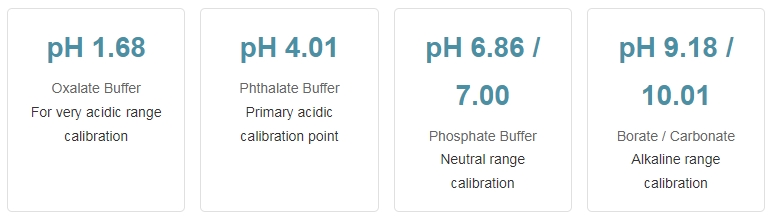
2.1 Buffer Temperature Dependence
| Temperature (°C) | pH 4.01 | pH 6.86 | pH 7.00 | pH 9.18 | pH 10.01 |
|---|---|---|---|---|---|
| 0 | 4.01 | 6.98 | 7.12 | 9.46 | 10.32 |
| 20 | 4.00 | 6.88 | 7.02 | 9.22 | 10.06 |
| 25 | 4.00 | 6.86 | 7.00 | 9.18 | 10.01 |
| 30 | 4.01 | 6.85 | 6.99 | 9.14 | 9.97 |
| 40 | 4.03 | 6.84 | 6.97 | 9.07 | 9.89 |
| 50 | 4.06 | 6.83 | 6.96 | 9.01 | 9.83 |
Buffer pH values change with temperature. Always check the temperature-dependent pH value on the buffer bottle label. Automatic Temperature Compensation (ATC) adjusts the calibration for these changes.
2.2 Buffer Storage and Handling
- Store at room temperature (15-30°C): Avoid extreme temperatures
- Never pour used buffer back into bottle: Contamination alters pH
- Use fresh buffer for each calibration: Discard after use
- Check expiration dates: Old buffers degrade and give inaccurate readings
- Keep bottles tightly capped: CO₂ absorption changes pH of alkaline buffers
3. Step-by-Step Calibration Procedures
Rinse the electrode with distilled water. Gently blot dry with lint-free tissue. Ensure the electrode is properly stored (never dry) and the reference junction is clean.
Enter calibration mode on your pH meter. Choose the number of calibration points (1, 2, or 3). Most meters display "CAL" or have a dedicated calibration button.
Immerse electrode in pH 7.00 buffer. Wait for reading to stabilize (usually 30-60 seconds). Confirm when stable. This sets the offset (asymmetry potential).
Rinse electrode, immerse in second buffer. Wait for stabilization. Confirm when ready. This sets the slope (sensitivity). Choose buffer based on your sample pH.
For highest accuracy or wide pH range samples, add a third calibration point. Use the opposite buffer (if you used pH 4.01, now use pH 10.01 or vice versa).
Measure a third buffer solution (one not used for calibration). Reading should be within ±0.05 pH of the buffer value. If not, recalibrate or check electrode condition.
3.1 1-Point Calibration
Use when: Only one pH range is being measured (e.g., consistently acidic samples) and accuracy requirements are moderate (±0.1 pH).
Procedure: Calibrate with pH 7.00 buffer first. The meter assumes the theoretical slope (59.16 mV/pH at 25°C). Use the buffer closest to your expected sample pH for best results.
3.2 2-Point Calibration
Use when: Standard laboratory measurements requiring good accuracy (±0.02-0.05 pH). This is the most common calibration method.
Procedure: Calibrate with pH 7.00 buffer (offset) and either pH 4.01 or 10.01 buffer (slope). The meter calculates actual slope and offset.
3.3 3-Point Calibration
Use when: High accuracy required (±0.01 pH), measuring across wide pH ranges, or for research and regulatory compliance applications.
Procedure: Calibrate with pH 7.00, pH 4.01, and pH 10.01 buffers. This accounts for any non-linearity in electrode response across the entire pH range.
Important: Always start calibration with pH 7.00 buffer. This establishes the zero point. Then proceed to acidic or alkaline buffers. Never reverse this order.
4. Understanding Calibration Parameters
4.1 Offset (Asymmetry Potential)
The offset is the millivolt reading when the electrode is in pH 7.00 buffer. The theoretical value is 0 mV. Acceptable range is typically ±30 mV. Values outside this range indicate electrode aging or contamination.
4.2 Slope (Sensitivity)
The slope is the change in millivolts per pH unit. Theoretical slope at 25°C is 59.16 mV/pH. Acceptable range is 95-105% of theoretical (56-62 mV/pH at 25°C).
| Slope Percentage | Condition | Action |
|---|---|---|
| > 105% | Unusually high sensitivity | Check electrode, recalibrate with fresh buffers |
| 95-105% | Good condition | Normal operation |
| 90-95% | Acceptable but aging | Monitor closely, consider replacement soon |
| 85-90% | Poor condition | Clean electrode, if no improvement, replace |
| < 85% | Failed electrode | Replace immediately |
4.3 Electrode Efficiency
A healthy pH electrode should maintain >95% slope for at least 6-12 months with proper care. Replace electrodes when slope drops below 90% or offset exceeds ±30 mV.
5. Temperature Compensation
The Nernst equation shows that pH measurement is temperature-dependent. A change of 1°C causes approximately 0.03 pH error if uncompensated.
5.1 Types of Temperature Compensation
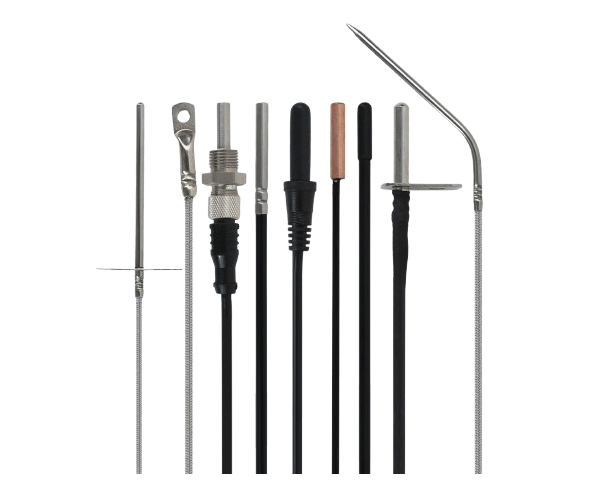
- Automatic Temperature Compensation (ATC): Uses a built-in or external temperature probe to automatically correct for temperature effects. Highly recommended.
- Manual Temperature Compensation: User enters sample temperature manually. Less accurate, suitable only when temperature is stable and known.
- No Compensation: Only acceptable if all measurements are at exactly the same temperature as calibration (rare).
5.2 Best Practices for Temperature Control
- Allow buffers and samples to reach the same temperature before measurement
- Calibrate at the same temperature as your samples
- Use ATC whenever possible—it's essential for accurate measurements
- For precise work, use a constant-temperature water bath
Temperature affects both the electrode slope AND the buffer pH. ATC compensates for both effects when used correctly. Always ensure the temperature probe is in the solution during calibration and measurement.
6. Calibration Frequency Guidelines
| Application | Recommended Frequency | Best Practice |
|---|---|---|
| High-precision research (±0.01 pH) | Before each use | Verify with third buffer after calibration |
| Laboratory QC (±0.02-0.05 pH) | Daily or before each batch | Check with pH 7.00 buffer between runs |
| Educational labs | Before each lab session | Students should calibrate their own meters |
| Industrial process monitoring | Weekly or as process requires | Consider online calibration verification |
| Field/Portable use | Before each sampling trip | Calibrate in the field with fresh buffers |
| Home/Aquarium use | Weekly or monthly | Check with pH 7.00 buffer before use |
| After electrode cleaning | Immediately after cleaning | Always recalibrate after cleaning |
| After long storage | Before first use | Rehydrate and calibrate after storage |
Quick Check: A simple way to verify calibration without full recalibration is to measure pH 7.00 buffer. If reading is within ±0.05 pH, the meter is likely still accurate. If outside this range, recalibrate immediately.
7. Troubleshooting Calibration Issues
| Problem | Possible Causes | Solutions |
|---|---|---|
| Drifting readings during calibration | Contaminated electrode, aged buffer, temperature fluctuations | Clean electrode thoroughly, use fresh buffers, allow temperature stabilization |
| Cannot calibrate (meter rejects buffer) | Expired buffers, contaminated buffers, electrode failure | Replace buffers, clean or replace electrode |
| Slope outside 95-105% range | Aging electrode, contaminated reference junction | Clean electrode, restore reference electrolyte, replace if needed |
| Offset > ±30 mV | Dirty glass membrane, aged reference electrode | Clean with appropriate solution, consider replacement |
| Slow response time | Contaminated glass membrane, aged electrode | Clean with pepsin/HCl solution, rehydrate overnight |
| Verification fails after calibration | Contaminated buffers, temperature differences, electrode issue | Use fresh verification buffer, ensure temperature equilibrium, clean electrode |
Common Mistake: Using the same buffer for calibration and verification. Always use a different buffer (e.g., calibrate with pH 4.01 and 7.00, verify with pH 10.01 or a second pH 7.00 bottle from a different lot).
8. Electrode Care for Reliable Calibration
8.1 Proper Storage
- Short-term (daily use): Store in pH 4 or 7 buffer solution
- Long-term (week+): Store with protective cap containing storage solution
- Never: Store dry or in distilled/deionized water (removes hydration layer)
8.2 Cleaning Procedures
| Contaminant | Cleaning Solution | Procedure |
|---|---|---|
| General dirt/oil | Mild detergent solution | Soak 10-15 minutes, rinse with distilled water |
| Protein deposits | Pepsin/HCl solution | Soak 15-30 minutes, rinse thoroughly |
| Inorganic deposits | 0.1 M HCl | Soak 5-10 minutes, rinse with distilled water |
| Bacteria/fungus | Dilute bleach solution | Soak 10-15 minutes, rinse thoroughly |
| Oil/grease | Isopropyl alcohol | Wipe with alcohol-soaked tissue, rinse with distilled water |
8.3 Electrode Rehydration
If an electrode has dried out, the hydration layer is lost. Soak in pH 4 buffer for 24-48 hours to restore function. Then recalibrate and check slope.
Maintenance Schedule: Clean electrodes weekly for heavy use, monthly for light use. Replace reference electrolyte for refillable electrodes every 1-3 months. Replace electrodes annually or when slope drops below 90%.
9. Common Calibration Mistakes to Avoid
10. Digital Calibration and Advanced Features
10.1 Automatic Buffer Recognition
Modern pH meters automatically recognize which buffer is being used (pH 4.01, 7.00, 10.01, etc.) and display the correct value. This eliminates manual buffer selection errors.
10.2 Calibration Logging and GLP Compliance
High-end meters store calibration data including:
- Date and time of calibration
- Slope and offset values
- Buffer temperatures
- Operator ID (user-defined)
- Calibration report generation for quality systems
10.3 Calibration Due Alerts
Many meters can be programmed to alert when calibration is due based on elapsed time, number of measurements, or drift detection.
For GLP (Good Laboratory Practice) and ISO 17025 accredited laboratories, calibration records must be maintained for audit trails. Digital meters with data logging simplify this compliance requirement.
11. Quick Reference: Calibration Checklist
Before Calibration:
During Calibration:
After Calibration:
12. Frequently Asked Questions
Q: How often should I replace my pH buffer solutions?
A: Replace buffers every 2-3 months if stored properly, or when opened. Discard immediately if cloudy, discolored, or contaminated. For critical applications, use fresh buffers daily.
Q: Can I use the same buffer for multiple calibrations?
A: No. Buffers can become contaminated after exposure to electrodes. Use fresh buffer for each calibration session. Never pour used buffer back into the stock bottle.
Q: What is the ideal calibration frequency?
A: For most applications, calibrate daily or before each use. For high-precision work, calibrate before each measurement. For stable systems with good electrode care, weekly calibration may suffice.
Q: My meter has an offset of 15 mV but slope is 98%. Is this okay?
A: Yes. Offset up to ±30 mV and slope between 95-105% are acceptable. Monitor trends—if offset increases over time or slope decreases, it indicates electrode aging.
Q: Do I need automatic temperature compensation (ATC)?
A: For accurate results, yes. Without ATC, a 10°C temperature difference causes approximately 0.3 pH error. ATC is essential for any application where temperature varies.