Water Quality Monitoring in the Food Industry: pH & Conductivity Control in Beverage & Dairy Production
DATE: 2026.07.24 AUTHOR: Food & Beverage Technology Team VIEWS: 3,400+ Food Industry Water Quality pH Monitoring Conductivity Beverage Production Dairy Processing
How pH and conductivity monitoring ensures product quality, process efficiency, and regulatory compliance in beverage, dairy, and food processing applications
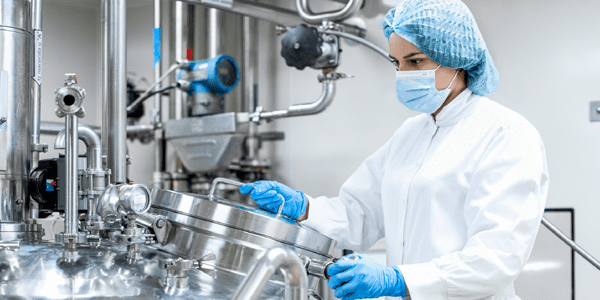
Water is the most widely used ingredient and utility in the food industry. It is used as an ingredient in beverages, for cleaning and sanitation (CIP), for heating and cooling, and as a component of many food products. The quality of water — particularly pH and conductivity — directly affects product taste, texture, safety, and shelf life. This article explores the critical role of pH and conductivity monitoring in beverage, dairy, and food processing applications.
1. Why Water Quality Matters in Food Production
Water quality impacts every aspect of food manufacturing:
-
Product Consistency: Variations in water pH or mineral content affect taste, color, texture, and stability
-
Food Safety: Water quality affects microbial growth and the effectiveness of cleaning/sanitizing processes
-
Process Efficiency: Scale formation, corrosion, and fouling increase maintenance and downtime
-
Regulatory Compliance: Food manufacturers must meet water quality standards and maintain records
-
Ingredient Interactions: pH affects the solubility and function of ingredients (sugar, salts, proteins, stabilizers)
Key Insight: Poor water quality is responsible for up to 30% of product quality issues in beverage and dairy manufacturing. Real-time pH and conductivity monitoring provides early warning to prevent costly batch failures.
2. Key Parameters: pH & Conductivity
2.1 pH in Food & Beverage Production
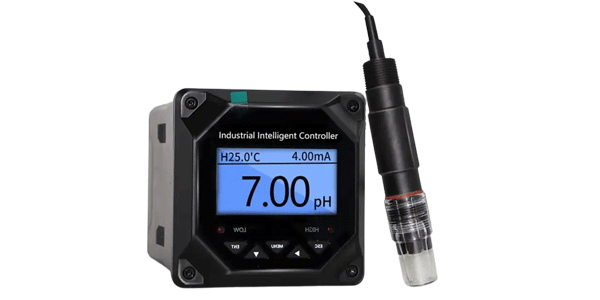
pH affects product taste, microbial stability, and ingredient functionality.
|
Application
|
Typical pH Range
|
Impact of Deviation
|
|
Carbonated Soft Drinks
|
2.5-3.5
|
Acid taste balance, carbonation stability
|
|
Juices & Nectars
|
3.0-4.5
|
Flavor profile, microbial stability, color stability
|
|
Milk & Dairy
|
6.5-6.8
|
Protein stability, acidification during fermentation
|
|
Fermented Dairy (Yogurt)
|
4.0-4.6
|
Fermentation endpoint, texture formation
|
|
Brewing & Beer
|
5.0-5.5 (mash)
|
Enzyme activity, yeast performance, flavor
|
|
Bottled Water
|
6.5-8.5
|
Mineral balance, taste, stability
|
2.2 Conductivity in Food & Beverage Production
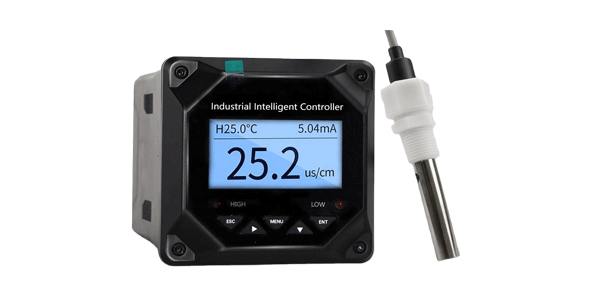
Conductivity indicates total dissolved solids (TDS) and mineral content.
|
Application
|
Typical Range (µS/cm)
|
Impact of Deviation
|
|
Process Water (for ingredient use)
|
< 50-200
|
Affects product consistency, ingredient solubility
|
|
Beverage Water
|
50-500
|
Mineral balance impacts taste and mouthfeel
|
|
Boiler Feed Water
|
< 10
|
Scale formation reduces efficiency, increases corrosion
|
|
Cooling Water
|
1,000-3,000
|
Scale and corrosion in cooling towers
|
|
CIP Rinse Water
|
< 50-100
|
Detergent and chemical residue verification
|
|
Wastewater (discharge)
|
500-5,000
|
Permit compliance, surcharge calculations
|
3. Applications in Beverage Production
Carbonated Beverages
Soft Drinks & Sparkling Water
-
pH monitoring: Ensures consistent acid balance, carbonation stability, and flavor profile
-
Conductivity monitoring: Verifies water quality used for syrup mixing
-
Critical control points: Water treatment, syrup batching, carbonation, final product
Juice & Nectars
Juice Processing
-
pH monitoring: Controls acid adjustment, color stability, and microbial safety
-
Conductivity monitoring: Verifies water purity for reconstitution
-
Critical control points: Water intake, blending, pasteurization, final product
Brewing
Beer & Malt Beverages
-
pH monitoring: Optimizes mash pH for enzyme activity (5.0-5.5)
-
Conductivity monitoring: Controls water mineral profile for flavor
-
Critical control points: Water treatment, mash, wort boiling, fermentation
Bottled Water
Natural & Purified Water
-
pH monitoring: Maintains taste balance and stability (6.5-8.5)
-
Conductivity monitoring: Controls mineral content, detects contamination
-
Critical control points: Source water, treatment (RO), final filling
4. Applications in Dairy & Food Processing
Dairy Processing
Milk, Yogurt & Cheese
-
pH monitoring: Controls fermentation, coagulation, and acidification
-
Conductivity monitoring: Verifies water quality for cleaning and product mixing
-
Critical control points: Raw milk intake, pasteurization, fermentation, CIP
Food Processing
Sauces, Soups & Ready Meals
-
pH monitoring: Controls acid balance for safety and flavor (e.g., canned foods)
-
Conductivity monitoring: Verifies water quality for ingredient mixing
-
Critical control points: Water treatment, ingredient batching, cooking, cooling
Sugar & Confectionery
Sugar Processing & Candy Making
-
pH monitoring: Controls inversion, color stability, and crystallization
-
Conductivity monitoring: Verifies water purity for dissolution
-
Critical control points: Water treatment, dissolution, cooking, cooling
CIP & Sanitation
Clean-in-Place (CIP) Systems
-
pH monitoring: Verifies acid/alkaline cleaner strength, confirms rinsing effectiveness
-
Conductivity monitoring: Detects detergent and chemical residue, water quality check
-
Critical control points: Pre-rinse, wash, rinse, final rinse
5. Sensor Technology Selection
|
Parameter
|
Sensor Type
|
Key Features
|
|
pH
|
Digital Glass Electrode
|
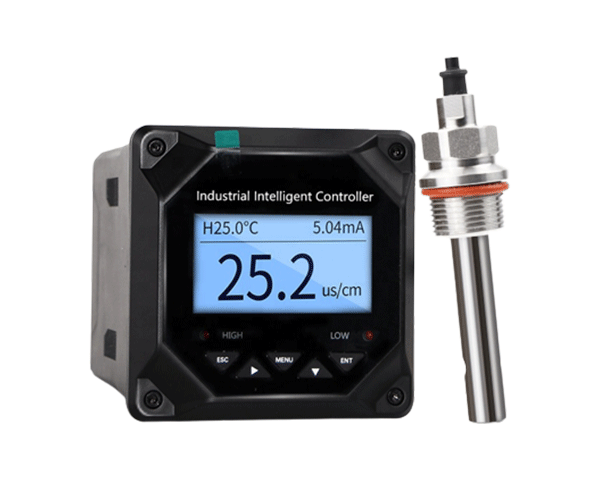
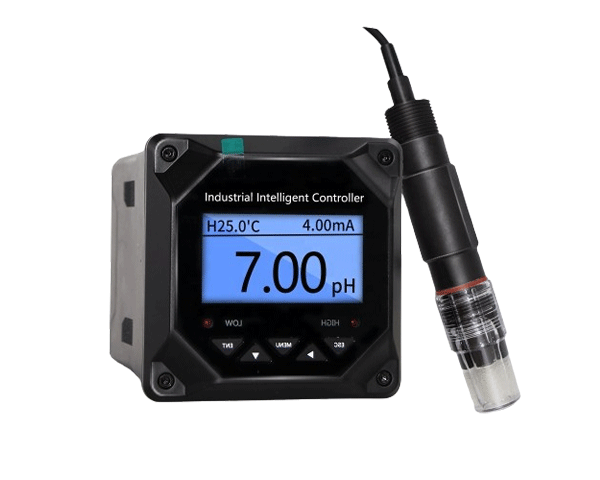
High accuracy, ISFET option (food-safe), PTFE junction for fouling resistance, CIP-compatible
|
|
pH
|
ISFET (Solid-State)
|
No glass, unbreakable, food-grade option
|
|
Conductivity
|
2-Electrode (pure water)
|
High accuracy for low TDS (e.g., RO water)
|
|
Conductivity
|
4-Electrode (industrial)
|
Anti-fouling, wide range, suitable for CIP, wastewater
|
|
Conductivity
|
Inductive (Toroidal)
|
Extreme fouling resistance, high TDS
|
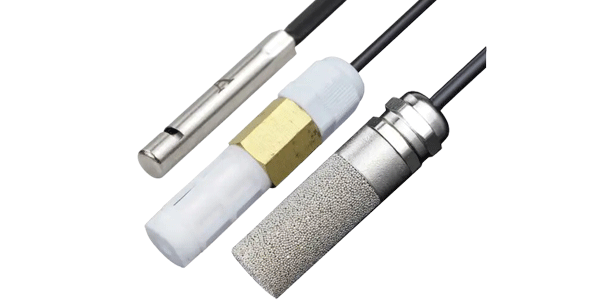
Food-Grade Considerations: pH and conductivity sensors used in food applications must be:
-
Food-safe materials (316L stainless steel, FDA-approved polymers)
-
Sanitary/aseptic design (no crevices, easy to clean)
-
CIP/SIP compatible (high temperature and chemical resistant)
-
Hygienic connections (tri-clamp, Varivent)
6. Data Monitoring & Integration
6.1 Integration with Control Systems
-
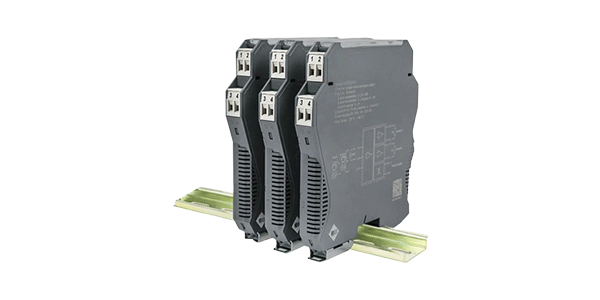
4-20mA analog output: Direct connection to PLC/DCS for control
-
Modbus RTU/TCP: Digital communication for data logging and integration
-
SCADA: Real-time dashboards and alarm management
-
MES (Manufacturing Execution System): Batch reporting, traceability, and quality management
6.2 Alarm & Alert Criteria
|
Application
|
pH Alert Criteria
|
Conductivity Alert Criteria
|
|
Beverage Water
|
< 6.5 or > 8.5
|
> 200 µS/cm (for purified water)
|
|
CIP Wash
|
pH < 1.5 (acid) or > 12.0 (caustic)
|
Conductivity drop indicating rinse completion
|
|
CIP Final Rinse
|
pH 6.0-8.0
|
< 50 µS/cm (return to feed water baseline)
|
|
Fermentation (Yogurt)
|
pH < 4.0 or > 4.8
|
N/A
|
7. Regulatory Compliance & Standards
-
FDA: Food Safety Modernization Act (FSMA) requires monitoring of water quality as a control point
-
Codex Alimentarius: International food standards for water quality in food processing
-
ISO 9001 / ISO 22000: Quality management and food safety management systems require documented water quality monitoring
-
EU Drinking Water Directive: Water used as an ingredient must comply with drinking water standards
-
HACCP: pH and water quality are often Critical Control Points (CCPs)
8. Case Studies
Case 1: Beverage Plant Water Quality Optimization
A large beverage plant producing carbonated soft drinks installed online pH and conductivity sensors in the water treatment plant and syrup batching area. Real-time monitoring identified that inconsistent RO water quality (conductivity variations) was causing flavor batch variations. The plant upgraded its monitoring system with automatic alerts. Results: 98% reduction in flavor batch rework, 15% reduction in water treatment chemical usage, and an annual savings of $250,000.
Case 2: Dairy Plant CIP Optimization
A dairy processor implemented pH and conductivity monitoring in its CIP system. Real-time conductivity measurements allowed the plant to optimize rinse cycles, reducing rinse water consumption by 25% and chemical costs by 15%. pH monitoring ensured adequate acid and caustic wash strengths. The system also provided documentation for regulatory audits.
Case 3: Fruit Juice Processing pH Control
A juice manufacturer installed pH sensors in the blending and pasteurization lines. Real-time pH monitoring ensured consistent acid balance across batches, improving product taste consistency. The system also helped detect a pH excursion during pasteurization, preventing a batch from being released and avoiding a potential food safety issue.
9. Implementation Best Practices
-
Identify critical control points: Map your process and identify where pH and conductivity monitoring is most needed
-
Select food-grade sensors: Ensure materials are FDA-compliant and meet sanitary design standards
-
Install at representative locations: Ensure sensors are placed where water is well-mixed and representative
-
Calibrate regularly: Set up a calibration schedule (e.g., weekly for pH, monthly for conductivity)
-
Integrate with your control system: Connect sensors to your PLC/SCADA/MES for automated data collection and alerts
-
Maintain records: Document calibration, measurements, and any corrective actions for audit trails
-
Provide operator training: Train staff on sensor operation, maintenance, and interpretation of data
10. Frequently Asked Questions
Q1: Why is pH important in food and beverage processing?
A: pH affects product taste, microbial stability, ingredient functionality, and safety. For example, pH below 4.6 prevents Clostridium botulinum growth in canned foods, while pH affects protein stability in dairy products.
Q2: How often should pH and conductivity sensors be calibrated in food processing?
A: pH sensors: weekly or daily depending on usage. Conductivity sensors: monthly. Calibrate more frequently in harsh environments (CIP, high temperature, fouling).
Q3: Can I use standard industrial sensors in food applications?
A: No. Food processing requires sensors with FDA-compliant materials, sanitary design, and CIP compatibility. Standard sensors may contaminate products or fail due to aggressive cleaning chemicals.
Q4: What is the typical lifespan of pH and conductivity sensors in food processing?
A: pH sensors: 12-18 months (shorter in CIP/aggressive environments). Conductivity sensors: 3-5 years. Regular maintenance extends lifespan.
Q5: How does conductivity relate to TDS in food processing water?
A: Conductivity is a direct measure of dissolved ions. A conversion factor (typically 0.5-0.7) relates conductivity (µS/cm) to TDS (mg/L). This is used to monitor water purity and mineral content.
11. Conclusion: Ensuring Quality Through Water Monitoring
Key Takeaways:
-
pH and conductivity monitoring is essential for consistent product quality in food and beverage manufacturing
-
Real-time data supports process optimization, regulatory compliance, and food safety
-
Food-grade sensors with sanitary design are required for food contact applications
-
Integration with control systems enables automated alerts and batch traceability
-
Investment in water quality monitoring typically pays back through reduced rework, chemical savings, and improved efficiency
Water quality monitoring is not just a regulatory requirement — it is a strategic tool for quality assurance and process optimization in the food industry. By implementing robust pH and conductivity monitoring systems, food manufacturers can ensure product consistency, enhance food safety, reduce costs, and build consumer trust.