




1. The Closed-Loop Imperative
Closed-loop water systems recirculate the same water repeatedly, dramatically reducing water consumption compared to once-through systems. Applications include recirculating aquaculture systems (RAS), cooling towers, hydroponics, industrial process water, and swimming pools. However, closed-loop systems concentrate contaminants, making continuous, multi-parameter water quality monitoring essential for system health and efficiency.
The global closed-loop water treatment market is projected to reach $35 billion by 2028, driven by water scarcity, stricter environmental regulations, and the need for operational efficiency. Multi-parameter instruments are at the heart of this transformation, providing the data needed for automated control and decision-making.
Unlike open systems where fresh water continuously dilutes contaminants, closed-loop systems require active management of all water quality parameters. A failure in monitoring can lead to rapid system collapse within hours.
2. Key Parameters for Closed-Loop Systems
| Parameter | Critical Range | Why It Matters | Failure Consequence |
|---|---|---|---|
| pH |
6.5-8.5 (general) 7.0-7.5 (optimal) |
Affects biological activity, corrosion, chemical treatment efficacy | Corrosion, biological death, treatment failure |
| Conductivity/TDS | Varies by application (500-5000 µS/cm) | Indicates dissolved solids accumulation, scaling potential | Scale formation, reduced heat transfer, equipment damage |
| Dissolved Oxygen |
>5 mg/L (aquatic life) >2 mg/L (treatment) |
Essential for aerobic biological processes | Fish kills, anaerobic conditions, odors |
| Temperature | 20-30°C (varies) | Affects reaction rates, gas solubility, biological activity | Stress, reduced efficiency, system failure |
| Turbidity | <5 NTU (most systems) | Indicates suspended solids, filtration effectiveness | Clogged equipment, reduced disinfection, biofilm growth |
| ORP/Chlorine | 650-750 mV (disinfection) | Disinfection efficacy indicator | Pathogen growth, biofouling |
Key Insight: Multi-parameter instruments provide interdependent parameter analysis—e.g., rising conductivity with stable pH suggests different treatment needs than rising conductivity with falling pH. Single-parameter monitoring misses these critical relationships.
3. Core Applications
Key Parameters: DO, pH, ammonia, nitrite, temperature, conductivity
Monitoring Points: Tank outlets, biofilter influent/effluent, oxygen injection, disinfection
Critical Alerts: DO below 5 mg/L, pH below 6.5, ammonia above 0.5 mg/L
Key Parameters: Conductivity, pH, ORP, temperature, corrosion rate
Monitoring Points: Recirculating loop, makeup water, bleed line
Critical Alerts: Conductivity exceeding cycles of concentration, pH out of 6.5-8.5 range
Key Parameters: EC, pH, DO, temperature, nutrient levels
Monitoring Points: Nutrient tank, distribution lines, return lines
Critical Alerts: EC drift, pH out of 5.5-6.5 range, low DO
Key Parameters: Conductivity, pH, turbidity, temperature, corrosion inhibitors
Monitoring Points: Supply, return, heat exchangers, treatment equipment
Critical Alerts: Conductivity spikes, pH excursions, turbidity increase
Tank/Process
Real-time measurement
Data analysis
Chemical dosing / Flow adjustment
Effectiveness check
4. Recirculating Aquaculture Systems (RAS) Deep Dive
RAS represents one of the most demanding closed-loop applications, where water quality directly determines fish survival and growth. A single monitoring failure can cause 100% mortality within hours.
4.1 Critical Parameters in RAS
- Dissolved Oxygen (DO): Minimum 5 mg/L, target 6-8 mg/L. Low DO causes stress, reduced feed intake, and death.
- pH: Maintain 7.0-7.5 (freshwater), 7.5-8.0 (marine). pH affects ammonia toxicity—lower pH reduces toxicity but inhibits nitrification.
- Ammonia (NH₃) & Nitrite (NO₂⁻): Toxic byproducts of fish waste. Un-ionized ammonia should be <0.02-0.05 mg/L.
- Conductivity/Salinity: Stable in freshwater RAS; marine RAS requires strict salinity control.
- Temperature: Species-dependent; stability is as critical as absolute value.
Case Study: Large-Scale RAS Salmon Farm — A 5,000-ton Atlantic salmon RAS facility installed multi-parameter sensors at 24 locations (tanks, biofilters, degassers, oxygen cones). Within 6 months, the system detected three impending DO crashes before fish loss occurred, prevented a pH-driven ammonia toxicity event, and reduced manual sampling labor by 85%. ROI achieved in 11 months.
4.2 Sensor Placement in RAS
- Fish tanks: DO, pH, temperature, ammonia (critical real-time)
- Biofilter influent/effluent: pH, ammonia, nitrite, alkalinity (nitrification efficiency)
- Oxygen injection points: DO (control point)
- CO₂ degassing towers: pH (CO₂ removal effectiveness)
- UV/Ozone disinfection: ORP, flow rate
- Makeup water intake: All parameters (source water quality)
Advanced RAS operations now use model predictive control based on multi-parameter data to optimize feeding, oxygen injection, and water exchange, reducing operating costs by 15-25%.
5. Cooling Tower Water Management
Cooling towers concentrate dissolved solids through evaporation, leading to scale, corrosion, and biological growth. Multi-parameter instruments enable cycle of concentration optimization.
5.1 Key Parameters for Cooling Towers
- Conductivity: Primary control parameter for bleed/bleed-off cycles. Target varies (2,000-5,000 µS/cm).
- pH: 6.5-8.5 range; affects scaling and corrosion inhibitor efficacy.
- ORP/Free Chlorine: Disinfection effectiveness; target 650-750 mV or 0.5-1.0 ppm free chlorine.
- Temperature: Inlet/outlet differential indicates heat transfer efficiency.
- Corrosion rate (optional): Direct measurement using corrosion coupons or probes.
5.2 Automated Control Strategy
- Multi-parameter sensor continuously measures conductivity, pH, ORP, temperature
- Controller compares to setpoints
- When conductivity exceeds setpoint, bleed valve opens until conductivity returns to range
- pH below 6.5 triggers caustic feed; above 8.5 triggers acid feed
- ORP below 650 mV triggers oxidant feed (chlorine/bromine)
- All actions logged for compliance and optimization
Case Study: Hospital Cooling Tower Optimization — A large medical center replaced weekly grab sampling with online multi-parameter monitoring. Results: Water consumption reduced by 30% ($45,000/year), chemical usage reduced by 25% ($12,000/year), and Legionella risk minimized through continuous ORP control. Payback period: 8 months.
6. Hydroponics & Controlled Environment Agriculture
Hydroponic systems rely entirely on nutrient solution quality. EC (electrical conductivity) and pH are the primary control parameters, but DO and temperature are equally critical.
6.1 Optimal Ranges for Hydroponics
| Crop | pH Range | EC Range (mS/cm) | DO (mg/L) |
|---|---|---|---|
| Lettuce | 5.5-6.5 | 1.2-1.8 | >5 |
| Tomatoes | 6.0-6.5 | 2.0-3.5 | >4 |
| Basil | 5.5-6.5 | 1.0-1.6 | >5 |
| Strawberries | 5.5-6.2 | 1.2-1.8 | >5 |
| Cucumbers | 5.5-6.0 | 1.7-2.5 | >4 |
6.2 Automated Nutrient Dosing
- Multi-parameter sensor measures EC and pH in real-time
- EC below setpoint triggers concentrated nutrient injection
- pH drift triggers acid or base injection
- DO monitoring triggers aeration or oxygen injection
- Temperature sensors adjust heating/cooling systems
Innovation Spotlight: AI-Powered Nutrient Optimization — Advanced systems use machine learning to correlate EC/pH trends with plant growth rates, automatically adjusting nutrient formulations for optimal yield. Commercial vertical farms report 15-20% yield increases using predictive nutrient management.
7. Technology Selection for Multi-Parameter Instruments
7.1 Sensor Technology Comparison
| Parameter | Sensor Type | Advantages | Limitations |
|---|---|---|---|
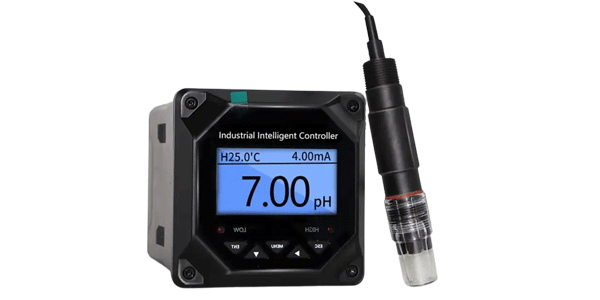
| pH | Glass electrode | High accuracy, wide range | Fragile, requires cleaning |
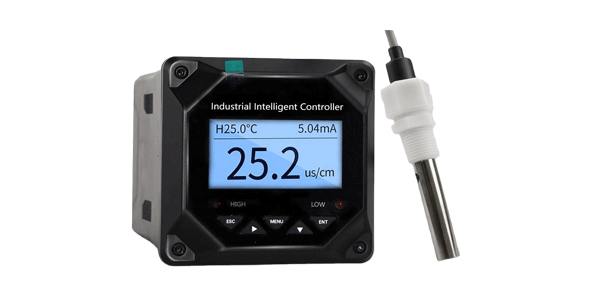
| Conductivity | 4-electrode | Resists fouling, wide range | Higher cost |
| DO | Optical (luminescent) | Low maintenance, no flow requirement | Higher initial cost |
| Turbidity | 90° scattering | ISO 7027 compliant | Requires periodic cleaning |
| ORP | Platinum electrode | Simple, proven | Dirty electrodes drift |
7.2 Integration Considerations
- Centralized vs. Distributed: Single multi-parameter probe or multiple single-parameter sensors?
- Communication Protocol: 4-20mA, Modbus RTU/TCP, Profibus, or wireless (LoRaWAN, NB-IoT)
- Data Management: Onboard logging, cloud platform, or SCADA integration
- Power: Line power, battery, or solar (remote applications)
- Cleaning: Manual, automatic wiper, or ultrasonic self-cleaning
For closed-loop systems with 24/7 operation, redundant sensors at critical control points (e.g., DO in RAS) are recommended. Automatic sensor verification and switchover prevent unplanned downtime.
8. Economic Impact & ROI
| Benefit Area | Typical Improvement | Annual Savings (Mid-Size Facility) |
|---|---|---|
| Water consumption | 20-40% reduction | $20,000 - $100,000 |
| Chemical usage | 15-30% reduction | $10,000 - $50,000 |
| Energy (pumps, aeration) | 10-25% reduction | $15,000 - $75,000 |
| Labor (manual sampling) | 70-90% reduction | $30,000 - $150,000 |
| Downtime/equipment damage | 50-80% reduction | $10,000 - $100,000 |
ROI Example: A mid-sized RAS facility ($500,000 annual operating budget) invested $45,000 in a multi-parameter monitoring and control system. Annual savings: water ($25,000), chemicals ($12,000), energy ($18,000), labor ($35,000) = $90,000. Payback period: 6 months. 3-year ROI: 500%.
9. Emerging Trends in Closed-Loop Monitoring
9.1 Digital Twins
Virtual replicas of closed-loop systems incorporate real-time multi-parameter data for predictive modeling. Operators can simulate "what-if" scenarios (e.g., "What if DO drops to 3 mg/L for 30 minutes?") without risk to live systems.
9.2 AI-Driven Predictive Control
Machine learning models trained on historical multi-parameter data predict future water quality states and recommend preemptive actions. Early adopters report 15-30% reduction in chemical usage and 20-40% reduction in energy consumption.
9.3 Wireless Sensor Networks
Low-cost, battery-powered multi-parameter sensors with LoRaWAN or NB-IoT connectivity enable monitoring at points previously considered too remote or expensive, creating comprehensive system visibility.
The Future: By 2030, closed-loop water systems will be fully autonomous, with multi-parameter sensors providing the data for AI-driven optimization—adjusting chemical feeds, flow rates, and treatment processes without human intervention.
10. Frequently Asked Questions
Q: How many monitoring points does a closed-loop system need?
A: Minimum: influent (or tank), process, and effluent (or return). Optimal: 5-20 points depending on system complexity, including critical equipment (biofilters, heat exchangers, disinfection).
Q: How often should multi-parameter sensors be calibrated?
A: pH/ORP: weekly to monthly; conductivity: monthly to quarterly; optical DO: every 6-12 months; turbidity: quarterly. High-reliability applications may require more frequent verification.
Q: Can one multi-parameter probe replace multiple single-parameter sensors?
A: Often yes, but consider redundancy—a single probe failure takes out all parameters. Many systems use a hybrid approach: multi-parameter probes for general monitoring plus dedicated sensors for critical parameters.
Q: What is the typical lifespan of multi-parameter sensors?
A: pH/ORP: 1-2 years; conductivity: 3-5 years; optical DO: 3-5 years (cap replaced annually); turbidity: 2-3 years.
Q: Do closed-loop systems need automatic cleaning for sensors?
A: Highly recommended. Biofouling, scaling, and particle deposition degrade sensor performance. Self-cleaning (mechanical wipers, ultrasonic, or air blast) reduces maintenance frequency by 70-90%.
11. Summary: The Core Role of Multi-Parameter Monitoring
Key Takeaways:
- Closed-loop systems concentrate contaminants, making continuous monitoring essential
- Multi-parameter instruments provide the complete water quality picture needed for automated control
- Applications include RAS, cooling towers, hydroponics, and industrial process water
- ROI is typically achieved in 6-12 months through water, chemical, energy, and labor savings
- Emerging technologies (digital twins, AI, wireless sensors) will further enhance system optimization
Multi-parameter water quality instruments are not merely measurement devices—they are the central nervous system of closed-loop water management. By providing real-time, comprehensive data, they enable the automation, optimization, and protection that make closed-loop systems viable and sustainable.
Final Recommendation: For any closed-loop water system with annual operating costs exceeding $100,000, the investment in a multi-parameter monitoring and control system typically pays for itself within 12 months. The question is no longer "if" but "how quickly" to implement.