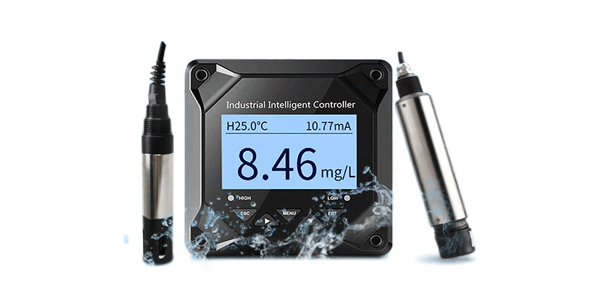
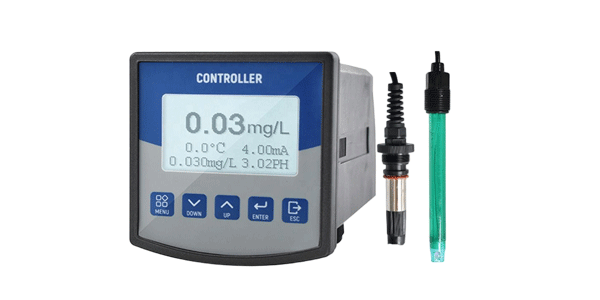
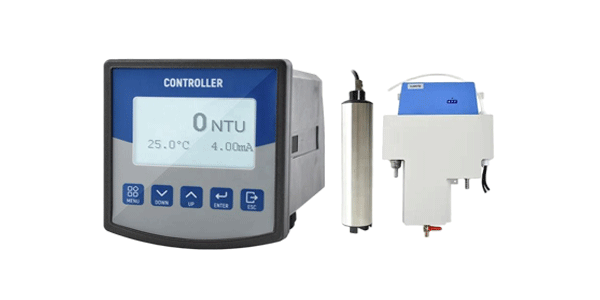
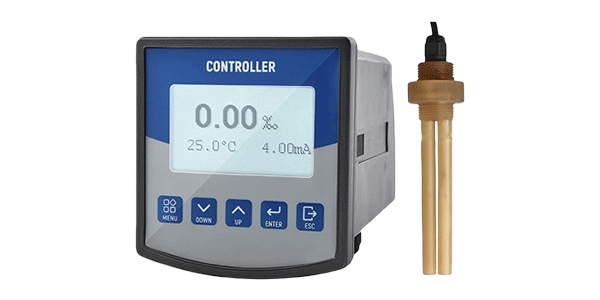
pH, DO, Turbidity Selection Guide
DATE: 2026.06.17 AUTHOR: Technical Team VIEWS: 3,200+ Sensor Selection Application Matching Total Cost of Ownership
Digital Sensor Selection Guide for Multi-Parameter Water Quality Analyzers: pH, Dissolved Oxygen, Turbidity & More
Choosing the right digital sensors for your multi-parameter water quality analyzer is critical for accurate measurements, long-term reliability, and cost-effective operation. This guide covers selection criteria for pH, ORP, dissolved oxygen (optical vs. polarographic), conductivity (2-electrode vs. 4-electrode vs. inductive), turbidity, and ion-selective electrodes (ISE) — with application-specific recommendations.
1. Why Choose Digital Sensors for Multi-Parameter Systems?
Digital sensors with built-in signal processing offer significant advantages over traditional analog sensors:
|
Feature
|
Analog Sensors
|
Digital Sensors
|
|
Signal Transmission
|
4-20mA (susceptible to interference)
|
RS485/Modbus (digital, noise-immune)
|
|
Calibration Data
|
Stored in controller
|
Stored in sensor (plug-and-play)
|
|
Diagnostics
|
Limited
|
Full self-diagnostics (glass impedance, reference impedance)
|
|
Sensor Swapping
|
Requires recalibration
|
Pre-calibrated sensors can be swapped instantly
|
|
Cable Length
|
Limited (<20m typical)
|
Up to 100m+
|
|
Interoperability
|
Manufacturer-dependent
|
Standard protocols, interchangeable
|
✅ Key Advantage: Digital sensors store calibration history and serial numbers, eliminating recalibration when replacing sensors — significantly reducing downtime.
2. pH Sensor Selection Guide
2.1 Main Types Comparison
|
Type
|
Applications
|
Advantages
|
Limitations
|
|
General Glass Electrode
|
Drinking water, surface water, general monitoring
|
Low cost, fast response, high accuracy
|
Not HF-resistant, not for high temperature
|
|
HF-Resistant Electrode
|
HF-containing wastewater, industrial cleaning
|
Special glass resists corrosion
|
Higher cost, slightly slower response
|
|
High-Temperature Electrode
|
Sterilization processes, boiler water
|
Withstands up to 130°C
|
High cost, requires special maintenance
|
|
Low-Ionic-Strength Electrode
|
Pure water, deionized water, rainwater
|
Special reference design
|
Slow response, shorter lifespan
|
|
ISFET (Solid-State)
|
Food, pharmaceutical, high-fouling environments
|
No glass bulb, unbreakable
|
High cost, requires dedicated meter
|
2.2 Key Selection Parameters
-
Measurement Range: 0-14 pH (general), or specific narrow range (e.g., 2-12 pH)
-
Accuracy Requirement: Laboratory grade (±0.01) vs. Industrial grade (±0.05-0.1)
-
Temperature Range: 0-60°C (standard), 60-100°C (high-temp), 100-130°C (ultra-high-temp)
-
Pressure Rating: Atmospheric, ≤6 bar, ≤10 bar
-
Reference System: Double junction (poison-resistant) vs. Single junction
-
Junction Material: Ceramic (general), PTFE (fouling-resistant), Open (low-ionic-strength)
2.3 Application Quick Reference
|
Application
|
Recommended Type
|
Reason
|
|
Water Treatment Plant
|
General glass + double junction
|
Cost-effective, stable and reliable
|
|
Wastewater (influent)
|
PTFE junction (fouling-resistant)
|
Resists suspended solids clogging
|
|
Industrial wastewater (with HF)
|
HF-resistant electrode
|
Special glass resists corrosion
|
|
Pharmaceutical purified water
|
ISFET or low-ionic-strength
|
No glass contamination risk
|
|
Fermentation vessels
|
High-temperature sterilization electrode
|
Withstands 130°C sterilization cycles
|
3. Dissolved Oxygen (DO) Sensor Selection Guide
3.1 Optical vs. Polarographic: Core Comparison
|
Feature
|
Optical (Fluorescence)
|
Polarographic (Electrochemical)
|
|
Measurement Principle
|
Fluorescence quenching
|
Electrochemical reduction
|
|
Stirring Required
|
❌ No
|
✅ Yes (minimum flow 0.2 m/s)
|
|
Warm-up Time
|
None
|
10-30 minutes
|
|
Response Time (T90)
|
10-30 seconds
|
60-120 seconds
|
|
Calibration Frequency
|
6-12 months
|
Weekly
|
|
Maintenance
|
Cap replacement yearly
|
Membrane + electrolyte replacement monthly
|
|
Affected by H₂S
|
No
|
Yes (anode poisoning)
|
|
Initial Cost
|
Higher ($800-2,500)
|
Lower ($300-800)
|
|
Annual Maintenance Cost
|
$150-300 (cap)
|
$50-150 (membrane + electrolyte)
|
|
Sensor Lifespan
|
5+ years (cap 2-4 years)
|
1-2 years
|
3.2 Selection Decision Tree
Need to measure DO?
-
Yes → Is there flow/stirring in the measurement environment?
-
Yes → Is budget sufficient?
-
Yes → Choose Optical DO (low maintenance, high stability)
-
No → Choose Polarographic DO (lower cost, regular maintenance)
-
No → Must choose Optical DO (no oxygen consumption, no stirring required)
-
No → Skip
3.3 Application Recommendations
|
Application
|
Recommended Type
|
Key Reason
|
|
Wastewater Treatment (aeration)
|
Optical
|
No stirring requirement, fouling-resistant, low maintenance
|
|
Aquaculture
|
Optical
|
High accuracy at low DO, no oxygen consumption, fish-safe
|
|
Drinking Water Treatment
|
Optical
|
Long-term stability, long calibration intervals
|
|
Laboratory BOD Testing
|
Polarographic or Optical
|
Polarographic: traditional; Optical: gaining acceptance
|
|
Field Surface Water Monitoring
|
Optical
|
No stirring needed, fast response, low-flow capable
|
|
Fermentation/Bioreactors
|
Optical
|
Sterilizable, no oxygen consumption, fast response
|
4. Conductivity Sensor Selection Guide
4.1 Three Technology Paths Comparison
|
Type
|
Measurement Principle
|
Range
|
Advantages
|
Applications
|
|
2-Electrode
|
Resistance between two electrodes
|
0-2000 µS/cm
|
Low cost, high accuracy
|
Pure water, drinking water, low-ionic-strength
|
|
4-Electrode
|
Voltage-current method with 4 electrodes
|
0-2000 mS/cm
|
Anti-polarization, fouling-resistant
|
Wastewater, industrial effluent, high TDS
|
|
Inductive (Toroidal)
|
Electromagnetic induction
|
0-2000 mS/cm
|
No electrode contact, extreme corrosion resistance
|
Strong acids/bases, highly corrosive media
|
4.2 Selection Key Points
-
Measurement Range: Pure water (<10 µS/cm) → 2-electrode; Wastewater (>1000 µS/cm) → 4-electrode or inductive
-
Fouling Level: High suspended solids/oil → 4-electrode or inductive (fouling-resistant)
-
Corrosiveness: Strong acids/bases → Inductive (no metallic electrode contact)
-
Accuracy Requirement: High accuracy → 2-electrode or 4-electrode; General control → Inductive
-
Temperature Compensation: All types require built-in temperature sensor for automatic compensation
4.3 Application Recommendations
|
Application
|
Recommended Type
|
Reason
|
|
Pure/Ultrapure Water
|
2-electrode (K=0.01 or 0.1)
|
Ultra-low range, high accuracy
|
|
Drinking Water/Surface Water
|
2-electrode (K=1.0)
|
Low cost, sufficient accuracy
|
|
Municipal Wastewater
|
4-electrode
|
Fouling-resistant, wide range
|
|
Industrial Wastewater (high TDS)
|
4-electrode or Inductive
|
Anti-polarization, long life
|
|
Chemical (strong acid/base)
|
Inductive
|
No electrode corrosion
|
5. Turbidity Sensor Selection Guide
5.1 Technology Principle Comparison
|
Type
|
Measurement Principle
|
Standard
|
Applications
|
|
90° Scattered Light
|
Detects scattered light at 90°
|
ISO 7027
|
Drinking water, surface water (low turbidity)
|
|
Transmitted Light
|
Detects light attenuation
|
Traditional method
|
High turbidity (>1000 NTU)
|
|
Multi-Angle Scattering
|
Ratio from multiple angles
|
Advanced technology
|
Ultra-low turbidity (<0.1 NTU)
|
|
Surface Scattering
|
Scattering from sample surface
|
Online-specific
|
Wastewater, high-fouling environments
|
5.2 Key Selection Parameters
-
Measurement Range: 0-10 NTU (ultra-low), 0-100 NTU (drinking water), 0-1000 NTU (general), 0-4000 NTU (high turbidity)
-
Accuracy: ±0.1 NTU (laboratory grade), ±1-2% FS (industrial grade)
-
Self-Cleaning: Ultrasonic vs. Mechanical wiper vs. None
-
Bubble Compensation: Bubble rejection capability
-
Calibration Method: Formazin standard vs. StablCal standard
5.3 Application Recommendations
|
Application
|
Recommended Type
|
Key Reason
|
|
Drinking Water Plant (low turbidity)
|
90° Scattered Light (ISO 7027)
|
High accuracy, regulatory compliance
|
|
Wastewater Treatment (high turbidity)
|
Transmitted Light or Surface Scattering
|
Wide range, fouling-resistant
|
|
Surface Water/River Monitoring
|
90° Scattered Light
|
Low-medium range, reliable
|
|
Aquaculture
|
90° Scattered Light
|
Low turbidity monitoring, fish health
|
|
Industrial Process (high TSS)
|
Surface Scattering with self-cleaning
|
Extreme environment, low maintenance
|
6. Other Sensor Selection References
6.1 ORP (Oxidation-Reduction Potential) Sensors
-
Electrode Material: Platinum (general), Gold (cyanide-containing), Graphite (high-fouling)
-
Selection Points: Same type as pH sensor (double junction, PTFE junction)
-
Typical Lifespan: 12-24 months
-
Replacement Indicators: Slow response, low slope
6.2 Ion-Selective Electrodes (ISE)
|
Ion Type
|
Main Applications
|
Selection Points
|
|
Ammonium (NH₄⁺)
|
Wastewater treatment, aquaculture
|
Requires potassium ion compensation
|
|
Fluoride (F⁻)
|
Drinking water, industrial wastewater
|
Requires TISAB buffer
|
|
Nitrate (NO₃⁻)
|
Agricultural runoff, surface water
|
Requires chloride compensation
|
|
Chloride (Cl⁻)
|
Industrial processes, seawater
|
Direct measurement, no reagents
|
7. Comprehensive Selection Decision Table
|
Application
|
pH
|
DO
|
Conductivity
|
Turbidity
|
ORP
|
Ammonia
|
|
Drinking Water Plant
|
General Glass
|
Optical
|
2-Electrode
|
90° Scattering
|
Platinum
|
Optional
|
|
Municipal Wastewater
|
PTFE Junction
|
Optical
|
4-Electrode
|
Surface Scattering
|
Platinum
|
ISE
|
|
Industrial Wastewater
|
Site-Dependent
|
Optical
|
4-Electrode/Inductive
|
Surface Scattering
|
Pt/Au
|
ISE
|
|
Surface Water Monitoring
|
General Glass
|
Optical
|
2-Electrode
|
90° Scattering
|
Platinum
|
ISE
|
|
Aquaculture
|
General Glass
|
Optical
|
2-Electrode
|
90° Scattering
|
Optional
|
ISE
|
|
Pure Water Systems
|
Low-Ionic-Strength
|
Optical
|
2-Electrode (K=0.01)
|
N/A
|
Optional
|
N/A
|
8. Frequently Asked Questions
Q1: Are digital sensors compatible with all multi-parameter controllers?
A: Not necessarily. Confirm communication protocol (Modbus RTU, Profibus, HART) and connector type (M12, bare wire). It is recommended to purchase sensors from the same brand or verified compatible combinations.
Q2: If calibration data is stored in the sensor, does it really not need recalibration when replacing?
A: Yes. Digital pH sensors store slope, offset, date, and other calibration data in the chip. When connected to a new controller, the controller automatically reads the calibration information — plug-and-play.
Q3: Why are optical DO sensors so much more expensive than polarographic?
A: Optical DO uses fluorescent materials, LED light sources, and precision photodetectors, resulting in higher manufacturing costs. However, in the long run, optical DO has lower maintenance costs and is better suited for applications requiring long-term stable operation.
Q4: How do I know when a turbidity sensor needs replacement?
A: Consider replacement when: calibration fails with fresh standard, optical window is visibly scratched, readings are unstable, or calibration values exceed expected range.
Q5: Can a single multi-parameter analyzer connect to digital sensors from different brands?
A: In theory, if the communication protocol is consistent (e.g., Modbus RTU), they can be mixed. However, it is recommended to use sensors from the same brand or combinations that have been compatibility-tested to avoid communication failures due to protocol differences.
9. Selection Summary
|
Sensor
|
Primary Consideration
|
Secondary Consideration
|
Recommended Brands
|
|
pH
|
Water quality (corrosion, fouling resistance)
|
Temperature, pressure range
|
METTLER, Hach, Endress+Hauser
|
|
DO (Optical)
|
Stirring requirement
|
Maintenance budget
|
YSI, Hach, Hamilton
|
|
DO (Polarographic)
|
Budget constraints
|
Maintenance capability
|
Thermo Fisher, WTW
|
|
Conductivity
|
Measurement range (low/medium/high)
|
Fouling/corrosion level
|
METTLER, Hach, JUMO
|
|
Turbidity
|
Turbidity range (low/medium/high)
|
Self-cleaning need
|
Hach, WTW, YSI
|
|
ORP
|
Electrode material (Pt/Au)
|
Shared reference with pH
|
Same as pH brand
|
|
ISE
|
Target ion type
|
Interference ions
|
Hach, Thermo Fisher
|
📌 Core Recommendations: Prioritize digital sensors from the same brand as your multi-parameter controller to ensure plug-and-play compatibility. For critical parameters (e.g., DO, pH), prioritize reliability over price. Consider total cost of ownership rather than just initial purchase price.