Ultrasonic Water Meters in Agricultural Irrigation: Real-Time Flow Monitoring for Precision Water Conservation
DATE: 2026.08.27 AUTHOR: Smart Irrigation Team VIEWS: 2,800+ Ultrasonic Water Meter Agricultural Irrigation Smart Irrigation Real-Time Monitoring Water Conservation Precision Farming
How ultrasonic water meters with multi-diameter options and real-time flow monitoring enable precise irrigation control, water conservation, and cost savings for modern agriculture
Water is the lifeblood of agriculture, accounting for approximately 70% of global freshwater withdrawals. With increasing water scarcity and the need for sustainable farming practices, precision irrigation has become essential. Ultrasonic water meters offer a modern solution for accurate, reliable flow measurement across a wide range of pipe diameters, providing real-time data accessible via mobile apps and web dashboards. This technology enables farmers to monitor water usage precisely, optimize irrigation schedules, and significantly reduce water waste.
1. Challenges in Agricultural Irrigation
Farmers face several challenges when it comes to irrigation water management:
-
Water scarcity: Competing demands for limited water resources
-
Inefficient irrigation: Over-irrigation wastes water, under-irrigation reduces yield
-
Lack of visibility: No real-time data on water usage or irrigation efficiency
-
Varying pipe sizes: Different fields and irrigation systems use different pipe diameters
-
Energy costs: Pumping water is energy-intensive; overuse increases costs
-
Environmental impact: Runoff can carry fertilizers and pesticides into water bodies
Key Insight: Studies show that precision irrigation — enabled by accurate flow monitoring — can reduce water usage by 20-50% while maintaining or increasing crop yields. The savings on water, energy, and fertilizer can pay back investment in monitoring equipment within 1-2 growing seasons.
2. How Ultrasonic Water Meters Work
2.1 Measurement Principle
Ultrasonic water meters use the time-of-flight (transit-time) measurement principle:
-
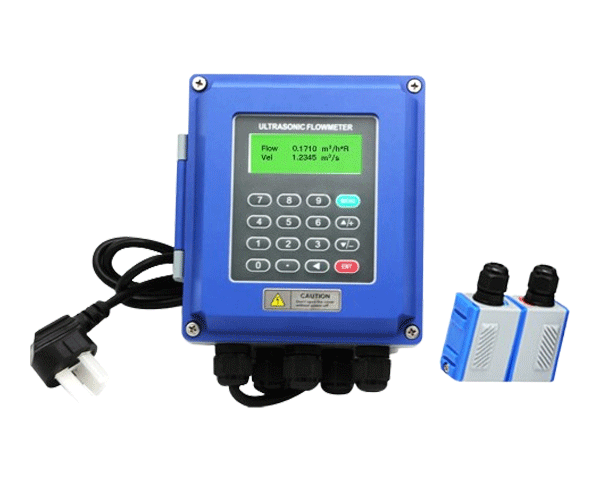
Two ultrasonic transducers are mounted on the pipe, alternately sending and receiving sound waves
-
Sound waves travel faster with the flow (downstream) and slower against the flow (upstream)
-
The difference in travel time is proportional to the flow velocity
-
Flow rate is calculated by multiplying velocity by the pipe cross-sectional area
2.2 Advantages of Ultrasonic Technology
|
Advantage
|
Description
|
|
No moving parts
|
No wear, low maintenance, long service life
|
|
High accuracy
|
±1-2% reading, independent of fluid properties
|
|
Wide turndown ratio
|
Accurate across a wide range of flow rates
|
|
No pressure drop
|
No obstruction in pipe, energy efficient
|
|
Multi-diameter compatibility
|
Same meter can be used on different pipe sizes with appropriate programming
|
|
Bi-directional measurement
|
Measures flow in both directions
|
|
Digital output
|
Easily integrated with telemetry and monitoring systems
|
3. Multi-Diameter Options for Different Irrigation Systems
Irrigation systems use various pipe sizes depending on the application:
|
Pipe Diameter
|
Typical Application
|
Flow Rate Range
|
|
DN15 - DN50
|
Drip irrigation lines, small zones
|
0.1 - 10 m³/h
|
|
DN65 - DN100
|
Main distribution lines, medium fields
|
10 - 80 m³/h
|
|
DN125 - DN200
|
Large fields, center pivot irrigation
|
80 - 400 m³/h
|
|
DN250 - DN400+
|
Main canals, large-scale irrigation projects
|
400 - 2000+ m³/h
|
Flexible Sizing
Why Multi-Diameter Matters
-
One meter family can be used across an entire farm
-
Reduces inventory of spare meters and parts
-
Simplifies installation and training
-
Same monitoring platform for all pipe sizes
Installation Options
How to Install
-
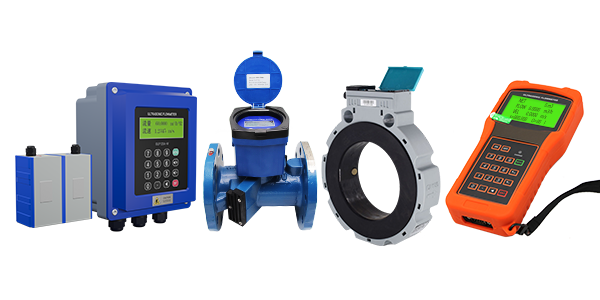
In-line: Installed between pipe flanges
-
Clamp-on: Non-invasive; sensors attach to outside of pipe
-
Insertion: Installed via a hot-tap for larger pipes
-
Calibration: Configured for specific pipe diameter and material
4. Real-Time Flow Monitoring & Data Access
4.1 How Data is Transmitted
Modern ultrasonic water meters integrate with data transmission systems:
-
LoRa (Low-Power Wide-Area): Long-range, low power, ideal for remote fields
-
4G/5G Cellular: High bandwidth, suitable for video and large data
-
NB-IoT: Narrowband IoT for battery-powered devices
-
WiFi: For on-farm networks near buildings
-
RS485 / Modbus: Wired connection for local SCADA systems
4.2 Data Access: Mobile & PC
Mobile App
Smartphone/Tablet Monitoring
-
View real-time flow rates and totals
-
Receive alarm notifications
-
Access historical data and trends
-
Control irrigation valves remotely
-
Available for iOS and Android
Web Dashboard
PC / Laptop Monitoring
-
Comprehensive data visualization
-
Customizable dashboards and reports
-
Multi-farm and multi-field views
-
Data export for analysis and compliance
-
Integration with farm management software
5. Precise Irrigation Control & Water Conservation Benefits
5.1 How Precision Irrigation Works
-
Measure: Ultrasonic meter measures real-time flow rate and total volume
-
Analyze: Data is analyzed to determine actual water usage vs. crop requirements
-
Adjust: Irrigation schedules are optimized based on real-time data
-
Control: Automated valves adjust flow based on setpoints
5.2 Water Conservation Benefits
|
Benefit
|
Typical Improvement
|
Annual Savings (per hectare)
|
|
Water reduction
|
20-50% less water used
|
1,000-5,000 m³
|
|
Energy savings (pumping)
|
15-30% less electricity/fuel
|
$100-500
|
|
Fertilizer reduction
|
10-25% less runoff
|
$50-200
|
|
Yield improvement
|
5-15% higher yield
|
Varies by crop
|
ROI Example: A 100-hectare farm invests $10,000 in ultrasonic flow meters and monitoring system. Annual savings: water ($3,000), energy ($2,000), fertilizer ($1,000), plus 10% yield increase ($10,000). Total annual benefit: $16,000. Payback period: <8 months. 5-year ROI: 800%.
6. System Architecture & Deployment
6.1 Typical System Components
-
Ultrasonic flow meters: Installed at field intake points
-
Data logger/RTU: Local data collection and transmission
-
Power supply: Solar panel + battery (remote areas) or mains power
-
Communication: LoRa, 4G, or NB-IoT for data transmission
-
Cloud platform: Data storage, processing, and visualization
-
Mobile & web apps: User interfaces for monitoring and control
6.2 Deployment Steps
-
Site survey: Identify pipe sizes, locations, and power/communication availability
-
Select meters: Choose appropriate diameter and installation type (in-line, clamp-on, insertion)
-
Install: Install meters according to manufacturer specifications
-
Configure: Set up communication, data logging, and alarm thresholds
-
Integrate: Connect to cloud platform and configure user access
-
Train: Train farm staff on system operation and data interpretation
7. Integration with Smart Farming Systems
Ultrasonic water meters can be integrated with other smart farming technologies:
-
Weather stations: Adjust irrigation based on rainfall and evapotranspiration
-
Soil moisture sensors: Optimize irrigation timing and amount
-
Variable rate irrigation (VRI): Apply different water amounts to different zones
-
Farm management software: Track water usage per crop and field
-
Automated valve control: Turn irrigation on/off based on flow data
8. Case Studies
Case 1: Center Pivot Irrigation Optimization — Corn Farm
A 200-hectare corn farm installed ultrasonic water meters with LoRa communication on eight center pivot irrigation systems. Real-time flow data was monitored via mobile app. The farmer identified that two pivots were applying 30% more water than others due to uneven pressure. After adjusting the pumps and valves, water usage was reduced by 25% across the farm, saving 50,000 m³ of water and $8,000 in pumping costs annually.
Case 2: Drip Irrigation Monitoring — Vineyard
A 50-hectare vineyard equipped each drip irrigation zone with ultrasonic flow meters (DN25-DN50). The system monitored daily water usage and detected a leak in one zone that was losing 500 liters/hour. The leak was repaired before it caused significant water loss or vine stress. The vineyard reported a 20% reduction in water usage and a 12% improvement in grape quality.
Case 3: Multi-Farm Water Management — Cooperative
A farming cooperative of 15 members installed ultrasonic water meters on each member's irrigation intake. The system provided real-time data to a central dashboard. The cooperative used the data to allocate water fairly among members, track total water usage, and demonstrate water conservation for regulatory reporting. The system helped the cooperative reduce total water consumption by 18% and improve yield across all member farms.
9. Maintenance & Calibration
9.1 Maintenance Requirements
-
Ultrasonic meters: Minimal maintenance; no moving parts
-
Clamp-on sensors: Check coupling gel periodically (if used)
-
In-line meters: Check for debris or scale in the pipe
-
Data logger: Check battery status (solar/battery systems)
-
Communication: Verify data transmission regularly
9.2 Calibration
-
Ultrasonic meters are factory calibrated and typically do not require field calibration
-
Regular verification using a portable flow meter is recommended
-
If the pipe diameter changes, the meter configuration must be updated
10. Frequently Asked Questions
Q1: What pipe sizes are compatible with ultrasonic water meters?
A: Ultrasonic meters are available for pipe sizes from DN15 (½-inch) to DN400+ (16 inches and larger). Clamp-on versions work on virtually any pipe size with appropriate transducers.
Q2: Can I use the same meter on different pipe diameters?
A: Yes, if the meter is programmed for the specific pipe diameter. Some meters can store multiple pipe diameter configurations.
Q3: How is data transmitted from remote fields?
A: Data is transmitted via LoRa (long-range, low power), 4G cellular, or NB-IoT. LoRa is popular for large farms due to its long range and low power consumption.
Q4: Is a mobile app available for monitoring irrigation flow?
A: Yes. Most systems provide mobile apps for iOS and Android, as well as web-based dashboards accessible from any computer.
Q5: How much water can be saved with ultrasonic flow monitoring?
A: Typical savings range from 20-50%, depending on the current irrigation efficiency. Farmers often reduce water usage while maintaining or increasing crop yield.
11. Conclusion: Smart Irrigation for a Water-Scarce Future
Key Takeaways:
-
Ultrasonic water meters provide accurate, reliable flow measurement for agricultural irrigation
-
Multi-diameter options suit all pipe sizes used in modern irrigation systems
-
Real-time monitoring via mobile and PC enables informed decision-making
-
Precision irrigation significantly reduces water usage, energy costs, and environmental impact
-
Investment in smart irrigation technology typically pays back within 1-2 seasons
Ultrasonic water meters are a cornerstone of smart irrigation, providing the data needed to optimize water use, reduce costs, and improve crop yields. As water scarcity becomes an increasing challenge, adopting precision irrigation technology is not just an option — it is a necessity for sustainable agriculture.