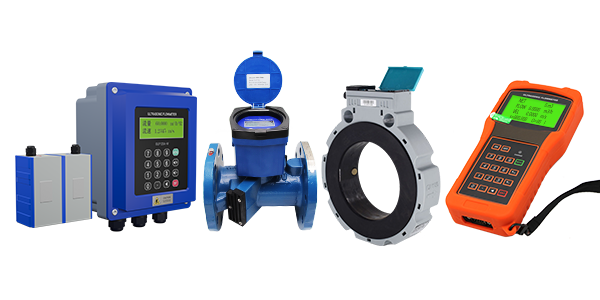
Non-Invasive Ultrasonic Flow Meters for Agricultural Irrigation: Clamp-On Installation without Pipe Cutting
DATE: 2026.08.28 AUTHOR: Smart Irrigation Team VIEWS: 2,400+ Non-Invasive Flow Meter Ultrasonic Flow Meter Clamp-On Installation Irrigation Monitoring Smart Farming No Pipe Cutting
How clamp-on ultrasonic flow meters enable accurate, non-invasive irrigation flow monitoring without pipe cutting, reducing installation time and cost while improving water management
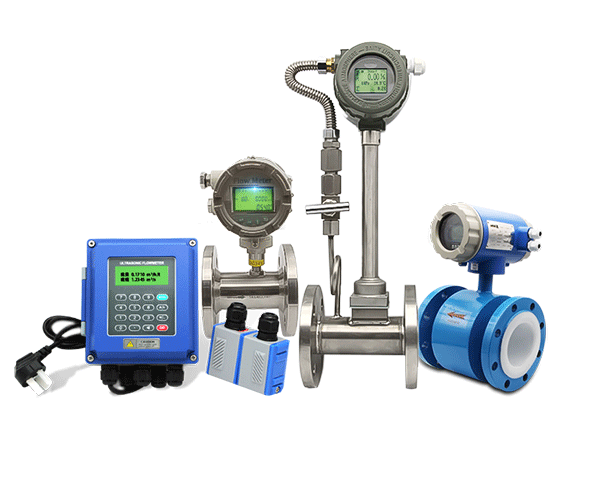
Traditional flow meters often require cutting pipes, shutting down systems, and significant installation labor. For agricultural irrigation, where systems may be spread across large areas with varying pipe sizes, this can be costly and disruptive. Non-invasive ultrasonic flow meters — specifically clamp-on models — offer a revolutionary alternative: accurate flow measurement without any pipe cutting, system shutdown, or process interruption. This article explores how this technology is transforming agricultural irrigation management.
1. Non-Invasive Measurement Technology Overview
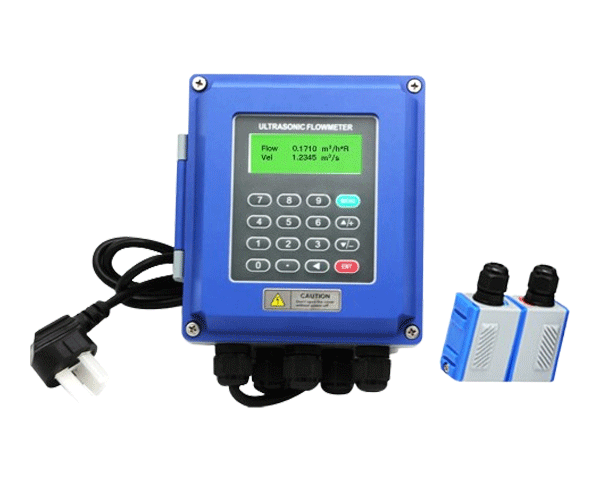
Clamp-on ultrasonic flow meters use the time-of-flight (transit-time) principle to measure flow without contacting the fluid:
-
Two ultrasonic transducers are clamped onto the outside of the pipe
-
Sound waves are transmitted through the pipe wall and fluid
-
The difference in travel time between upstream and downstream signals is proportional to flow velocity
-
Flow rate is calculated using the pipe's internal diameter and cross-sectional area
Key Advantage: No contact with the fluid means no contamination risk, no pressure drop, and no wear from suspended solids — ideal for agricultural water that may contain sediment or debris.
2. Installation Comparison: Traditional vs. Non-Invasive
|
Factor
|
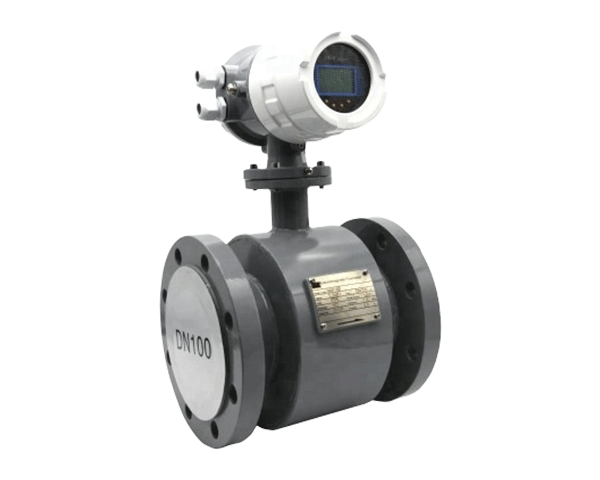
Traditional In-Line Meter
|
Clamp-On Ultrasonic Meter
|
|
Pipe Cutting Required?
|
Yes — requires cutting and flanging
|
No — clamps onto existing pipe
|
|
System Shutdown Needed?
|
Yes — flow must be stopped
|
No — install while flowing
|
|
Installation Time
|
Several hours to days
|
30-60 minutes
|
|
Installation Cost
|
High (labor, parts, downtime)
|
Low (simple labor)
|
|
Pressure Drop
|
Yes — obstruction in flow
|
No — no obstruction
|
|
Pipe Material
|
Any (meter installed in-line)
|
Most rigid materials (metal, plastic, PVC)
|
|
Maintenance
|
Requires periodic cleaning, seals
|
Minimal — only external sensors
|
|
Accuracy
|
±0.5-2% of reading
|
±1-2% of reading
|
3. Key Advantages for Agricultural Irrigation
No Downtime
Install Without Interrupting Irrigation
Install sensors while irrigation systems are running — no need to stop watering during critical growing periods. This is especially valuable during peak season when irrigation cannot be interrupted.
Versatile Pipe Compatibility
Works on Various Pipe Types
Compatible with PVC, HDPE, steel, cast iron, and other rigid pipe materials. No need to replace or modify existing irrigation infrastructure.
No Contamination Risk
Maintains Water Quality
No sensors or wetted parts come into contact with irrigation water — eliminates contamination risk and maintains water quality for crops.
Cost-Effective
Lower Installation & Maintenance Costs
Eliminates pipe cutting, welding, and flange installation. No moving parts means minimal maintenance — just periodic sensor cleaning.
4. Pipe Size & Measurement Range Capabilities
Clamp-on ultrasonic flow meters can accommodate a wide range of pipe sizes commonly used in agricultural irrigation:
|
Pipe Diameter
|
Typical Flow Range
|
Common Application
|
|
DN15 – DN50
|
0.1 – 10 m³/h
|
Drip irrigation lines, small zones
|
|
DN65 – DN150
|
10 – 150 m³/h
|
Main distribution lines, medium fields
|
|
DN200 – DN400
|
150 – 800 m³/h
|
Large fields, center pivot systems
|
|
DN400+
|
800+ m³/h
|
Main canals, large-scale projects
|
5. Real-Time Data & Wireless Monitoring
5.1 Data Transmission Options
-
LoRa: Long-range, low-power — ideal for large farms and remote fields
-
4G/5G Cellular: Real-time data transmission with high bandwidth
-
WiFi / Ethernet: For on-farm networks
-
RS485 / Modbus: Wired connection for local SCADA systems
5.2 Monitoring & Alerts
-
Mobile App: View flow rates, totals, and trends from anywhere
-
Web Dashboard: Comprehensive data visualization and reporting
-
Alarms: Receive notifications for flow anomalies, leaks, or equipment failure
-
Historical Data: Track water usage over time for analysis and reporting
6. Water Conservation & Cost Benefits
Accurate flow data enables farmers to make informed decisions:
-
Optimize irrigation timing: Apply water only when needed
-
Detect leaks: Identify leaks early to prevent water loss
-
Improve uniformity: Ensure even water distribution across fields
-
Track water usage: Monitor consumption and allocate water fairly
-
Reduce energy costs: Pump only the required amount
ROI Example: A 50-hectare farm installs clamp-on flow meters on 4 main irrigation lines. Installation cost: $4,000. Annual water savings: 15% (~$2,500). Energy savings: $800. Total annual benefit: $3,300. Payback period: ~15 months. 5-year ROI: 300%.
7. Installation Steps
-
Select location: Choose a straight section of pipe (at least 10-20 pipe diameters upstream, 5-10 downstream) for optimal accuracy.
-
Clean pipe surface: Remove dirt, rust, or paint from the transducer mounting area.
-
Apply coupling gel: Apply acoustic coupling gel to the transducer faces to ensure good sound transmission.
-
Mount transducers: Clamp transducers onto the pipe and secure them.
-
Connect cables: Connect transducer cables to the flow meter/transmitter.
-
Configure meter: Enter pipe material, diameter, wall thickness, and fluid type into the meter.
-
Verify signal: Check signal strength and quality.
-
Calibrate: Perform zero calibration and verify with a known flow rate if possible.
8. Common Issues & Considerations
|
Issue
|
Solution
|
|
Pipe surface roughness
|
Clean and sand surface for better coupling
|
|
Signal loss
|
Check coupling gel, transducer alignment, and cable connections
|
|
Air bubbles in pipe
|
Install at a higher point or allow degassing
|
|
Pipe lining (e.g., cement, rubber)
|
May attenuate signal; consider different mounting or meter type
|
|
Temperature changes
|
Ensure temperature compensation is enabled
|
9. Case Studies
Case 1: Center Pivot Irrigation — Large Corn Farm
A 300-hectare corn farm with six center pivot systems installed clamp-on ultrasonic flow meters on the main supply lines. Installation took 4 hours for all six meters — no pipe cutting, no system shutdown. Real-time data revealed that two pivots were receiving 20% more water than others due to pressure differences. The farmer adjusted the system, saving 35,000 m³ of water annually and reducing pumping costs by 18%.
Case 2: Orchard Drip Irrigation — Almond Farm
An almond orchard with 25 drip irrigation zones installed clamp-on flow meters on each zone's PVC mainline. Within the first month, the system detected a 1,500 L/hour leak in one zone. The leak was repaired, saving 10,000 m³ of water over the season. The grower also used the data to fine-tune irrigation schedules, reducing total water usage by 15% while maintaining yield.
Case 3: Multi-Farm Water Allocation — Irrigation District
An irrigation district serving 15 farms installed clamp-on flow meters at each farm's connection point. The non-invasive installation meant no disruption to farming operations. The district used the data to allocate water fairly, monitor total usage, and identify farms with high water consumption for efficiency guidance.
10. Frequently Asked Questions
Q1: Is it really possible to measure flow without cutting pipes?
A: Yes. Clamp-on ultrasonic flow meters use sound waves that pass through the pipe wall, measuring flow without any contact with the fluid or modification to the pipe.
Q2: How accurate are clamp-on ultrasonic flow meters?
A: Typical accuracy is ±1-2% of reading, which is sufficient for agricultural irrigation monitoring. Accuracy depends on proper installation, pipe condition, and signal quality.
Q3: What pipe materials are compatible with clamp-on meters?
A: Most rigid pipe materials including PVC, HDPE, steel, ductile iron, and cast iron. Plastic pipes with sound-absorbing linings may need special installation.
Q4: Can I install the meter while water is flowing?
A: Yes. Clamp-on meters are installed on the outside of the pipe, so the system does not need to be shut down. This is a major advantage over traditional meters.
Q5: Do clamp-on meters require regular maintenance?
A: Minimal. Periodic cleaning of the pipe surface and checking of coupling gel (if used) is recommended. There are no moving parts, so maintenance is very low.
11. Conclusion: Revolutionizing Irrigation Monitoring
Key Takeaways:
-
Clamp-on ultrasonic flow meters provide accurate, non-invasive flow measurement without pipe cutting
-
Installation is fast, simple, and does not disrupt irrigation — no downtime
-
Compatible with all common pipe sizes and materials used in agriculture
-
Real-time data enables water conservation, leak detection, and cost savings
-
Ideal for both small farms and large irrigation districts
Non-invasive ultrasonic flow meters are transforming agricultural irrigation monitoring. By eliminating the need for pipe cutting and system shutdown, they make it easy and affordable for farmers to gain real-time visibility into their water usage, enabling smarter irrigation decisions and better water conservation.