TDS vs. Conductivity: Differences, Relationship & Accurate Conversion
🧪 Water Quality Hub 📅 March 18, 2026 ⏱ 12 min read ⚖️ TDS · conductivity · conversion factor · water chemistry
🔬 Two terms, one measurement principle — but not the same thing. TDS (Total Dissolved Solids) and electrical conductivity are often used interchangeably, but they represent different quantities. This article explains what each means, how they are mathematically linked, the role of the conversion factor, and when you can (and cannot) reliably convert between them. We also provide practical tables and examples for accurate estimation.
1. What Are TDS and Conductivity?
⚡ Electrical Conductivity
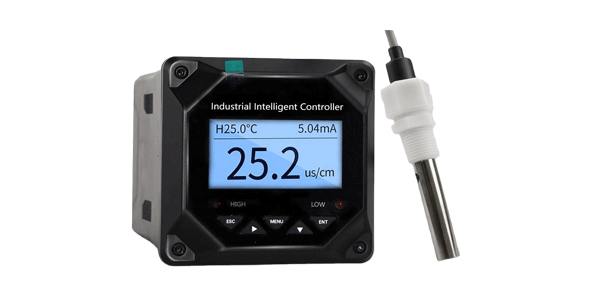
Conductivity (EC) measures the ability of water to conduct an electrical current. It depends on the concentration of ions, their mobility, and their charge. Units: µS/cm (microsiemens per centimeter) or mS/cm.
It is a direct physical measurement: an AC voltage is applied between two electrodes, and the resulting current is measured.
Example: pure water ≈ 0.055 µS/cm; tap water 200–800 µS/cm; seawater ≈ 50 mS/cm.
🧂 Total Dissolved Solids (TDS)
TDS represents the total mass of dissolved substances (inorganic salts, small amounts of organic matter) in water. Units: mg/L or ppm (parts per million).
TDS is typically measured gravimetrically: evaporating a filtered water sample and weighing the residue. However, for routine use, TDS is estimated from conductivity using a conversion factor.
Example: distilled water TDS 0–1 mg/L; tap water 100–500 mg/L; brackish water >5000 mg/L.
2. The Relationship: How They Are Linked
Because dissolved ions carry electrical current, there is a strong empirical correlation between TDS (mass concentration) and conductivity. However, the relationship is not universal — it depends on the mixture of ions present.
TDS (mg/L) = k × EC (µS/cm)
where k is the conversion factor, typically ranging from about 0.4 to 1.0. For many natural waters, a factor of 0.65–0.7 is common.
2.1 Why the Factor Varies
-
Ion type: Different ions have different molar conductivities. For example, a solution of NaCl has a different TDS/EC ratio than one with CaSO₄ at the same TDS.
-
Ion pairing and complexation: At higher concentrations, ions interact, reducing effective mobility.
-
Temperature: Conductivity is temperature‑dependent; TDS is not. All conversions must be at a reference temperature (usually 25°C).
3. Common Conversion Factors (k) for Different Water Types
|
Water type / solute
|
Typical k factor (µS/cm → mg/L)
|
Notes
|
|
Natural freshwater (rivers, lakes)
|
0.65 – 0.70
|
Mixed ions, dominated by Ca²⁺, HCO₃⁻, SO₄²⁻
|
|
NaCl dominant (seawater, brine)
|
0.50 – 0.55
|
Sodium chloride has higher conductivity per mg/L
|
|
KCl solutions (laboratory)
|
0.50 – 0.52
|
Often used for calibration
|
|
Mixed wastewater
|
0.60 – 0.80
|
Depends on industrial contribution
|
|
Boiler feedwater (ultra‑pure)
|
~0.50 – 0.60
|
Very low ionic strength, sensitive to trace ions
|
Note: For ultra‑pure water (EC < 10 µS/cm), the factor becomes unstable and highly dependent on the specific ions present (often CO₂). Direct TDS measurement by gravimetry is recommended.
4. How to Accurately Convert Conductivity to TDS
4.1 Using a Standard Factor (Estimation)
For routine monitoring where approximate TDS is acceptable, use a factor typical for your water type:
-
If you have natural freshwater, start with k = 0.65.
-
Multiply your conductivity (µS/cm) by k to get TDS in mg/L.
Example: A river sample has conductivity 450 µS/cm. Using k = 0.67, estimated TDS = 450 × 0.67 = 302 mg/L.
4.2 Determining Your Own Conversion Factor (More Accurate)
-
Collect a representative water sample.
-
Measure its conductivity (at 25°C).
-
Measure TDS by the gravimetric method (Standard Methods 2540C): filter through 0.45 µm, evaporate at 180°C, weigh residue.
-
Calculate k = TDS (mg/L) / EC (µS/cm).
-
Use this factor for future samples from the same source, provided water composition remains stable.
Repeat periodically (e.g., seasonally) if water chemistry varies.
5. Quick Reference: EC to TDS (using k=0.65)
|
Conductivity (µS/cm)
|
Estimated TDS (mg/L) with k=0.65
|
Typical water type
|
|
0.055
|
~0.04
|
Ultra‑pure water
|
|
10
|
6.5
|
Distilled water
|
|
100
|
65
|
Rainwater, very soft
|
|
300
|
195
|
Soft to moderate freshwater
|
|
500
|
325
|
Average river water
|
|
800
|
520
|
Hard freshwater / tap water
|
|
1500
|
975
|
Brackish / high‑mineral water
|
|
5000
|
3250
|
Saline / some industrial streams
|
|
50000
|
32500
|
Seawater (approx.)
|
6. When Conversion Fails — Important Limitations
⚠️ Do not blindly convert! The conversion factor approach assumes a stable ionic composition. It fails when:
-
The water type changes (e.g., freshwater vs. seawater intrusion).
-
High organic content or non‑ionic dissolved solids are present (they contribute to TDS but not to conductivity).
-
Extreme pH (high H⁺ or OH⁻) skews conductivity without proportional TDS.
-
Conductivity is very low (<10 µS/cm) — small amounts of CO₂ or NH₃ disproportionately affect conductivity.
In such cases, rely on direct TDS measurement (gravimetric) or use ion‑specific sensors.
7. TDS Meters — What They Actually Display
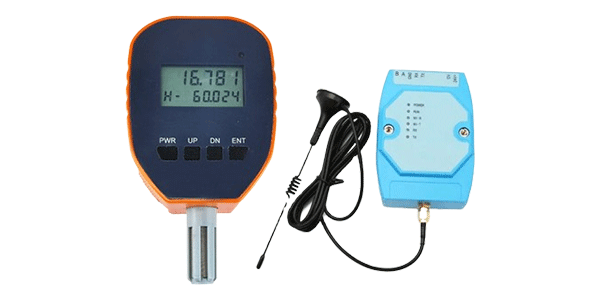
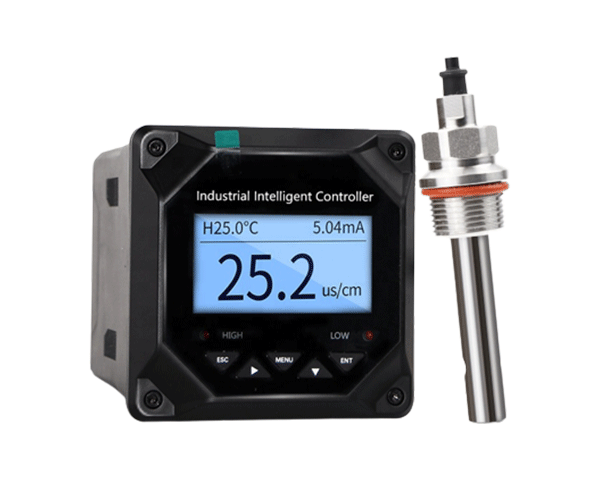
Most handheld "TDS meters" are actually conductivity meters with a fixed conversion factor (usually 0.5, 0.64, or 0.7) programmed inside. They measure EC and internally multiply by the chosen factor. This is why:
-
A TDS meter calibrated for NaCl (k=0.5) will give different readings in natural water compared to a meter set to k=0.65.
-
Always check the factor used by your TDS meter — if it doesn't match your water, readings will be systematically biased.
Better practice: Use a true conductivity meter, then apply the correct factor for your specific application.
8. Regulatory Context — When TDS is Required
Some regulations (e.g., drinking water standards, discharge permits) specify TDS limits, not conductivity. In such cases, you must either:
-
Perform gravimetric TDS analysis (more accurate, but slower).
-
Establish a site‑specific correlation between EC and TDS, validated over time, and use EC as a surrogate with regular verification.
The USEPA and EU Water Framework Directive accept the correlation method if properly documented.
Conclusion
Conductivity and TDS are intimately related but not identical. Conductivity is a fast, inexpensive measurement, while TDS provides a mass‑based metric. The conversion factor bridges them, but it is not universal — it depends on water chemistry. For accurate work, determine your own factor, be aware of its limitations, and never treat a TDS meter reading as absolute truth without understanding the underlying factor. Use conductivity as a dynamic proxy, and verify with gravimetric TDS when precision matters.