Deionized Water Monitoring: Flow & Quality Control for High-Purity Water Systems
DATE: 2026.08.25 AUTHOR: High-Purity Water Systems Team VIEWS: 2,700+ Deionized Water DI Water Monitoring Resistivity Conductivity Flow Measurement High-Purity Water
How continuous monitoring of flow, resistivity, conductivity, and pH ensures consistent deionized water quality for pharmaceutical, semiconductor, and industrial applications
Deionized (DI) water — also known as demineralized or high-purity water — is water that has had almost all mineral ions removed. It is essential in industries where even trace contaminants can cause product defects, process failures, or regulatory non-compliance. Applications include semiconductor manufacturing, pharmaceutical production, power generation, laboratory use, and industrial cleaning. Monitoring both flow and water quality parameters is critical for ensuring consistent DI water quality.
1. Why Deionized Water Monitoring Matters
DI water quality can change rapidly due to:
-
Exhaustion or breakthrough of ion exchange resins
-
Membrane degradation in RO/EDI systems
-
Contamination from pipes, fittings, or storage tanks
-
Microbial growth in storage or distribution
-
Variations in feed water quality
-
Insufficient flow rates affecting water quality
Key Insight: A single contamination event in a DI water system can cause millions of dollars in product losses — especially in semiconductor and pharmaceutical manufacturing. Real-time monitoring is essential for early detection and protection.
2. Key Monitoring Parameters
|
Parameter
|
Typical Range
|
Why It Matters
|
Sensor Type
|
|
Resistivity
|
10-18.2 MΩ·cm
|
Primary indicator of ion removal; lower resistivity indicates contamination
|
Conductivity/Resistivity sensor
|
|
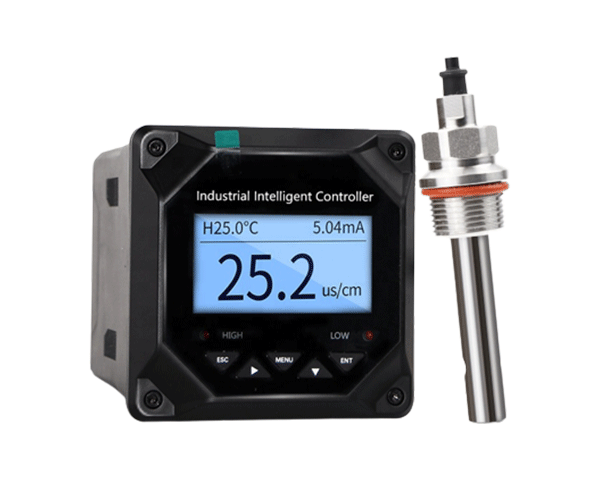
Conductivity
|
0.055-0.5 µS/cm
|
Inverse of resistivity; measures dissolved ions
|
Conductivity sensor (2-electrode)
|
|
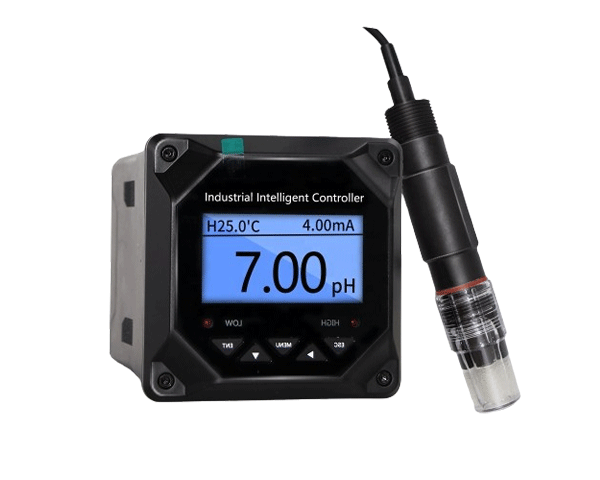
pH
|
5.0-7.0 (pure water)
|
Indicates CO₂ absorption, contamination
|
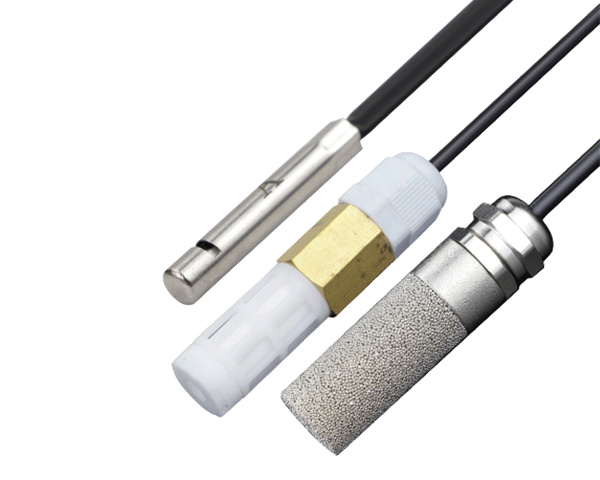
Glass electrode (low-ionic strength)
|
|
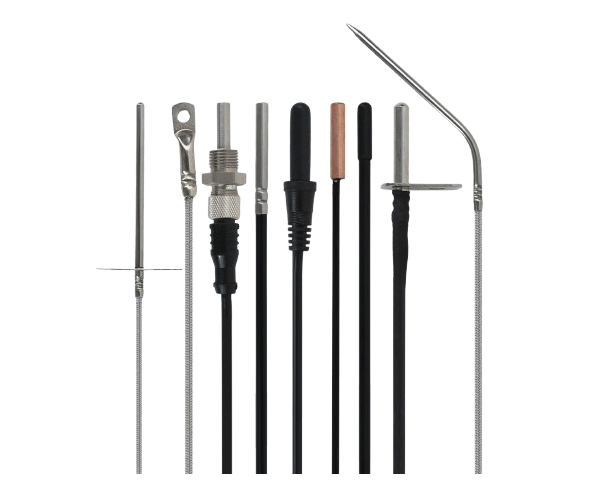
Temperature
|
15-25°C (typical)
|
Affects resistivity, conductivity, and pH readings
|
RTD or thermistor
|
|
Flow Rate
|
Process-dependent
|
Ensures adequate flow for production, detects system issues
|
Ultrasonic, magnetic, or paddlewheel flow meter
|
|
TOC (Total Organic Carbon)
|
< 50 ppb (semiconductor)
|
Measures organic contaminants
|
UV oxidation TOC analyzer
|
3. Flow Monitoring in DI Water Systems
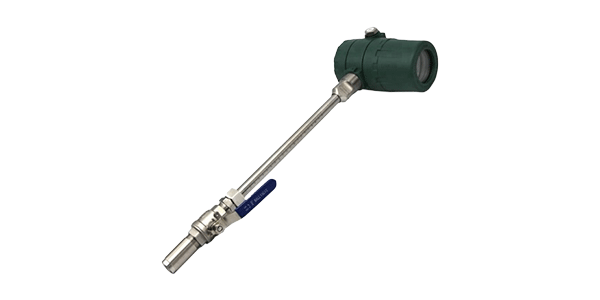
Flow Monitoring
Why Flow Monitoring Matters
-
System performance: Ensures pumps, valves, and membranes are operating correctly
-
Water balance: Tracks water usage and identifies leaks
-
Resin life: Monitors throughput to predict ion exchange resin replacement
-
Membrane protection: Ensures minimum flow for RO/EDI to prevent scaling
-
Production assurance: Verifies adequate flow to consuming processes
Flow Sensors
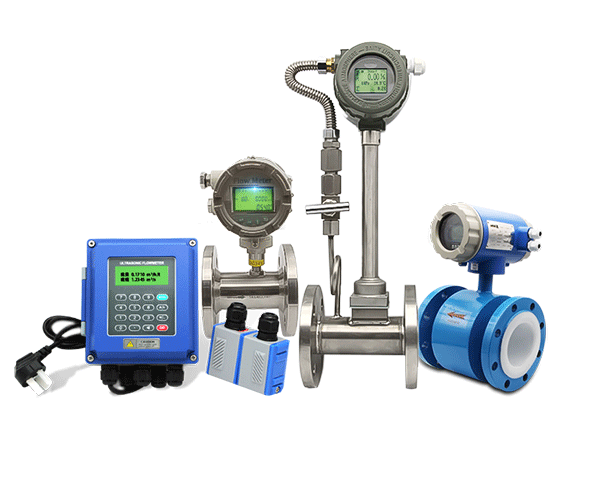
Recommended Flow Meters
-
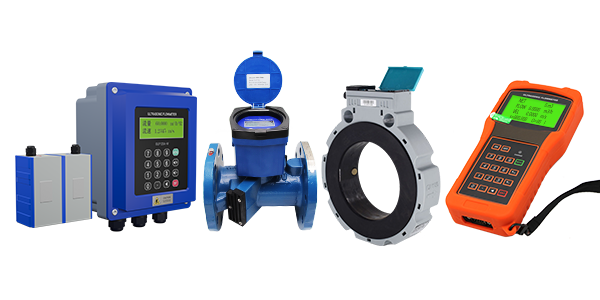
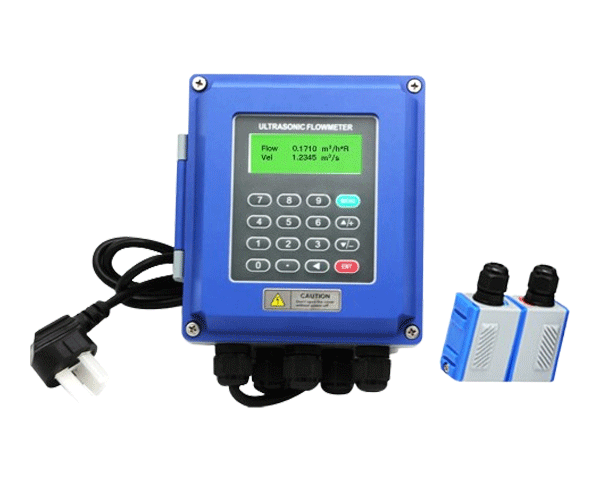
Ultrasonic (clamp-on): Non-invasive, no pressure drop, low maintenance
-
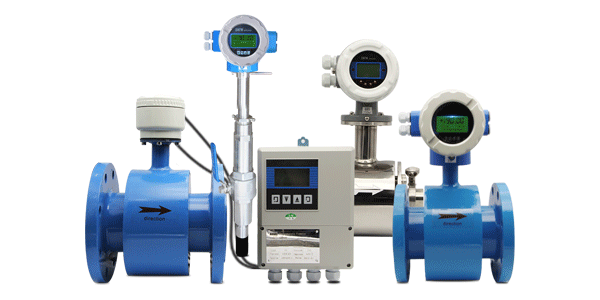
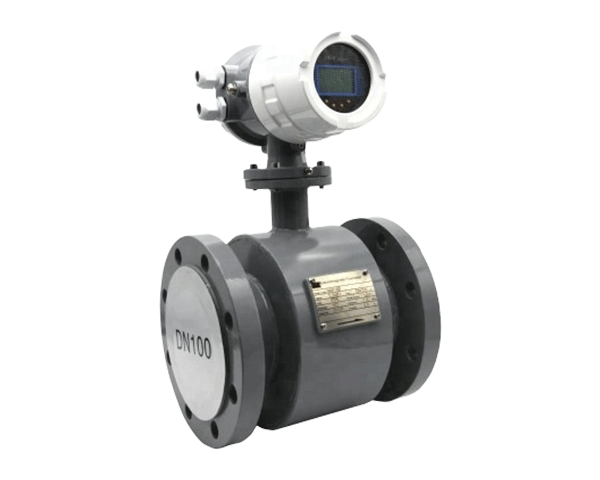
Magnetic (magmeter): High accuracy, no moving parts, for conductive DI water
-
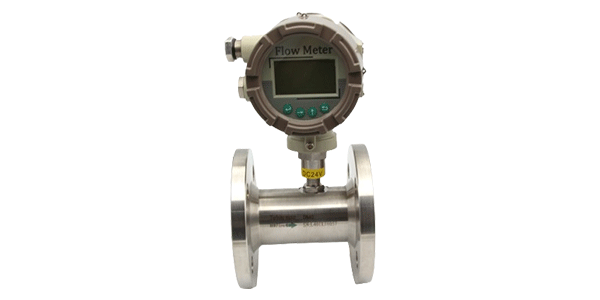
Paddlewheel: Cost-effective for less critical applications
-
Thermal mass: For very low flow applications (pure water)
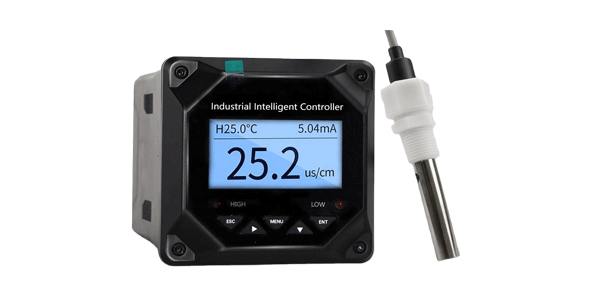
4. Water Quality Monitoring: Resistivity & Conductivity
Resistivity and conductivity are the primary parameters for DI water quality:
-
Resistivity (MΩ·cm): Higher resistivity = purer water. Theoretical maximum for pure water: 18.2 MΩ·cm at 25°C.
-
Conductivity (µS/cm): Lower conductivity = purer water. Pure water conductivity: 0.055 µS/cm at 25°C.
-
Temperature compensation: Both resistivity and conductivity are temperature-dependent. Readings are typically compensated to 25°C.
-
Sensor selection: 2-electrode sensors are used for low-conductivity DI water (0-100 µS/cm).
Key Standard: Semiconductor industry (SEMI) and pharmaceutical (USP) standards require resistivity > 18 MΩ·cm or conductivity < 0.055 µS/cm for ultrapure water.
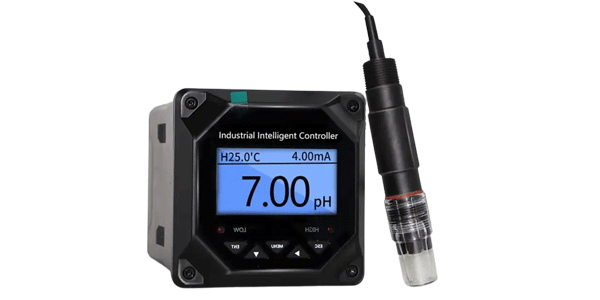
5. pH Measurement Considerations
pH measurement in DI water presents unique challenges:
-
Low ionic strength: DI water has very few ions, making pH measurement difficult and slow.
-
CO₂ absorption: Pure water absorbs CO₂ from the atmosphere, lowering pH to 5.5-6.0.
-
Temperature dependence: pH is temperature-sensitive; automatic temperature compensation is essential.
-
Sensor requirements: Special "low-ionic-strength" pH electrodes with open junctions are required.
-
Monitoring location: Best measured at the point of use or immediately after production.
6. System Architecture & Monitoring Points
6.1 Typical DI Water System
-
Feed Water: Pretreated water (RO permeate, city water)
-
Ion Exchange / EDI: Primary deionization
-
Polishing: Mixed bed resin or continuous polishing
-
Storage Tank: DI water storage (often with UV and nitrogen blanketing)
-
Distribution Loop: Continuous circulation to points of use
-
Point of Use (POU): Final filters and monitoring
6.2 Recommended Monitoring Points
|
Location
|
Parameters to Monitor
|
Purpose
|
|
Inlet (RO/EDI outlet)
|
Resistivity, conductivity, flow
|
Verify deionization performance
|
|
Storage Tank
|
Resistivity, pH, temperature, level
|
Monitor storage quality, detect contamination
|
|
Distribution Loop
|
Resistivity, flow, pH
|
Maintain water quality in circulation
|
|
Point of Use (POU)
|
Resistivity, flow
|
Final verification before use
|
|
Return Line
|
Resistivity, flow, pH
|
Detect contamination in distribution system
|
7. Sensor & Equipment Selection
|
Parameter
|
Recommended Sensor
|
Key Features
|
|
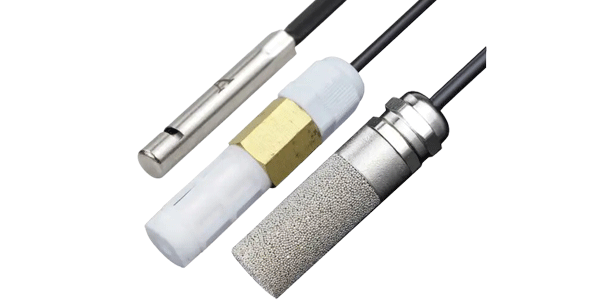
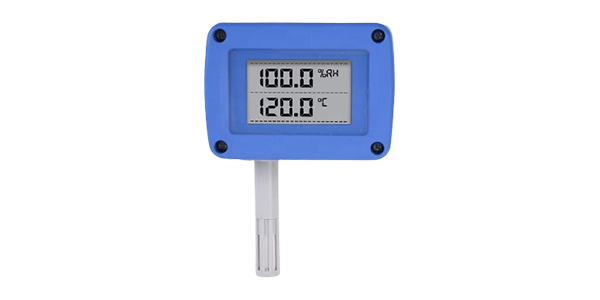
Resistivity/Conductivity
|
2-Electrode digital sensor (K=0.01 or 0.1)
|
Low range (0-100 µS/cm), temperature compensated, Modbus output
|
|
pH (Low Ionic)
|
Digital pH sensor with open junction
|
Special low-ionic-strength design, stable reading
|
|
Temperature
|
RTD (Pt100)
|
High accuracy, integrated with conductivity/pH sensors
|
|
Flow
|
Ultrasonic or Magnetic
|
Non-invasive, no pressure drop, high accuracy
|
|
TOC
|
UV oxidation TOC analyzer
|
Continuous organic carbon monitoring
|
|
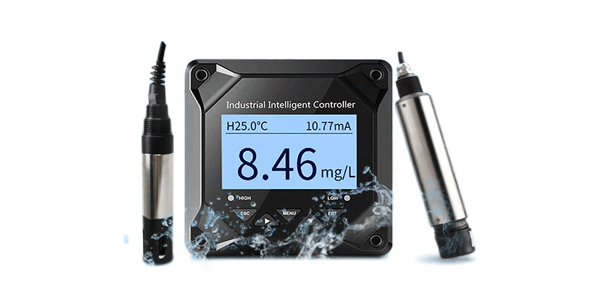
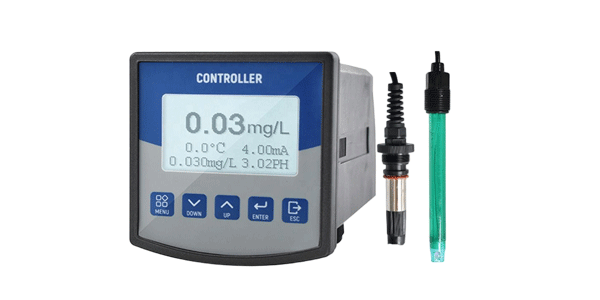
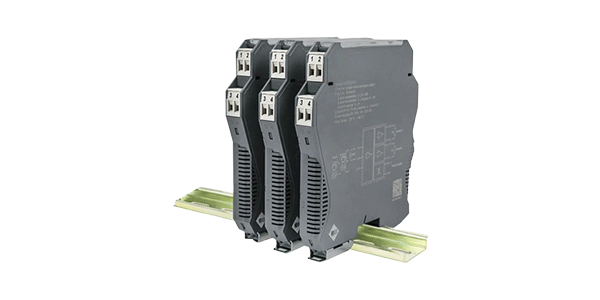
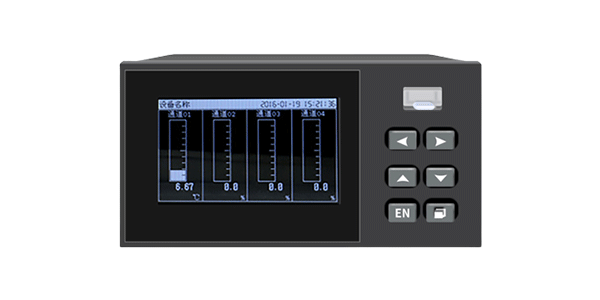
Controller/Transmitter
|
Multi-parameter analyzer
|
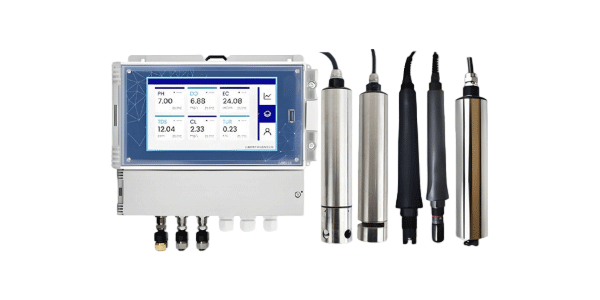
Accepts multiple sensor inputs, data logging, alarms
|
8. Alert & Response Strategy
Define alarm thresholds and response actions:
|
Parameter
|
Alert Threshold
|
Action
|
|
Resistivity Drop
|
> 5% below setpoint
|
Investigate potential contamination, check resin/membrane
|
|
Conductivity Rise
|
> 0.1 µS/cm above baseline
|
Check ion exchange, RO, or EDI performance
|
|
Flow Rate Drop
|
> 10% below normal
|
Check pump, filters, blockages
|
|
pH Change
|
> 0.5 pH from baseline
|
Check CO₂ absorption or chemical contamination
|
|
Temperature Change
|
> 3°C from baseline
|
Check system operation, potential issues
|
9. Regulatory & Industry Standards
-
USP <1231>: Water for Pharmaceutical Purposes — purity requirements for DI water
-
SEMI F63: Guide for Ultrapure Water Used in Semiconductor Manufacturing
-
ASTM D5127: Standard Guide for Ultra-Pure Water Used in Electronics and Semiconductor Industries
-
ISO 3696: Water for analytical laboratory use — specification and test methods
-
CLSI C3-A4: Preparation and Testing of Reagent Water in Clinical Laboratories
10. Case Studies
Case 1: Semiconductor Fab DI Water Monitoring Upgrade
A semiconductor manufacturing plant upgraded its DI water monitoring system with real-time resistivity, flow, and TOC sensors at each point of use. The system detected a sudden drop in resistivity (from 18.2 to 16.8 MΩ·cm) in one fab area. Investigation revealed a partially exhausted ion exchange resin bed. The plant replaced the resin before it caused wafer defects, preventing an estimated $500,000 in potential losses.
Case 2: Pharmaceutical DI Water System Monitoring
A pharmaceutical manufacturer installed a multi-parameter DI water monitoring system (resistivity, conductivity, pH, temperature, flow) on the distribution loop. The system identified a gradual pH drop from 6.8 to 5.5 over two weeks. Investigation revealed a biofilm in the storage tank, which was treated before it impacted product quality. The system provided early warning, avoiding a batch recall.
Case 3: Power Plant DI Water Flow Monitoring
A power plant installed ultrasonic flow meters on its DI water makeup lines. The system detected a gradual flow decrease over several months. Investigation revealed a partially blocked strainer. Cleaning the strainer restored full flow and prevented potential boiler tube fouling from reduced water quality.
11. Frequently Asked Questions
Q1: What is the difference between DI water and deionized water?
A: They are the same — "DI" stands for deionized. Both terms refer to water that has had mineral ions removed through ion exchange or membrane processes.
Q2: Why does DI water have a pH below 7?
A: Pure water absorbs CO₂ from the atmosphere, forming carbonic acid, which lowers pH to about 5.5-6.0. This is normal and does not necessarily indicate contamination.
Q3: How often should resistivity sensors be calibrated in DI water systems?
A: Typically every 3-6 months, depending on usage and manufacturer recommendations. Calibration is performed using conductivity standards (e.g., 84 µS/cm or 1,413 µS/cm) with appropriate temperature compensation.
Q4: What is the typical flow rate for DI water distribution loops?
A: Typically 1-3 m/s (3-10 ft/s) to maintain turbulent flow and prevent microbial growth. Minimum flow is critical for maintaining water quality.
Q5: Can I use standard pH sensors in DI water?
A: No. Standard pH sensors have high ionic-strength requirements. Special "low-ionic-strength" pH sensors with open junctions are required for accurate DI water pH measurement.
12. Conclusion: Ensuring DI Water Quality with Comprehensive Monitoring
Key Takeaways:
-
DI water quality is critical for pharmaceutical, semiconductor, and industrial applications
-
Continuous monitoring of resistivity, conductivity, pH, flow, and temperature is essential for quality assurance
-
Early detection through monitoring prevents product losses and process failures
-
Proper sensor selection (2-electrode conductivity, low-ionic pH, ultrasonic flow) is essential for accurate measurement
-
Integration with SCADA or automation systems enables real-time alerts and proactive maintenance
Investing in comprehensive DI water monitoring is not just a regulatory requirement — it is a strategic investment in product quality, process reliability, and operational efficiency. By implementing robust monitoring systems, industries can ensure consistent high-purity water quality, reduce downtime, and protect their most critical processes.