Key Applications of Conductivity Meters in Industrial Water Treatment
🏭 Water Quality Hub 📅 March 16, 2026 ⏱ 12 min read ⚙️ cooling towers · boilers · wastewater · desalination
⚙️ From simple monitoring to intelligent process control — In industrial water treatment, conductivity is not just a water quality indicator; it is a direct lever for efficiency, safety, and compliance. This article explores the critical applications where online conductivity meters provide real-time data to optimize cooling systems, protect boilers, manage wastewater sludge, control chemical concentrations, and more — backed by real-world examples and advanced sensor technologies.
1. Cooling Water & Cooling Tower Control
Cooling towers are ubiquitous in power plants, refineries, and manufacturing facilities. As water evaporates, dissolved solids concentrate, increasing conductivity and scaling/corrosion risk. Conductivity meters enable automatic blowdown control to maintain proper cycles of concentration [citation:7][citation:3].
-
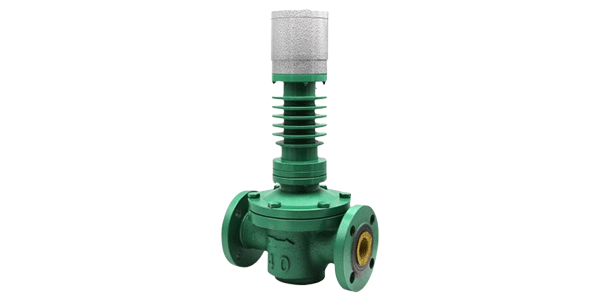
Automatic blowdown: When conductivity exceeds a setpoint, a valve opens to discharge concentrated water and refill with fresh makeup, saving water while protecting equipment [citation:7].
-
Chemical feed integration: Many systems (e.g., ProMinent AEGIS II) use conductivity measurements to trigger biocide or corrosion inhibitor dosing, ensuring chemical efficacy without overfeed [citation:7].
-
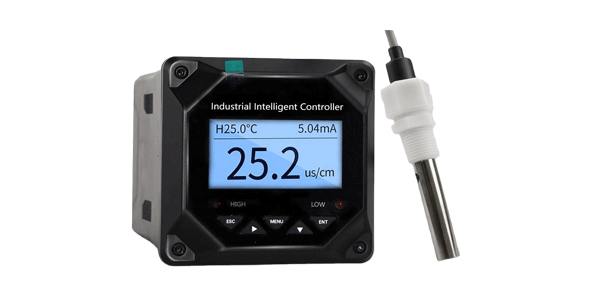
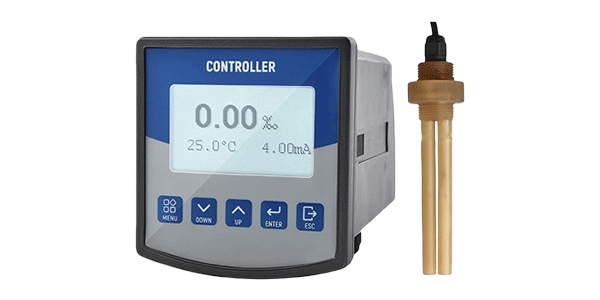
Wide range capability: Four-electrode or inductive sensors handle fouling and high ranges (up to 200 mS/cm) typical in cooling loops [citation:3][citation:7].
2. Boiler Feedwater & Steam Condensate Monitoring
Boiler efficiency and safety depend on extremely pure water. High conductivity leads to scale formation and carryover [citation:5]. Conductivity meters are deployed at multiple points:
-
Boiler feedwater: Continuous monitoring ensures demineralizer performance; ultra-pure water requires electrodes with low cell constant (K=0.01) [citation:10].
-
Boiler blowdown: Similar to cooling towers, automatic blowdown based on conductivity reduces energy loss and prevents scale [citation:5].
-
Condensate return: Detecting conductivity spikes indicates contamination (e.g., cooling water in-leakage), protecting the boiler from damage [citation:5].
-
Saturated steam: High steam conductivity can cause turbine deposits; online monitoring is critical in power generation [citation:5].
3. Wastewater Treatment — Sludge Blanket & Process Optimization
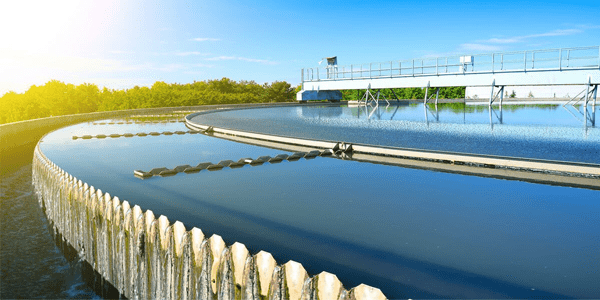
Modern conductivity instrumentation goes beyond simple concentration measurement. Precision conductivity profilers can be deployed in clarifiers and settling tanks to visualize stratification [citation:1].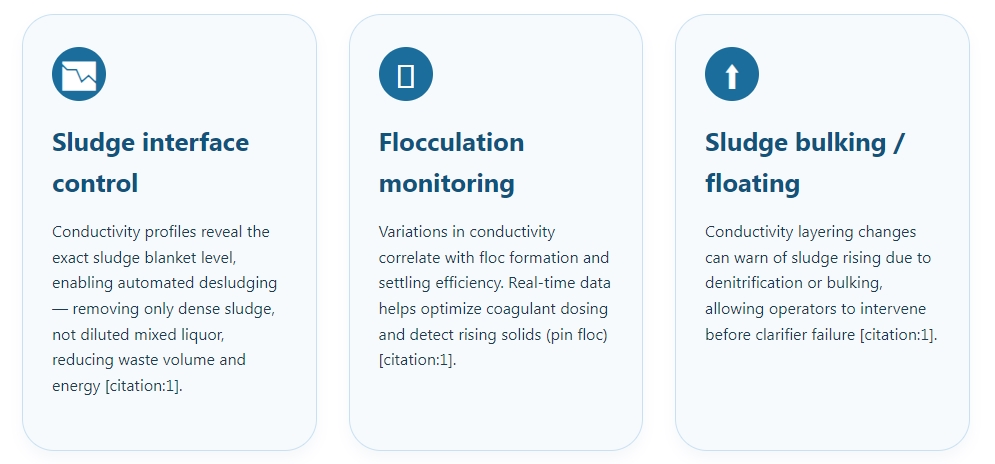
As described in Industrial Materials Magazine, multi-depth conductivity sensors provide a "CT scan" of the clarifier, improving wastewater recycling and reducing sludge handling costs [citation:1].
4. Membrane Processes — Reverse Osmosis (RO) & EDI
Conductivity is the primary indicator of membrane performance and product water quality.
-
Feed water monitoring: Baseline conductivity helps track salt loading.
-
Permeate conductivity: A sudden increase signals membrane damage, seal leaks, or fouling. Typical RO permeate ranges from 5–50 µS/cm depending on feed [citation:4].
-
Stage‐by‐stage monitoring: Multi-point conductivity sensors identify which membrane elements are degrading.
-
EDI / CEDI: Ultra-pure water systems use high-precision conductivity cells (K=0.01) to verify resistivity >18 MΩ·cm [citation:10].
5. Case Study: Seawater Desalination
🌊 Energy Seawater Desalination Project
This large‑scale desalination plant (investment 1.96 billion RMB) produces over 10 million tons of fresh water annually. Raw seawater conductivity is typically 49 mS/cm, while product water must be ≤2000 µS/cm [citation:4]. Online conductivity meters from CN11 series are installed at multiple points: feed, post‑pretreatment, RO permeate, and final blended water. The high‑temperature version (up to 95°C) monitors (slag water heat exchange) to ensure process stability [citation:4]. Continuous conductivity data enables operators to optimize energy consumption and maintain zero‑liquid discharge compliance.
6. Chemical Concentration & CIP (Clean‑in‑Place) Monitoring
In many industries, conductivity correlates directly with chemical strength. Applications include:
-
Acid/alkali dilution: Ensuring precise concentration for etching, cleaning, or pH adjustment. Inductive sensors (toroidal) resist corrosion from aggressive chemicals [citation:10].
-
CIP systems: Food, beverage, and pharmaceutical plants use conductivity to verify detergent concentration during rinse cycles and confirm complete removal [citation:10].
-
Plating bath control: Electroplating industries monitor conductivity to maintain metal ion concentration and bath stability [citation:2].
7. Power Generation & Petrochemical Complexes
According to the China Instrument Manufacturers Association, water analysis instruments are essential in every petrochemical facility [citation:5]. Key areas include:
-
Desalinated water (demineralizer) outlet: Continuous monitoring of cation and anion exchanger performance.
-
Cycle chemistry: In combined cycle power plants, conductivity plus pH ensures corrosion product transport is minimized.
-
Cooling water in ethylene plants: High‐precision conductivity meters control inhibitor feed [citation:5].
8. Sensor Technologies Enabling These Applications
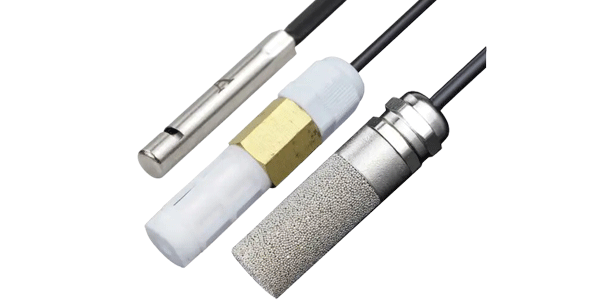
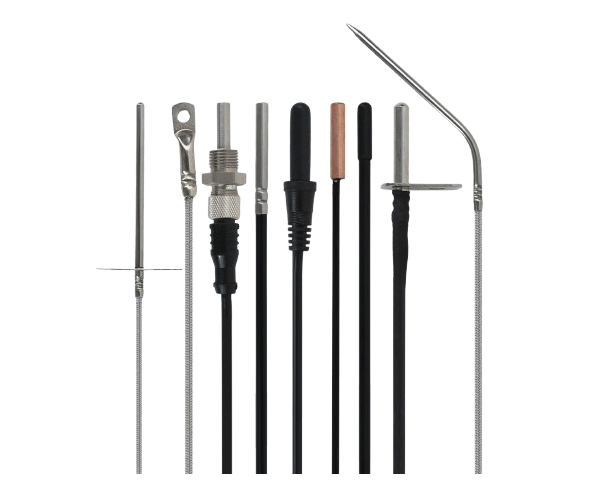
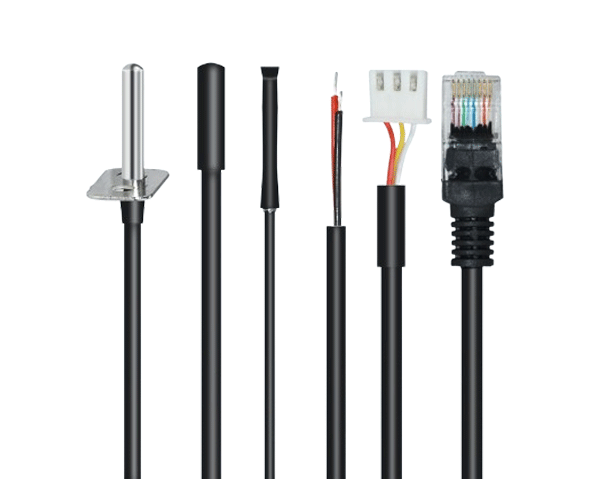
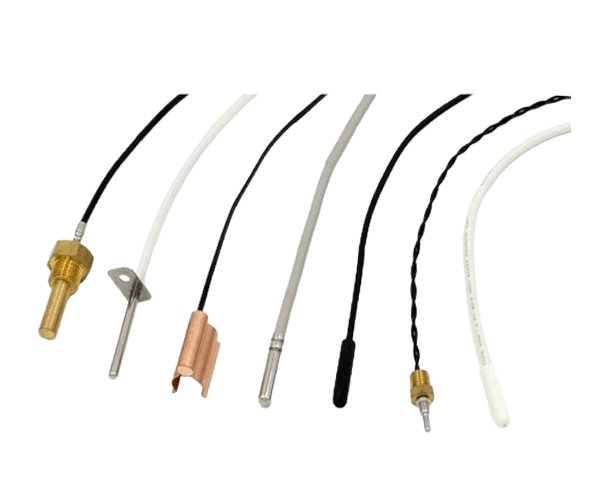
Industrial environments demand robust, accurate, and low‑maintenance sensors. Key developments: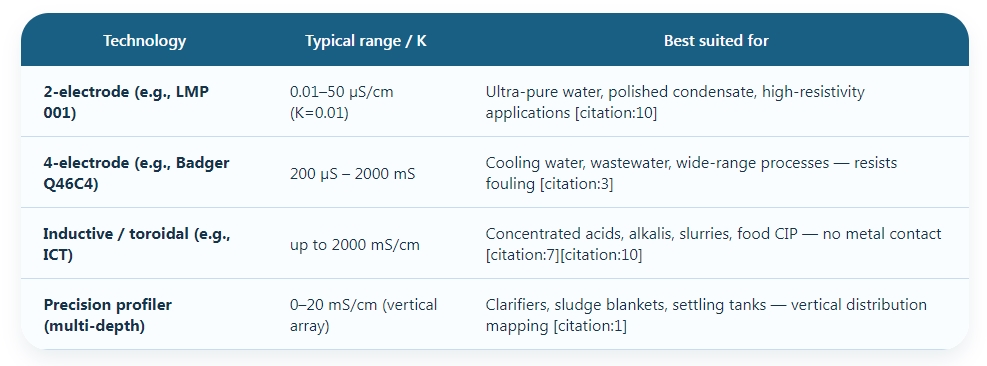
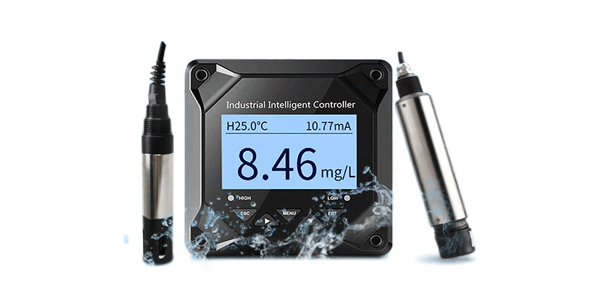
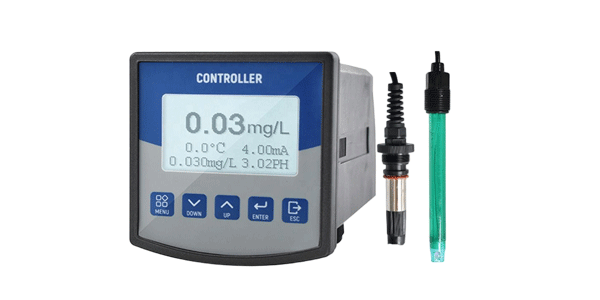
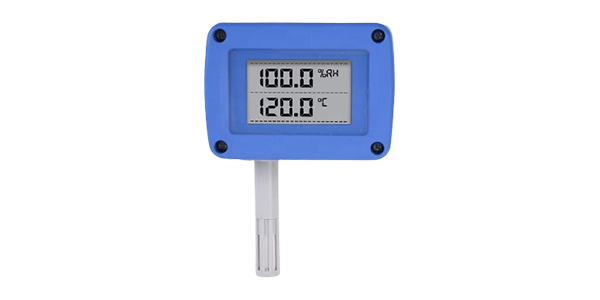
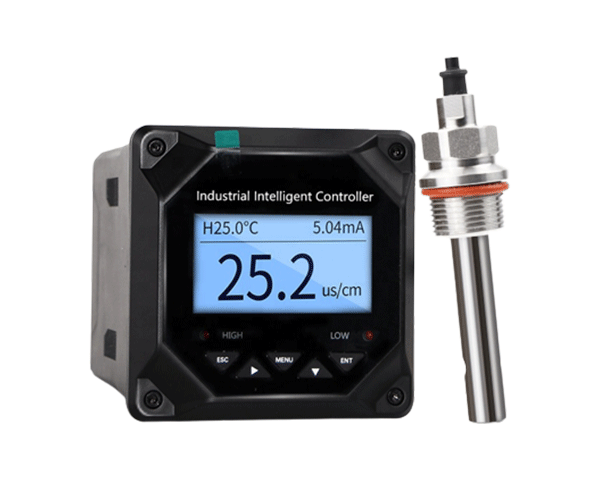
Many industrial meters now feature digital communication (Modbus, 4‑20 mA, RS485) and integrated PID controllers for direct process actuation [citation:7][citation:9].
9. Regulatory Compliance & Environmental Safety
Conductivity monitoring helps industries comply with discharge permits (e.g., China‚Äôs Integrated Wastewater Discharge Standard) and internal corporate sustainability goals. Real‑time alarms prevent off‑spec water from entering rivers or municipal systems [citation:2][citation:6]. In the EU, cooling water treatment must follow VDI 2047 guidelines, where conductivity‑controlled blowdown is mandated to prevent Legionella growth [citation:7].
Conclusion
From the depths of a clarifier to high‑pressure boiler tubes, conductivity meters have evolved into versatile, intelligent tools that not only measure but actively control industrial water treatment processes. Whether it's saving millions of liters of cooling water, protecting multi‑million‑dollar turbines, or ensuring ultrapure water for chip manufacturing, the right conductivity sensor is indispensable. As sensor technology advances (4‑electrode, inductive, digital profilers), the integration with automation systems will only deepen — making water treatment more sustainable and cost‑effective.