








1. Basic Principles of Turbidity Sensors
Turbidity sensors are optical-based water quality monitoring devices that quantify water turbidity by measuring the scattering, absorption, or transmission characteristics of light by suspended particles in water.
Light Source → Water Sample → Light Detector → Signal Processing → Turbidity Output
Typical optical path: Incident light scattered by water particles, detector receives scattered light signal
1.1 Optical Measurement Principles
Turbidity sensors are mainly based on the following three optical principles:
- Scattered Light Principle: Measures scattered light intensity at 90° to incident light (most common)
- Transmitted Light Principle: Measures attenuation of transmitted light through water sample
- Surface Scattering Principle: Measures scattered light from water sample surface, no intrusive installation needed
According to ISO 7027 international standard, the 90° scattered light method is the benchmark method for turbidity measurement, with results expressed in NTU (Nephelometric Turbidity Units).
2. Main Types of Turbidity Sensors
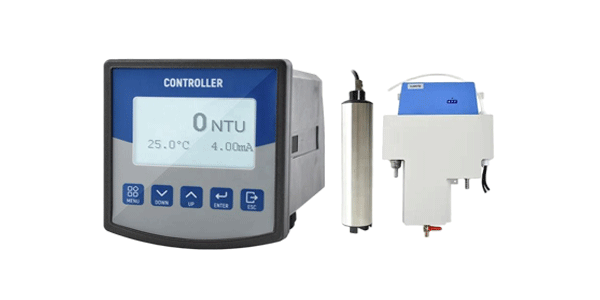
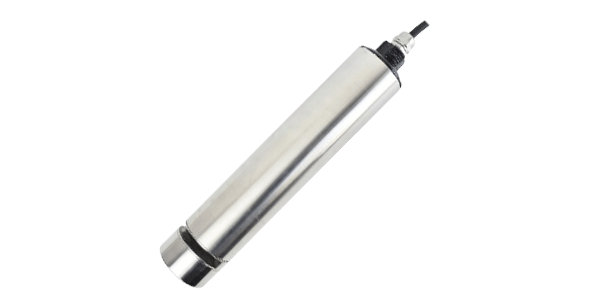
Working Principle: LED light source, 90° scattered light detection
Measurement Range: 0-1000 NTU
Accuracy: ±0.1 NTU
Features: High accuracy, ISO compliant
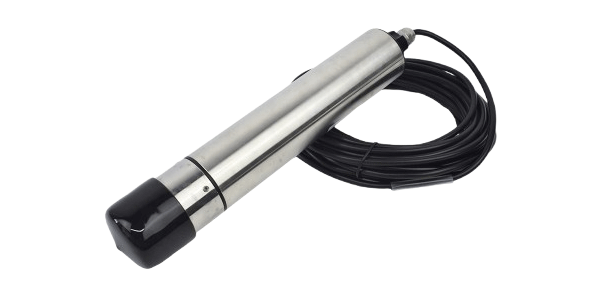
Working Principle: Measures transmitted light attenuation
Measurement Range: 0-4000 NTU
Accuracy: ±2% FS
Features: Suitable for high turbidity measurement
Working Principle: Non-contact surface scattering measurement
Measurement Range: 0-1000 NTU
Accuracy: ±1% FS
Features: Maintenance-free, no contamination
Working Principle: Multiple angle scattered light ratio
Measurement Range: 0-100 NTU
Accuracy: ±0.05 NTU
Features: Eliminates color interference
2.1 Sensor Technical Parameter Comparison
| Sensor Type | Measurement Principle | Measurement Range | Accuracy | Response Time | Main Applications |
|---|---|---|---|---|---|
| 90° Scattering | 90° Scattered Light | 0-1000 NTU | ±0.1 NTU | 3-5 seconds | Drinking water, laboratory |
| Transmission | Transmitted Light Attenuation | 0-4000 NTU | ±2% FS | 2-3 seconds | High turbidity wastewater |
| Surface Scattering | Surface Scattering | 0-1000 NTU | ±1% FS | 1-2 seconds | Online monitoring |
| Ratio | Multiple Angle Ratio | 0-100 NTU | ±0.05 NTU | 5-8 seconds | Ultra-low turbidity |
3. Sensor Structure and Components
3.1 Core Components
A typical turbidity sensor consists of the following core components:
- Light Source: LED (850nm infrared or visible light), lifespan 5-10 years
- Optical Window: Quartz or sapphire material, scratch resistant
- Light Detector: Photodiode or photomultiplier tube
- Signal Processor: Microprocessor for signal amplification and calculation
- Temperature Sensor: Compensates for temperature effects on measurement
- Self-cleaning Device: Mechanical brush or ultrasonic cleaning
3.2 Signal Processing Flow
Turbidity sensor signal processing includes the following steps:
- 1. Light source driving and stabilization
- 2. Light signal acquisition and amplification
- 3. Ambient light interference elimination
- 4. Temperature compensation calculation
- 5. Nonlinear correction
- 6. Digital filtering and output
Modern turbidity sensors typically integrate temperature compensation functions, as water temperature changes affect light scattering characteristics, requiring real-time compensation to ensure measurement accuracy.
4. Application Scenarios and Selection Guide
Drinking Water Treatment
Raw water monitoring, coagulation control, filtration monitoring, finished water testing
Recommended Sensor: 90° scattering, accuracy ±0.1 NTU
Wastewater Treatment
Influent monitoring, biological tanks, sedimentation tanks, discharge points
Recommended Sensor: Surface scattering, self-cleaning function
Industrial Processes
Cooling water, boiler feed water, process water, product cleaning
Recommended Sensor: Transmission type, wide measurement range
Environmental Monitoring
Rivers, lakes, oceans, rainfall runoff
Recommended Sensor: Anti-fouling type, long-term stability
4.1 Key Selection Factors
- Measurement Range: Select appropriate range based on expected turbidity level
- Accuracy Requirements: Drinking water requires high accuracy (±0.1 NTU), industrial processes can be more flexible
- Installation Method: Immersion, flow-through, insertion, or surface type
- Environmental Conditions: Temperature, pressure, corrosive media
- Maintenance Needs: Self-cleaning function reduces maintenance frequency
- Output Signal: 4-20mA, MODBUS, Profibus, etc.
5. Installation and Maintenance Points
5.1 Installation Considerations
- Installation Location: Avoid bubbles, vortices, dead zones
- Sampling Point: Representative location, away from chemical dosing points and mixers
- Installation Depth: Ensure sensor is completely submerged
- Protection Measures: Lightning protection, waterproofing, freeze protection
- Calibration: Perform field calibration after installation
5.2 Maintenance
- Regular Cleaning: Clean optical window monthly
- Calibration Check: Verify accuracy with standard solution monthly
- Seal Inspection: Check sealing performance quarterly
- Spare Parts Replacement: LED light source lifespan 5 years, replace when due
- Winter Protection: Freeze protection measures in cold regions
5.3 Common Faults and Troubleshooting
| Fault Symptom | Possible Causes | Solutions |
|---|---|---|
| Unstable Readings | Bubble interference, improper installation location | Change installation location, add degassing device |
| High Readings | Window contamination, calibration drift | Clean window, recalibrate |
| No Signal Output | Power failure, cable damage | Check power supply and connections |
| Slow Response | Low temperature, dirt accumulation | Heating insulation, clean sensor |
6. Technology Development Trends
6.1 Intelligent Development
- Self-diagnostic Function: Automatically detects faults and alarms
- Adaptive Calibration: Automatically adjusts based on environmental changes
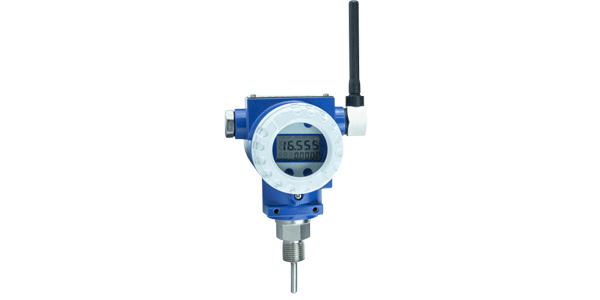
- Wireless Transmission: LoRa, NB-IoT and other wireless technology applications
- AI Algorithms: Machine learning optimizes measurement accuracy
6.2 New Material Applications
- Nano Coating: Anti-fouling, scratch-resistant optical windows
- Sapphire Window: Extremely high hardness and chemical stability
- Ceramic Housing: Corrosion resistant, wear resistant
- Fiber Optic Technology: Remote measurement, electromagnetic interference resistant
6.3 Multi-function Integration
Modern turbidity sensors tend toward multi-function integration:
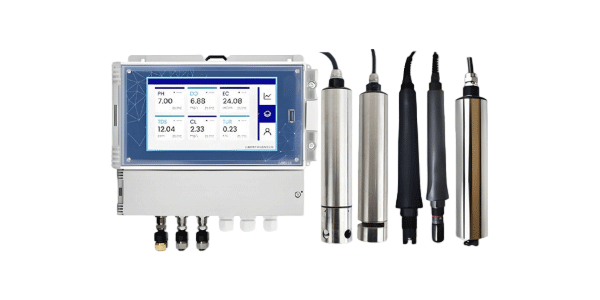
- Turbidity + temperature + pH multi-parameter sensors
- Turbidity + dissolved oxygen + conductivity integrated probes
- Smart sensors with video monitoring function
- Cloud-based data management and analysis platforms