








1. Basic Principles and Importance of Turbidity Meters
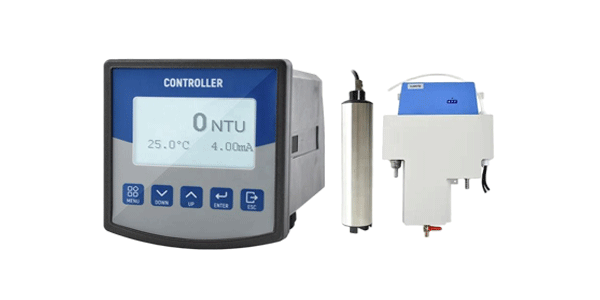
Turbidity is a key indicator for measuring suspended particle content in liquids, directly affecting water quality assessment, process control, and product quality. Turbidity meters determine turbidity values by measuring the scattering of light passing through a liquid, with units in NTU (Nephelometric Turbidity Units).
Why is Turbidity Measurement Critical?
- Water Safety: Core indicator for drinking water and swimming pool water quality
- Industrial Control: Key parameter in food and beverage, pharmaceutical, and wastewater treatment industries
- Environmental Monitoring: Fundamental data for river, lake, and marine ecosystem assessment
2. Comparison of Main Technology Types
Understanding the characteristics of different turbidity meter technologies is the first step to making the right choice:
| Technology Type | Working Principle | Measurement Range | Accuracy | Applicable Scenarios | Price Range |
|---|---|---|---|---|---|
| Transmission-Scattering Method | Simultaneously measures transmitted and scattered light | 0-1000 NTU | High | Laboratories, Water quality monitoring stations | Medium-High |
| Scattered Light Method | Measures 90° scattered light | 0-40 NTU | Medium-High | Drinking water, Low turbidity measurement | Medium |
| Surface Scattering Method | Measures scattered light from liquid surface | 0-10000 NTU | Medium | High turbidity wastewater, Industrial processes | Medium |
| Laser Turbidity Meter | Uses laser light source, high sensitivity | 0-1 NTU | Very High | Ultra-pure water, Pharmaceutical industry | High |
3. Key Selection Factors
1. Measurement Range and Accuracy Requirements
- Low Turbidity Applications (0-10 NTU): Choose high-sensitivity instruments with at least 0.01 NTU resolution
- Medium-High Turbidity Applications (10-1000 NTU): Ensure instruments operate within linear range
- Very High Turbidity (>1000 NTU): Consider surface scattering or infrared technology
2. Usage Environment and Sample Characteristics
- Laboratory Use: Portable or benchtop, focus on accuracy and repeatability
- Online Monitoring: Consider protection level, corrosion resistance, and automatic cleaning functions
- Sample Characteristics: Color, bubbles, flow rate and other factors affect technology selection
3. Regulatory and Standard Compliance
- Ensure instruments comply with applicable standards like ISO 7027, EPA Method 180.1
- Drinking water monitoring must meet local regulatory requirements
Selection Summary
When choosing a turbidity meter, follow the "suitability first" principle: First clarify measurement range, accuracy requirements, and application scenarios; then select appropriate technology based on sample characteristics and usage environment; finally find the best balance between performance, brand, and price.
4. Recommendations for Different Application Scenarios
1. Drinking Water and Water Treatment Plants
- Recommendation: Online scattered light turbidity meter, EPA compliant
- Key Features: Automatic cleaning, alarm function, 4-20mA output
- Budget Range: $1,000 - $3,500
2. Laboratory Research
- Recommendation: High-precision benchtop turbidity meter with multi-parameter measurement capability
- Key Features: GLP compliance, data management software, multiple measurement modes
- Budget Range: $1,500 - $5,500
3. Industrial Wastewater Treatment
- Recommendation: Surface scattering turbidity meter with high range capability
- Key Features: IP67 protection, corrosion-resistant, anti-fouling design
- Budget Range: $800 - $2,800
5. Maintenance and Calibration Essentials
Daily Maintenance Checklist
- Regularly clean sample cell and optical components
- Check light source intensity and stability
- Verify calibration validity and recalibrate promptly
- Record instrument performance trends
Calibration Best Practices
- Use certified standard solutions
- Calibrate in stable environment (temperature controlled)
- Implement multi-point calibration for improved accuracy
- Establish calibration records and traceability system
6. Frequently Asked Questions
Answer: Laboratory instruments are recommended for calibration every 3-6 months. Online instruments can be calibrated every 1-3 months depending on usage frequency and environmental conditions. High-precision applications may require more frequent calibration.
Answer: Verify using standard turbidity solutions, comparing measured values with standard values. Error should be less than the instrument's nominal accuracy, typically acceptable within ±2%.
Answer: Yes, particularly for transmission light method instruments. Choosing scattered light method or instruments with color compensation functions can minimize this effect.
Answer: Portable units are suitable for multi-point sampling and field testing. Online units provide continuous monitoring and process control. Many users configure both types to meet different needs.
Professional Advice Summary
When choosing a turbidity meter, follow the "suitability first" principle:
- Clarify Requirements: First determine measurement range, accuracy requirements, and application scenarios
- Technology Matching: Select appropriate technology based on sample characteristics and usage environment
- Budget Balance: Find the best balance between performance, brand, and price
- Long-term Considerations: Evaluate total cost of ownership including maintenance, calibration, and consumables
Whenever possible, obtain sample testing opportunities before purchasing to ensure the instrument performs as expected under actual conditions. Discuss application details with suppliers, as they can usually provide valuable professional advice.