Temperature & Humidity Sensors for Tobacco Curing and Storage
Tobacco Quality Is Decided Twice — in the Barn and in the Warehouse
A flue-curing barn runs a three-stage temperature schedule that turns green leaf into yellow, aromatic cured tobacco. A storage warehouse holds that quality for months while the leaf ages. Both environments live or die on two measurements: dry-bulb temperature and relative humidity. Manual thermometers and experience-based damper adjustments still work — but they drift, they react late, and one bad batch of over-soured or under-cured leaf costs more than a season of sensors. This article explains where temperature and humidity sensors belong in tobacco curing barns and leaf storage warehouses, what to measure at each point, and how to turn the readings into automatic control.
38→68 °C
typical flue-curing curve, 3 stages
±0.3 °C
barn sensor class for setpoint control
55–65 %
RH sweet spot for leaf storage
70 %+
RH where mold risk rises sharply
24/7
unattended monitoring & alarms
In one line — temperature and humidity sensors give curing barns and tobacco storage warehouses the two numbers that decide leaf quality: dry-bulb temperature drives the curing schedule and fan/heat control, relative humidity drives venting, dehumidification and mold prevention — with wired transmitters, wireless nodes and cloud alarms covering every barn and every stack.
Why It Matters
Two Measurements, Two Stages of Quality
Tobacco leaf is a hygroscopic, biologically active material. From harvest to packed case, its color, aroma and chemical composition are shaped by temperature and humidity — and there is no way to "fix" leaf that was cured too fast, dried too hard, or stored too damp.
01
In the barn: the curing schedule is a temperature-and-humidity program
Flue-curing follows three stages — yellowing, leaf-drying (color fixing) and stem-drying. Each stage holds a dry-bulb setpoint and a wet-bulb (humidity) window. Readings that drift by 2–3 °C push the leaf into soured, green or scorched territory before anyone notices.
Calibrated dry-bulb and wet-bulb sensors hold the schedule where the cure plan put it
02
In the warehouse: humidity decides whether leaf keeps or rots
Stored leaf exchanges moisture with the air continuously. Below roughly 55 % RH it becomes brittle and shatters in handling; above roughly 70 % RH mold develops and curing losses mount. Temperature also drives tobacco beetle activity in warm seasons.
Continuous RH monitoring with dehumidifier / ventilation linkage keeps stacks in the safe band
03
Manual checking cannot cover modern barn banks and big warehouses
A curing facility runs dozens of barns in parallel, each at a different point in its schedule. A storage warehouse holds hundreds of stacks with different moisture histories. Spot-checking finds problems after they happen; sensors find them while they can still be corrected.
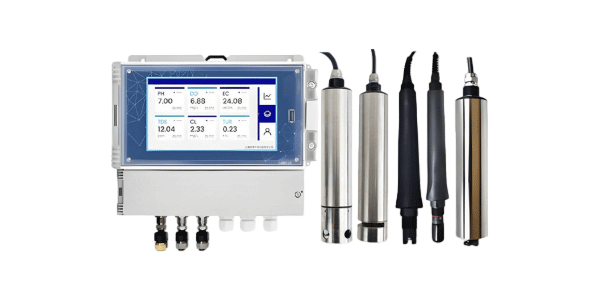
One monitoring system covers every barn and stack, with alarms to the phone
The common thread. Both stages need the same thing: trustworthy dry-bulb and humidity readings, taken at the right points, feeding a controller or a monitoring platform that acts on them automatically. The rest of this article walks through each stage in turn.
Stage 1 — Curing
Sensors in the Flue-Curing Barn
The three-stage schedule the sensors must hold
Bulk-curing (flue-curing) of flue-cured tobacco follows a stage-by-stage program. The values below are typical industry reference points — the exact curve always follows the leaf variety, stalk position and the farm's own cure plan.
|
Stage
|
Dry-bulb setpoint
|
Wet-bulb / RH window
|
What goes wrong without control
|
|
Yellowing
|
≈ 35–40 °C, held for 30–60 h
|
Wet-bulb ≈ 35–37 °C, high RH
|
Too dry: leaf yellows but stays green-veined; too humid: soured, dark leaf
|
|
Leaf drying (color fixing)
|
≈ 43–54 °C, stepped up slowly
|
RH stepped down, wet-bulb drooped deliberately
|
Ramp too fast: brown or scalded leaf; too slow: over-soured, low aroma
|
|
Stem drying
|
≈ 60–68 °C to finish
|
Low RH, high airflow
|
Under-dried stems re-wet the load in storage; overheating drives off aroma
|
Indicative flue-curing schedule. Always follow the curing chart for the specific variety, and let the barn controller hold the curve.
Where the sensors go
DRY
Dry-Bulb Sensor
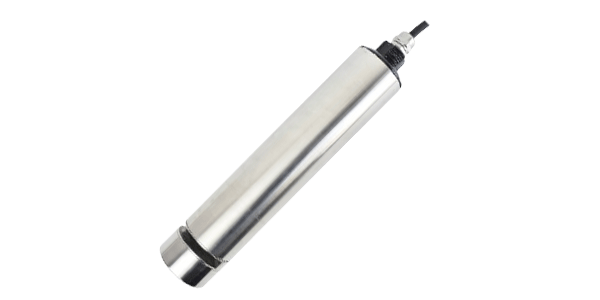
Measures barn air temperature at leaf height — the number the controller compares against the stage setpoint to fire the heat source and modulate the fan.
WET
Wet-Bulb / Humidity Sensor
Measures the moisture drive inside the barn. Traditional barns use a wick-and-reservoir wet bulb; modern barns increasingly use electronic capacitive RH sensors.
LEAF
Leaf-Zone Placement
Sensors belong inside the leaf mass or at return-air height — not in the supply plenum — so they read what the leaf actually experiences, not the hottest air leaving the heat exchanger.
CTRL
Controller Feedback
The automatic barn controller uses the two readings to open/close vents, damp the wet-bulb and step the temperature — replacing manual damper turns at 3 a.m.
LOG
Curve Logging
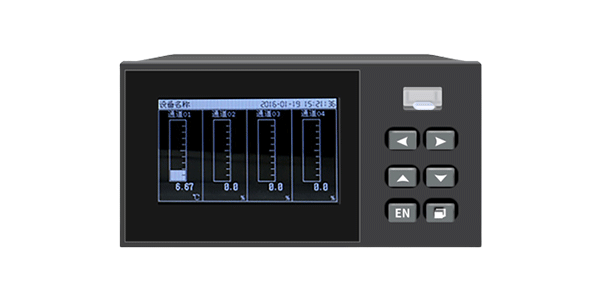
Recording the actual temperature/humidity curve of every barn lets the farm compare against the target schedule and trace any off-quality batch to its barn.
ALM
Remote Alarm
Barn temperature collapse (burner out), humidity runaway or power failure trigger SMS/app alerts before a load of leaf is lost overnight.
Wet-bulb maintenance is part of the measurement. A traditional wet-bulb sensor only reads correctly when the wick is clean, wet and fed from clean water — a dry or scaled wick quietly reports a humidity far below reality, the controller vents too hard, and the leaf over-dries. Electronic RH elements avoid the wick entirely but must be rated for the barn's humid, dusty environment and checked against a reference each season.
Stage 2 — Storage
Sensors in Leaf Storage & Aging Warehouses
After curing and grading, leaf rests in warehouses for months of natural aging. The building's job is to hold the leaf's moisture content steady — and moisture content follows the air around it.
|
Storage condition
|
Recommended band
|
Why
|
|
Relative humidity
|
≈ 55–65 % RH
|
Keeps leaf elastic without mold; the practical safe band for most cured leaf
|
|
Above ≈ 70 % RH
|
Action threshold
|
Mold growth risk rises sharply; musty odor and leaf losses follow
|
|
Below ≈ 55 % RH
|
Action threshold
|
Leaf dries, turns brittle, shatters in handling and regrading
|
|
Temperature
|
Cool and stable, avoid > 25–30 °C sustained
|
Warm storage accelerates insect (tobacco beetle) activity and unwanted chemical change
|
General reference bands for cured leaf storage. Local climate, leaf type and packaging change the exact targets — set alarms from your own quality standard.
Monitoring points that actually matter
Ambient Zones, Not Just One Reading
Warehouses stratify: roof space runs hot and dry, floor level cool and damp. Sensors at several heights and zones show the real distribution instead of one optimistic doorway reading.
Inside or Behind the Stacks
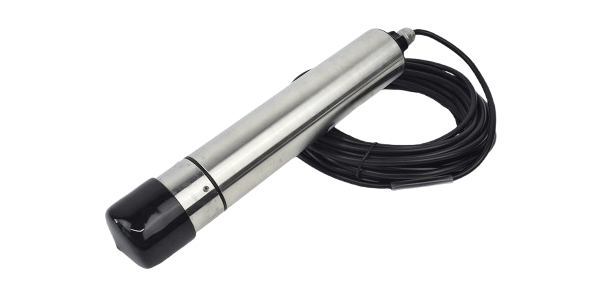
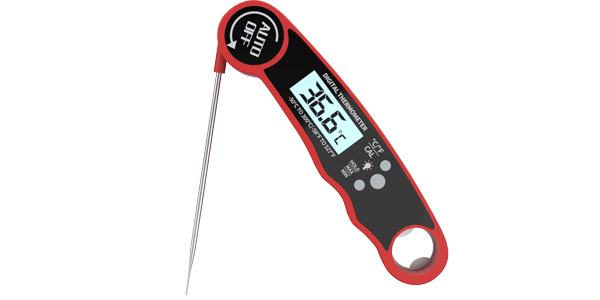
Leaf inside a stack equilibrates slowly. A probe pushed into a bale or placed in a stack gap detects moisture problems hours before the room sensor does.
Link to Dehumidify / Ventilate
When RH crosses the upper threshold, the system starts dehumidifiers or exhaust fans; below the lower band it stops them. Automatic linkage beats a work order raised the next morning.
Alarms With Location
An alert that says "Zone C, stack row 12, 72 % RH for 2 h" gets a targeted response — not a warehouse-wide scramble.
Seasonal reality. Most mold events happen at the humid-season night shift, and most shatter losses happen in dry winter heating. Both are silent failures — which is exactly why RH monitoring runs around the clock instead of during inspection rounds.
Sensor Selection
Choosing the Right Sensor for Each Point
|
Sensor type
|
Range / accuracy
|
Best for
|
Notes
|
|
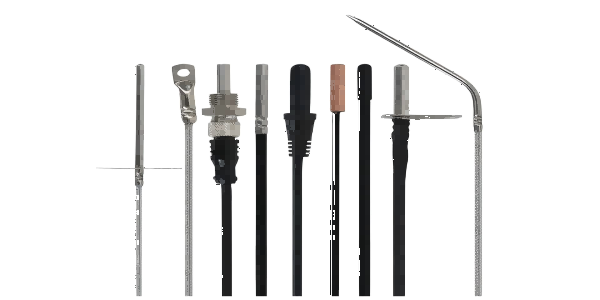
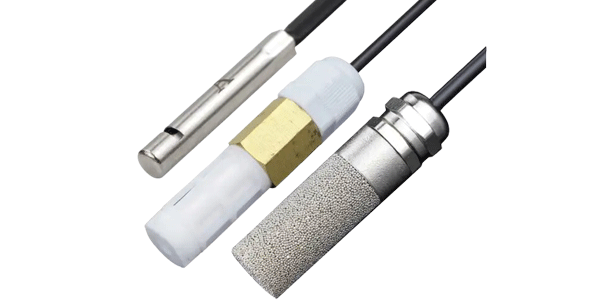
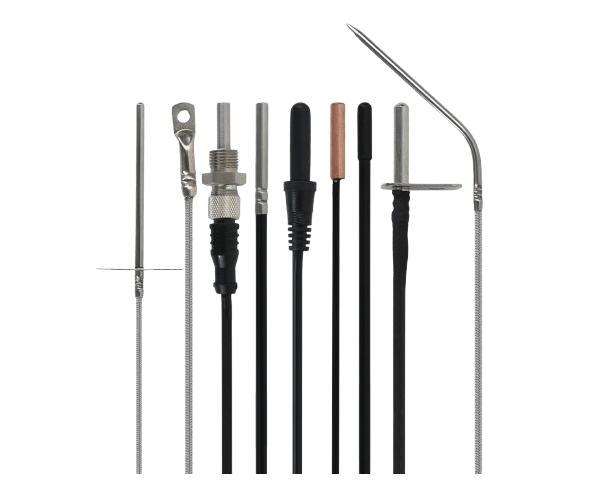
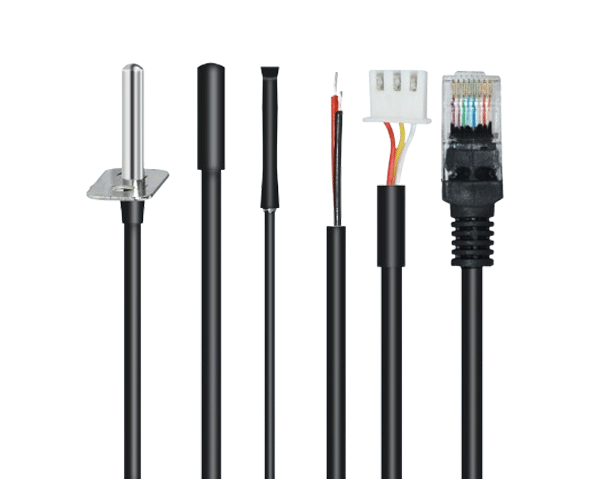
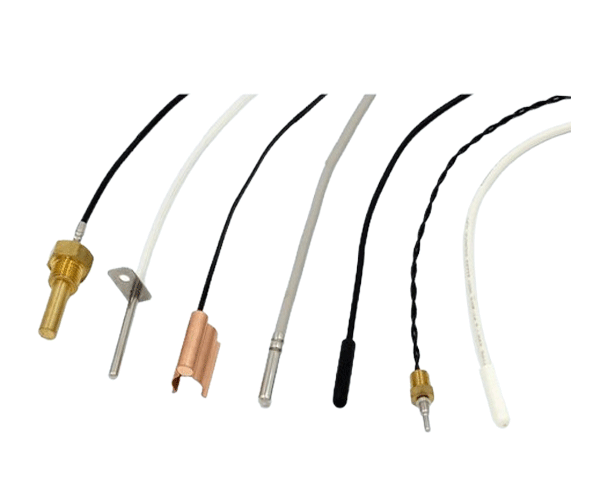
NTC thermistor probe
|
-40 to +105 °C, ±0.2–0.5 °C
|
Barn dry-bulb points, duct and plenum temperature
|
Low cost, fast response, the default for barn controllers
|
|
Pt100 / Pt1000 RTD
|
-50 to +200 °C, ±0.15–0.3 °C
|
High-accuracy barn control, heat-exchanger and flue-gas monitoring
|
More stable long-term; 3-wire for runs over ~5 m
|
|
Capacitive RH + temp (digital)
|
0–100 % RH, ±2–3 % RH
|
Barn humidity, warehouse ambient zones
|
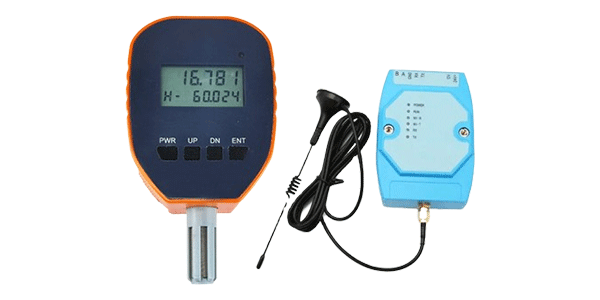
No wet wick; select barn-grade parts with dust protection and periodic check
|
|
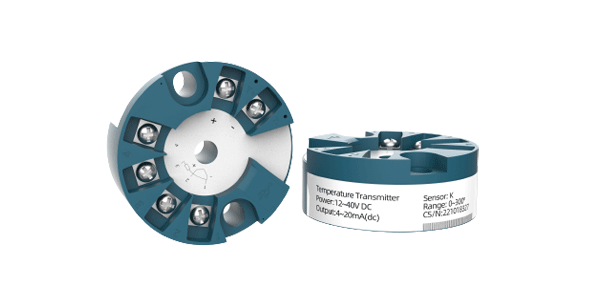
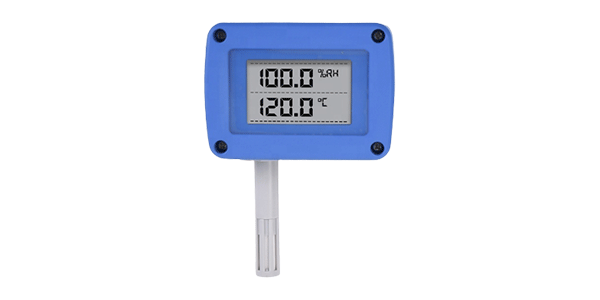
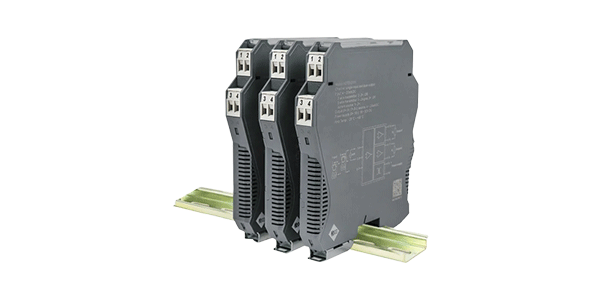
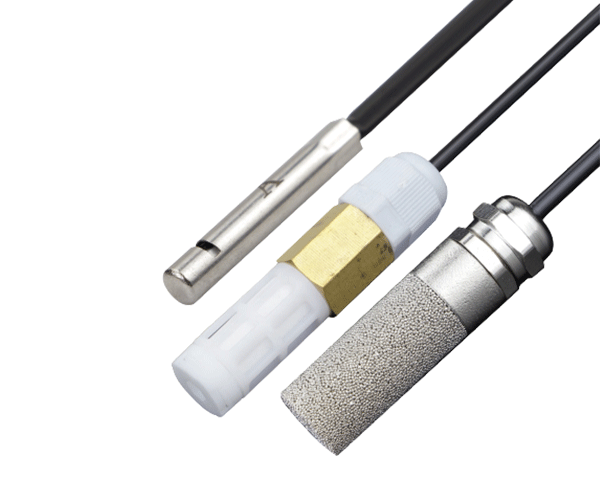
Temp & humidity transmitter (4–20 mA / RS485)
|
Industrial housing, long cable runs
|
Warehouse zones, fixed installations into PLC / monitoring systems
|
Signal survives long distances; RS485 buses many points on one pair
|
|
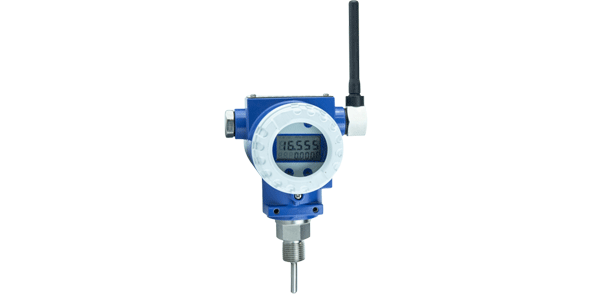
Wireless node (LoRa / 4G)
|
Battery or powered, cloud uplink
|
Stack probes, retrofit warehouses, barn banks without cabling
|
No wiring across the site; alarms and curves on phone / PC
|
From sensor to control — the signal chain
Sensing Pointdry-bulb · wet-bulb / RH · stack probe
→
Transmitter / Node4–20 mA · RS485 · LoRa / 4G
→
Controller or Platformbarn controller · cloud monitoring
→
Automatic Actionheat & fan · vents · dehumidifier · alarm
One rule across both stages: a sensor only pays for itself if its reading reaches something that acts. A barn controller acting on heat, fan and vents; a warehouse platform acting on dehumidifiers, ventilation and alarms. Measure-and-log without control is only half a system.
Implementation
Rolling It Out Across a Barn Bank or Warehouse
-
Map the points first — one dry-bulb + one humidity point per barn at leaf height; warehouse zones by area and stack height rather than a single room sensor.
-
Match the output to the controller — barn controllers usually take NTC or Pt1000 inputs; monitoring platforms take RS485 or wireless nodes. Confirm before ordering.
-
Start wired where power is easy, wireless where it is not — barn banks with spare conduit use cable; retrofit warehouses and stack probes go LoRa / 4G.
-
Set thresholds from the cure plan and quality standard — not from a generic datasheet. Barn alarms mirror the stage curve; warehouse alarms mirror the RH safe band.
-
Log every curve — the recorded temperature/humidity history is the tool for tracing off-quality batches and tuning next season's schedule.
-
Calibrate on a schedule — check barn sensors against a reference thermometer each season, RH elements against a calibrated hygrometer or salt bath.
Do not let a sensor substitute for the cure plan. Sensors hold the schedule the agronomist wrote; they do not rewrite it for leaf that came in wetter or greener than usual. Keep the agronomist's judgment in the loop — the monitoring system's job is to make sure the plan is actually executed, barn by barn, hour by hour.
FAQ
Questions From Curing Operations and Warehouse Managers
What temperature and humidity should a flue-curing barn hold?
A typical flue-curing schedule starts with a yellowing stage around 35–40 °C at high humidity, steps through leaf drying up to about 54 °C, and finishes stem drying at 60–68 °C with low RH. The exact curve depends on the leaf variety and the farm's cure plan — the sensors' job is to hold that curve precisely, stage by stage.
What is the ideal humidity for storing cured tobacco leaf?
Most cured leaf stores best around 55–65 % RH. Below about 55 % the leaf dries, becomes brittle and shatters in handling; above about 70 % mold risk rises sharply. Temperature should stay cool and stable — sustained warmth also encourages tobacco beetle activity.
Electronic RH sensor or wet-bulb in the barn?
Both are used. A wet bulb is cheap and familiar but only reads correctly with a clean, wet wick and clean water — a dry wick quietly under-reports humidity and over-dries the leaf. Electronic capacitive RH elements need no maintenance but should be barn-grade and checked against a reference each season.
Where should barn sensors be installed?
At leaf height inside or near the leaf mass, or at return-air height — where they read what the leaf experiences. Sensors placed in the hot supply plenum read the hottest air in the barn and make the controller under-heat the load.
Do we need to wire the whole warehouse?
No. Wired RS485 or 4–20 mA transmitters suit zones with easy conduit runs; battery or powered wireless nodes (LoRa / 4G) cover retrofit buildings and stack probes without cabling. Both feed the same monitoring platform, so mixed deployments work fine.
Can the system control dehumidifiers and ventilation automatically?
Yes. Set an upper RH threshold and the platform or controller starts dehumidifiers or exhaust fans; set a lower threshold and it stops them. Alarm push via SMS / app / email keeps the manager informed, with the alarm located to a specific zone or stack.
How often should the sensors be calibrated?
Check barn temperature sensors against a reference thermometer at the start of each curing season, and RH elements against a calibrated hygrometer periodically. Barns are dusty and humid environments — an unchecked sensor drifts quietly, and a drifted sensor is worse than none because the controller trusts it.
Equipping curing barns or a leaf storage warehouse?
Tell us the number of barns, the controller input types and the warehouse layout. We will match the sensor points, wiring or wireless plan and alarm thresholds — and quote the complete monitoring package.
Get a Quote & Solution