DS18B20 Sensors for Cold Chain Transport Monitoring
One Wire, Many Sensors — The Workhorse of Cold Chain Temperature Logging
A refrigerated truck runs a -18 °C setpoint, but the air near the evaporator is not the same temperature as the product in the middle of the pallet. A vaccine cooler must prove it held 2–8 °C for the whole journey. A cold storage room has warm corners the wall-mounted display never sees. Cold chain disputes are settled by logged data, and the sensor that dominates this space is the DS18B20: a low-cost digital temperature sensor that hangs dozens of individually addressable, waterproof probes on a single three-wire bus. This article explains how the DS18B20 works, where it belongs in reefer trucks, cold storage and last-mile delivery, and the practical details — wiring, limits, chip authenticity — that decide whether the log is trustworthy.
-55~+125 °C
sensor range, far beyond cold chain needs
±0.5 °C
accuracy from -10 to +85 °C
1 bus
dozens of sensors on one 1-Wire line
64-bit ID
unique address burned into each chip
IP68
waterproof probe options for wet loads
In one line — waterproof DS18B20 probes placed in return air, product zones and coolers feed a logger over a single 1-Wire bus, producing the time-stamped, per-point temperature record that proves the cold chain held.
Why Multi-Point
Three Reasons One Sensor Is Not Enough
01
Air temperature is not product temperature
The return-air probe near the refrigeration unit cycles up and down with the compressor. The product in the center of a pallet barely moves. Auditing a shipment on air temperature alone overstates both the excursions and the protection.
Product-simulating probes placed in the load alongside an air probe
02
Cold rooms are not uniform
Door ends, floor level and corners run warmer than the setpoint reading suggests. A mapping study with multiple probes shows the real distribution — and where the sensitive goods may and may not be stored.
Zone probes wired on the same bus, no extra logger channels
03
Claims need evidence at the right place
When a customer disputes a spoiled load, the winning record is time-stamped temperature at defined points — not a single dashboard number from the front of the truck.
Per-probe logging with unique serial IDs, traceable to placement
Why DS18B20 for this job. Analog sensors need one measurement channel each — ten points means ten channels. A 1-Wire bus carries all DS18B20 probes together, each identified by its unique 64-bit serial number, so the logger stays small and the wiring stays simple. That is the economics behind multi-point cold chain monitoring.
Meet the Sensor
How the DS18B20 Works
The DS18B20 is a digital temperature sensor from Maxim (originally Dallas Semiconductor), now produced and cloned by many manufacturers. It converts temperature directly to a digital value on the chip and speaks the 1-Wire protocol: a single data line carries both power (in parasite mode) and the addressable communication to every device on the bus.
1-W
1-Wire Multi-Drop Bus
Every probe on the bus shares one data line. The host addresses each chip by its unique 64-bit serial ID — no channel per sensor, no multiplexer.
DIG
Digital Output On-Chip
Conversion happens on the chip, so long cable runs do not add analog error. A 15 m probe run reads the same as a 1 m run, given sound wiring.
±0.5
±0.5 °C Accuracy
Specified from -10 to +85 °C — comfortably covering every cold chain band from deep-frozen to cool room. Resolution is programmable down to 0.0625 °C.
WP
Waterproof Probe Format
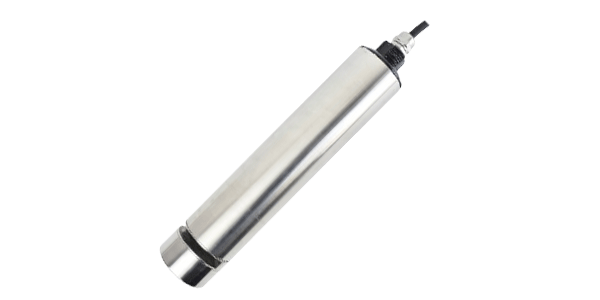
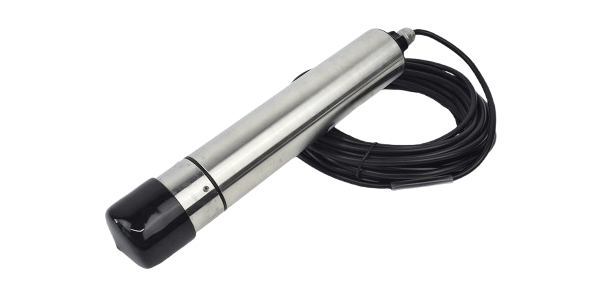
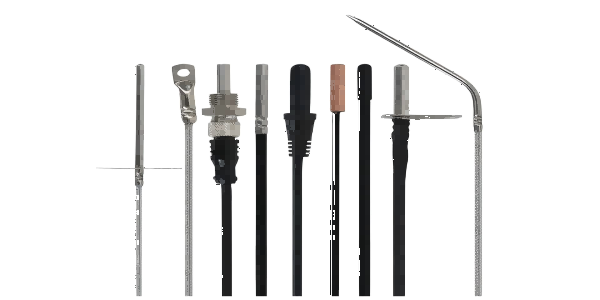
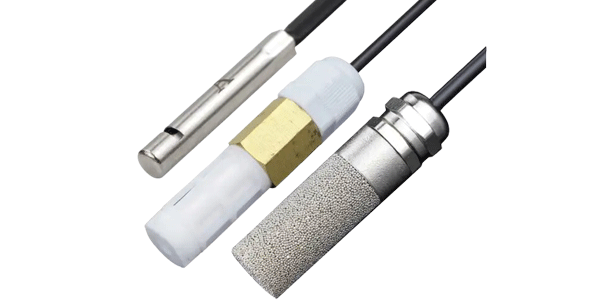
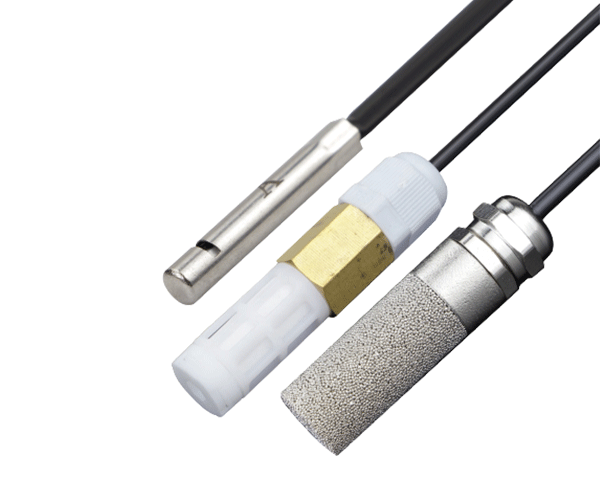
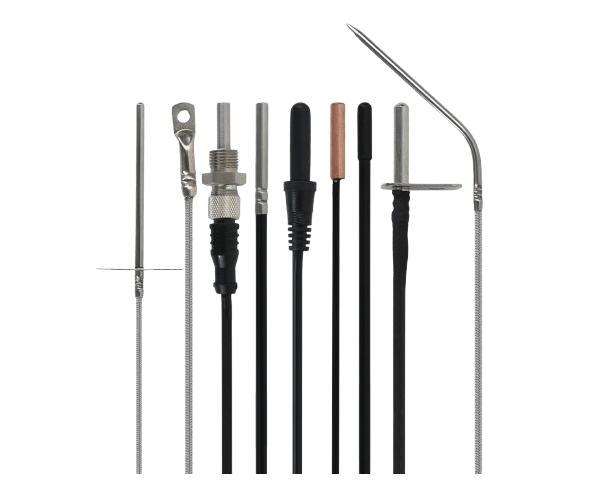
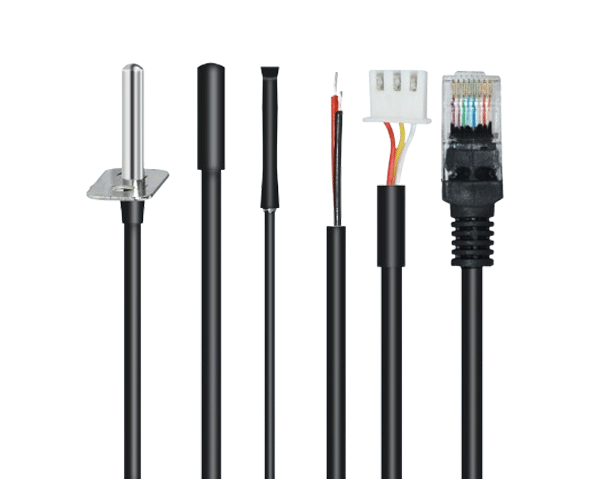
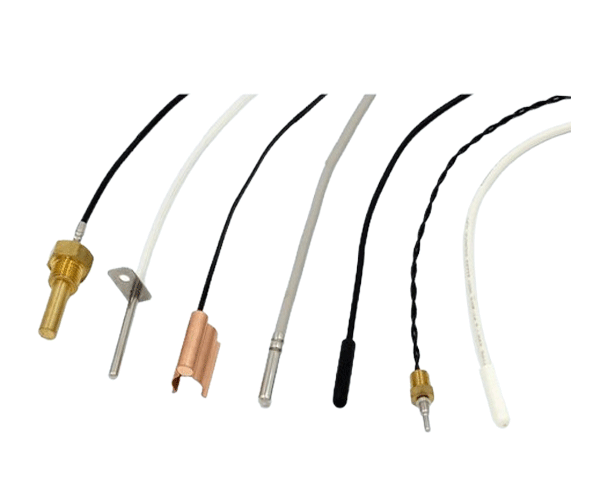
The most popular cold chain form: chip sealed in a stainless or nickel-plated tube with a PVC or silicone cable — hosed down, immersed, frozen without complaint.
PWR
Two Power Modes
Standard 3-wire mode (VCC, GND, DATA) for reliability; parasite power (2-wire) saves a conductor but limits how many sensors can convert simultaneously.
LOG
Logger-Friendly
Native interfaces exist for microcontrollers, PLC modules and standalone loggers — the same probe can serve a truck recorder or a cloud gateway.
|
Specification
|
Value
|
|
Measuring range
|
-55 to +125 °C
|
|
Accuracy
|
±0.5 °C from -10 to +85 °C (±2 °C over the full range)
|
|
Resolution
|
Programmable: 9–12 bit (0.5 / 0.25 / 0.125 / 0.0625 °C)
|
|
Conversion time
|
Up to 750 ms at 12-bit resolution
|
|
Bus
|
1-Wire, multi-drop, unique 64-bit serial ID per device
|
|
Supply
|
3.0–5.5 V; external supply or parasite power from the data line
|
|
Probe format (typical)
|
Stainless / nickel-plated tube Ø6 mm, 0.5–5 m PVC or silicone cable, IP68 options
|
Values per the DS18B20 datasheet. Actual probe specifications (cable rating, sealing, diameter) depend on the probe supplier.
Cold Chain Applications
Where the Probes Go
Refrigerated Trucks & Trailers
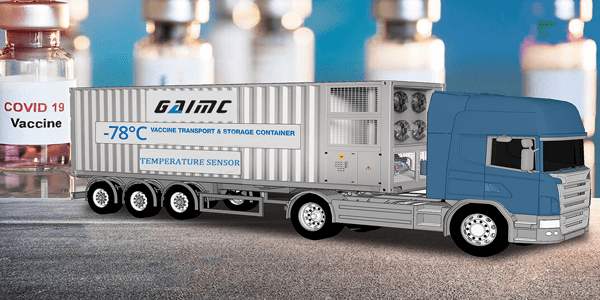
One probe in return air (what the refrigeration unit controls), one or more in the load (what the customer actually buys), optionally one at the door end. All on one bus to the telematics logger with GPS and door-open events.
Cold Storage & Distribution Centers
Zone probes at warm spots — door ends, top racks, floor level — for mapping studies and continuous compliance logging across chambers from -25 °C freezers to 15 °C cool rooms.
Pharma & Vaccine Shipments (2–8 °C)
Qualified shippers and passive coolers carry probe-logged records for release decisions. Multi-point probes catch warm pockets a single display would hide.
Last-Mile Delivery Boxes
Compact loggers with a single waterproof probe ride inside insulated food and grocery boxes, producing the delivery-level record that platform customers increasingly expect.
Typical probe placement on a reefer truck
|
Probe position
|
What it represents
|
Why the log needs it
|
|
Return air (near unit)
|
The control point of the refrigeration system
|
Shows equipment behavior, compressor cycling and defrost events
|
|
Center of load
|
Product core temperature proxy
|
The number the customer's quality claim is judged on
|
|
Door end / top shelf
|
Warmest realistic zone
|
Catches door-open and airflow excursions the center never sees
|
|
Under door seal (optional)
|
Ingress indicator
|
Identifies recurring door-gasket problems on specific vehicles
|
Placement follows the shipper's validation plan — the table shows common practice, not a substitute for your own mapping study.
Selection & Wiring
The Details That Decide Whether the Log Is Trustworthy
Not every "DS18B20" is the real thing. The market is full of compatible and counterfeit chips. Genuine parts match the datasheet across the full range; poor clones can deviate by 1–3 °C, drift, or fail on long buses. For a system whose log settles disputes, buy from traceable sources, verify a sample batch against a reference thermometer before deployment, and treat unexplained offsets as a sourcing problem — not a calibration problem.
Wiring rules that matter
-
A 4.7 kΩ pull-up from DATA to VCC is the classic starting value; long buses or many sensors may need a lower value or an active pull-up. Bus reliability problems are almost always pull-up problems.
-
Daisy-chain beats star — wiring probes in a linear chain (or short stubs) keeps reflections and timing margin healthy. Long home-run star topologies are the usual cause of intermittent read failures.
-
Watch cable length — practical bus lengths run from a few meters to tens of meters with proper cable and pull-up. Beyond that, use a 1-Wire bus driver or split into multiple buses.
-
3-wire for fleets, parasite only when it pays — external supply mode is robust and supports simultaneous conversion; parasite power saves a wire but limits conversion concurrency on long buses.
-
Record every serial ID's location — the 64-bit ID is your audit trail. A log that cannot say which probe sat in the load center proves nothing.
-
Verify before the load ships — read all probes, compare against a reference, and confirm IDs match the placement record as part of the pre-trip checklist.
The signal chain
Waterproof Probesreturn air · load · door end
→
1-Wire Busone line, unique 64-bit IDs
→
Logger / Gatewaytime-stamped per-probe records
→
Platform & Alarmsexcursion alerts · audit reports
Alarm bands worth configuring
|
Cold chain band
|
Typical target
|
What the alarm should do
|
|
Deep frozen
|
≤ -18 °C
|
Alert on sustained rise; distinguish defrost cycles from real excursions
|
|
Chilled
|
0 to +4 °C
|
Alert on the load-zone probes, not on transient air swings
|
|
Pharma cool
|
+2 to +8 °C
|
Time-weighted excursion logging for release decisions, per the quality plan
|
|
Produce / cool room
|
+8 to +15 °C
|
Zone-level alerts to catch door and airflow issues
|
Bands are common practice — set exact thresholds from your quality standard and validation study.
FAQ
Questions About DS18B20 in Cold Chain Work
How accurate is a DS18B20?
±0.5 °C from -10 to +85 °C per the datasheet, and ±2 °C over the full -55 to +125 °C range. Resolution is programmable down to 0.0625 °C — but resolution is not accuracy. For dispute-grade records, verify probes against a reference thermometer before deployment and at intervals afterward.
How many DS18B20 sensors can share one bus?
Dozens in practice — the protocol allows a very large number of devices, and cold chain deployments commonly run 8–30 probes per bus. The practical limits are bus length, pull-up strength and conversion time (each 12-bit conversion takes up to 750 ms, and conversions are usually commanded per device or sequentially).
Are the waterproof probes suitable for freezer and washdown use?
Yes — the common stainless-tube probe with PVC or silicone cable is built for exactly this. Check the cable's temperature rating for deep-freeze duty, and choose IP68-rated probes where they will be immersed or hosed down. The weakest point is usually the cable-to-tube seal, so buy probes with a potted joint.
Why did one probe on my bus start failing intermittently?
Nine times out of ten it is wiring, not the chip: a marginal pull-up, a star topology with long stubs, or a damaged cable at a door hinge. Check the pull-up value, re-arrange into a daisy chain, and inspect the cable run. Only then suspect the sensor itself.
Real DS18B20 or compatible clone — does it matter?
For a quality log, yes. Poor clones can deviate by 1–3 °C, drift, or misbehave on long buses. Source from traceable suppliers, and verify a sample of each batch against a reference thermometer before rolling out. The small price premium buys a log you can defend.
Where should the probe go — in the air or in the product?
Both, on the same bus. An air probe at return shows how the refrigeration unit is behaving; a probe buried in the load or a product-simulating block shows what the goods actually experienced. Excursion claims should be judged on load-zone data, not return-air data.
Can DS18B20 data be uploaded to a cloud platform?
Yes. The logger reads the bus and uploads over 4G / WiFi to the monitoring platform, giving live per-probe curves, excursion alarms to phone and email, and downloadable audit reports per shipment. Local storage on the logger keeps the record complete through network gaps.
Building multi-point temperature logging for your fleet?
Tell us the vehicles or chambers, the probe points and the logger or platform you use. We will match verified DS18B20 probes, cable lengths and the data path — samples before rollout.
Get a Quote & Sample