ITALY · MICROALGAE BIOMASS & WASTEWATER TREATMENT
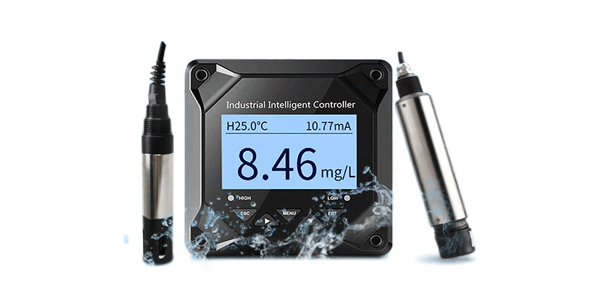
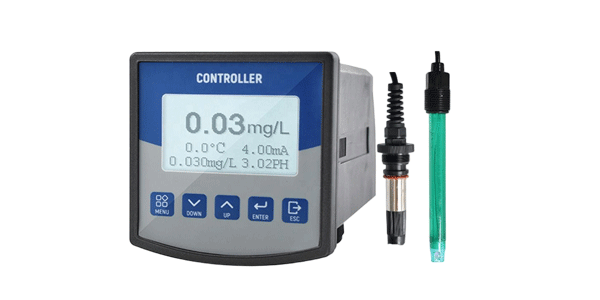
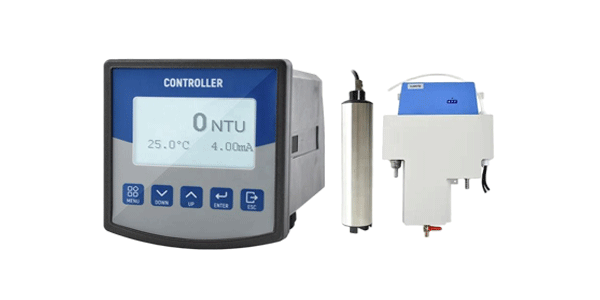
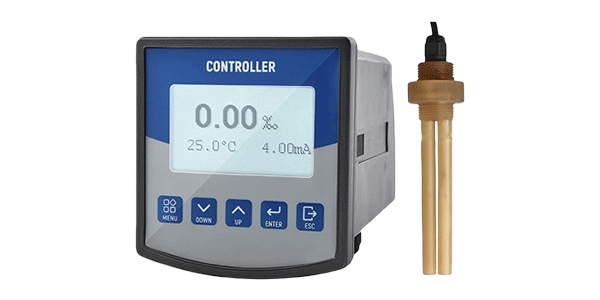
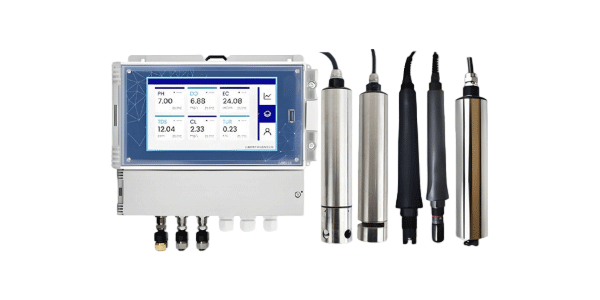
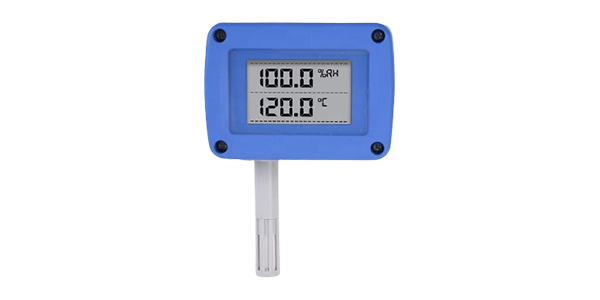
GWQ-MP200 Multi-Parameter Analyzer
Optimizing Microalgae Cultivation in Italy
Real-time monitoring of pH, DO, EC, ORP, turbidity, and ammonia | Enhance biomass yield, detect contamination, support circular economy
Request Quote
Microalgae in Italy: A Growing Sector
Italy is at the forefront of microalgae-based solutions in Europe, with applications spanning sustainable aquaculture feed, wastewater treatment, and circular economy initiatives. Recent studies highlight that microalgae cultivation can achieve up to 90% removal of ammoniacal nitrogen from municipal wastewater, offering a green alternative to conventional treatment. Italian researchers have also demonstrated the potential of microalgae-based biorefineries to produce reclaimed water, though challenges remain with pH and ammonium management. With the growing demand for omega-3 rich fish feed alternatives and biofuels, the Italian microalgae sector is poised for significant expansion.
Why GWQ-MP200 for Microalgae?
-
Monitor up to 6 key microalgae parameters simultaneously
-
ORP as a sensitive marker for growth dynamics and contamination
-
2x RS485 + Modbus-RTU for seamless integration with photobioreactor controls
-
Supports chlorophyll & cyanobacteria detection for culture health assessment
Top 4 Microalgae Cultivation Pain Points
Challenges that impact biomass productivity and process reliability
pH & Nutrient Imbalance
Microalgae photosynthesis causes pH fluctuations (>0.5 units daily). pH outside 7-9 range reduces CO₂ uptake and nutrient availability, limiting biomass growth.
Contamination & Culture Crashes
Manual sampling fails to detect early contamination. ORP has been proven as a sensitive real-time indicator of abnormal culture patterns.
Manual, Labor-Intensive Monitoring
Traditional water quality monitoring requires time-consuming sampling and lab analysis, with limited nighttime data collection.
Ammonia & DO Fluctuations
Ammonia spikes inhibit growth, while DO below 4 mg/L stresses cultures. Italian studies show strict ammonium limits complicate operations.
Microalgae-Specific Configuration
Parameter selection based on Italian pilot studies and PBR requirements
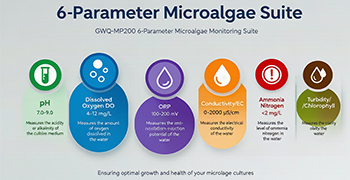
Recommended 6-Parameter Microalgae Suite
|
Parameter
|
Critical Role in Microalgae
|
Target Range
|
|
pH
|
CO₂ uptake, nutrient availability & toxicity
|
7.0–9.0
|
|
Dissolved Oxygen
|
Photosynthesis rate & culture health
|
4–12 mg/L
|
|
ORP
|
Growth phase indicator & contamination detection
|
100–200 mV
|
|
Conductivity / EC
|
Nutrient/ion concentration; media stability
|
0–2000 µS/cm
|
|
Ammonia Nitrogen
|
Critical for nutrient removal efficiency
|
<2 mg/L
|
|
Turbidity / Chlorophyll
|
Biomass density proxy & harvest timing
|
Varies by species
|
✔ Up to 6 channels | Compatible with digital sensors for photobioreactor & open pond systems
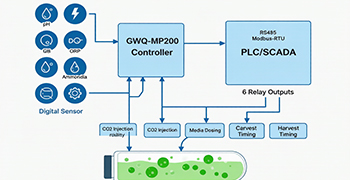
Integration with PBR Systems
GWQ-MP200 Controller + Digital Sensors
RS485 to PLC / SCADA | 6 relays for CO₂ injection & media dosing
-
Communication: 2x RS485 (Modbus-RTU) + 2x 4-20mA
-
Storage: 8GB TF card logs growth cycle data
-
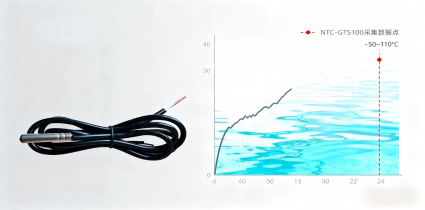
Automatic temperature compensation
ORP-based anomaly detection — GWQ-MP200 can continuously monitor ORP trends and trigger alarms when deviations indicate contamination or culture stress.
Nutrient dosing automation — pH and EC data can automatically adjust CO₂ injection and media supplementation, optimizing growth conditions in real-time .
GWQ-MP200 in Microalgae Applications (Italy)
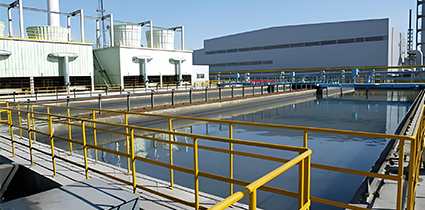
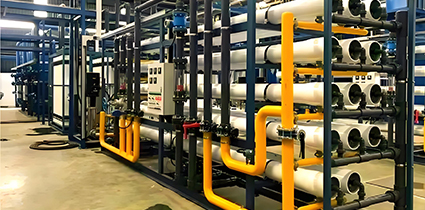
Real installations: pilot photobioreactors, open raceway ponds, and research facilities
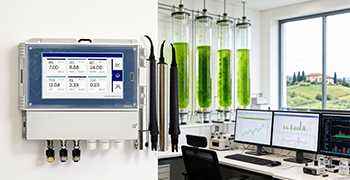
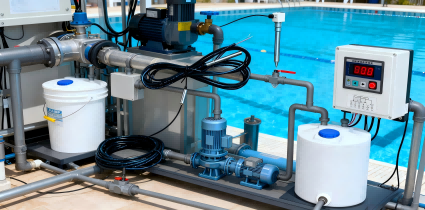
📊 GWQ-MP200 monitoring PBR parameters in Italian pilot facility
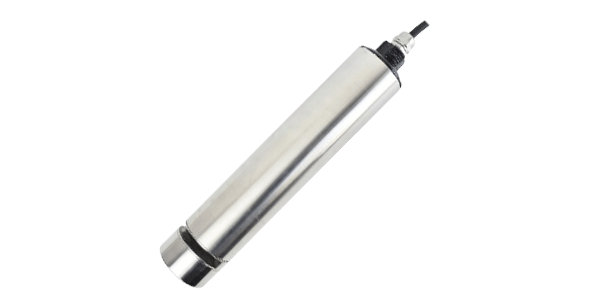
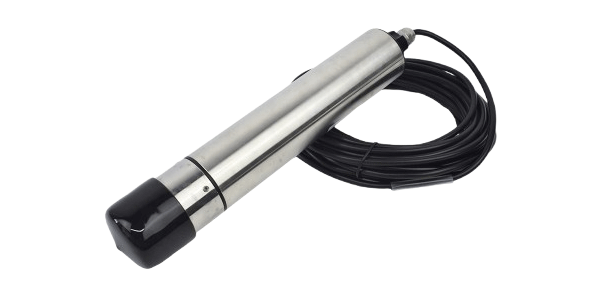
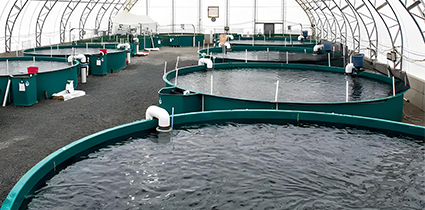
🔧 pH, DO & ORP sensors installed in microalgae cultivation tank
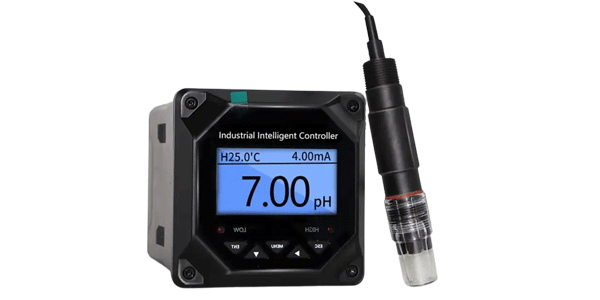
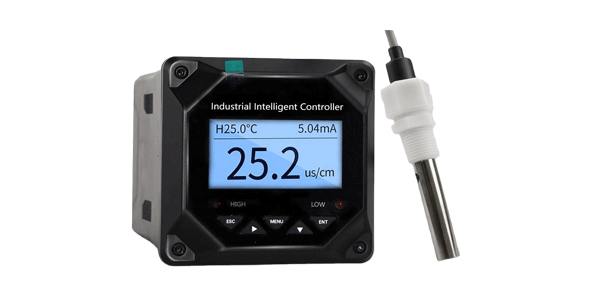
📱 6-Parameter Microalgae Suite
Based on deployments in Italian microalgae pilot plants (Marche, Campania regions) — contact us for detailed case photos
Real Case: Pilot Microalgae-Based Wastewater Treatment (Central Italy)
Challenge: Meeting strict Italian ammonium discharge limits while optimizing biomass production
Facility Background
A pilot-scale microalgae plant in central Italy was established to evaluate nutrient abatement from pre-settled municipal wastewater. The facility aimed to achieve 90%+ removal of ammoniacal nitrogen while producing biomass for potential aquaculture feed applications [citation:4][citation:10]. However, strict Italian legal requirements on ammonium effluent concentrations complicated operations, and risk assessments identified pH and ammonium as key risk factors requiring improved control systems. The facility operated seasonally, with significant variations in removal efficiency (50-99% for ammonia) influenced by temperature and light conditions.
GWQ-MP200 Implementation
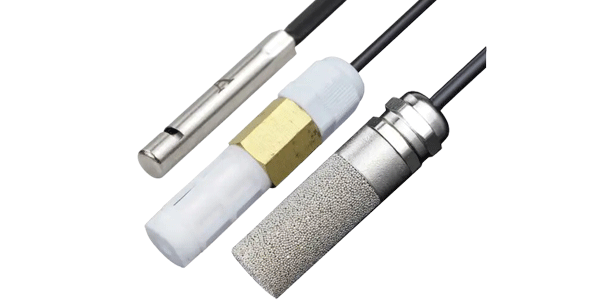
Installed one GWQ-MP200 with 6 digital sensors: pH, dissolved oxygen, ORP, conductivity, ammonia nitrogen, and turbidity. Integrated with the pilot's PLC via RS485 (Modbus-RTU) for automated CO₂ injection and media dosing. Configured relays for: ammonia >2 mg/L → alarm and feed adjustment; pH <7.0 → CO₂ injection activation; ORP deviation >20% → contamination alert.
Results after 8 months
90%
Ammonia removal efficiency
64%
pH fluctuation reduction
2×
ORP-based contamination detection speed
“The GWQ-MP200's continuous ORP monitoring has been transformative. We can now detect culture stress hours before visual signs appear, enabling timely interventions. The ability to track ammonia in real-time has been critical for maintaining compliance with Italian discharge limits.”
— Lead Researcher, Central Italy Pilot Facility
Key Metrics Improvement
✅ Ammonia monitoring: from 1x/day → continuous 24/7
✅ ORP trend analysis enables early contamination warning
✅ Seasonal efficiency variations better managed with real-time data
Financial & Sustainability Impact
Improved ammonia removal efficiency supports circular economy goals. Real-time control reduced chemical dosing costs and enabled consistent biomass quality for potential feed applications. System now serves as a model for Italian microalgae-based wastewater treatment regulations.
GWQ-MP200: Designed for Microalgae Research & Production
Multi-parameter flexibility — up to 6 channels, combine pH/DO/EC/ORP/ammonia/turbidity for complete microalgae monitoring.
Automated PBR control — 6 relays can trigger CO₂ injection, media dosing, and harvest timing based on parameter thresholds.
Seamless integration — 2x RS485 (Modbus-RTU) + 2x 4-20mA connects to photobioreactor control systems and cloud platforms.
Growth cycle logging — 8GB TF card stores complete cultivation data for research, optimization, and regulatory compliance.
Technical Specifications
|
Parameter
|
Specification
|
|
Measurement channels
|
1 to 6, any parameter combination
|
|
Outputs
|
2x isolated 4-20 mA (load <750Ω)
|
|
Communication
|
2x RS485 (Modbus-RTU)
|
|
Relays
|
6 relays, 250VAC/3A
|
|
Data storage
|
TF card 8GB (max 32GB)
|
|
Installation
|
Main unit: wall-mount; Sensors: immersion/thread
|
|
Dimensions
|
223×200×120 mm
|
|
Power supply
|
100–250 VAC, 50/60Hz
|
※ Compatible with digital sensors for photobioreactor, open pond, and wastewater applications
Configure Your Microalgae Monitoring System
When ordering, please provide: number of channels, parameter types per channel, measurement ranges, and sensor cable length. Our engineers will recommend the optimal sensor suite for your photobioreactor, open pond application.
* GWQ-MP200 only works with GAIMC digital sensors — consult sales for complete system compatibility.